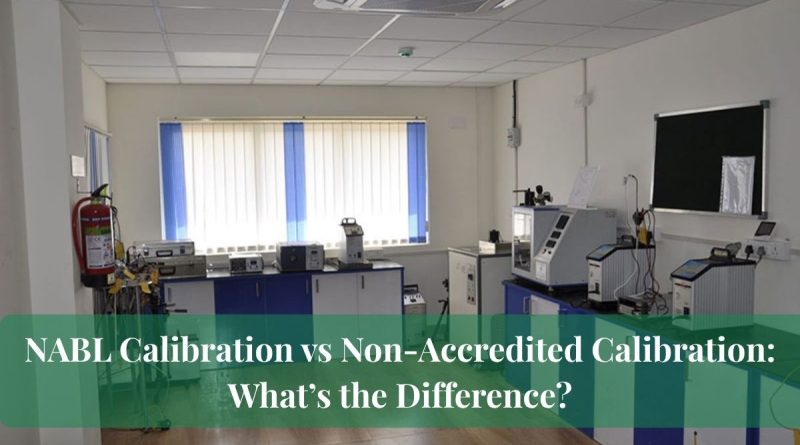
NABL Calibration vs Non-Accredited Calibration: What’s the Difference?
In industries where precision defines quality—such as manufacturing, pharmaceuticals, healthcare, and engineering—calibration is not just a routine process; it is a critical compliance requirement. When businesses search for NABL Calibration Services in Gujarat, they are often faced with an important question: Should you choose NABL-accredited calibration or a non-accredited service?
Understanding this distinction is essential for ensuring measurement accuracy, regulatory compliance, and operational reliability. This guide breaks down the differences in a clear, practical, and decision-oriented manner.
What is NABL Calibration?
NABL calibration refers to calibration services performed by laboratories accredited by the National Accreditation Board for Testing and Calibration Laboratories. NABL operates under the Quality Council of India and ensures that laboratories comply with international standards such as ISO/IEC 17025.
When you choose a NABL Calibration Lab in Gujarat, you are working with a facility that has been independently assessed for:
- Technical competence
- Measurement accuracy
- Traceability to national/international standards
- Quality management systems
This accreditation ensures that the calibration results are globally accepted and reliable.
What is Non-Accredited Calibration?
Non-accredited calibration is carried out by labs that are not certified by NABL or any recognized accreditation authority. While these labs may still offer calibration services, they do not undergo the rigorous auditing, validation, and compliance checks required for accreditation.
Such services may be suitable for basic internal checks but often lack:
- Verified traceability
- Standardized procedures
- Legal or regulatory acceptance
Key Differences Between NABL and Non-Accredited Calibration
1. Accuracy and Reliability
- NABL Calibration: High accuracy backed by standardized procedures and validated equipment.
- Non-Accredited: Accuracy may vary depending on internal practices.
2. Traceability
- NABL Calibration: Measurements are traceable to national or international standards.
- Non-Accredited: Traceability may not be documented or verifiable.
3. Compliance and Certification
- NABL Calibration: Certificates are recognized by regulatory authorities and auditors.
- Non-Accredited: Certificates may not be accepted during audits or inspections.
4. Quality Assurance
- NABL Calibration: Strict adherence to ISO/IEC 17025 ensures consistent quality.
- Non-Accredited: No mandatory quality framework.
5. Audit Acceptance
- NABL Calibration: Widely accepted in industries like pharmaceuticals, automotive, and aerospace.
- Non-Accredited: Often rejected in compliance-driven sectors.
Why NABL Calibration Matters for Businesses in Gujarat
Gujarat is a major industrial hub in India, with sectors like chemicals, textiles, engineering, and pharmaceuticals playing a significant role. For businesses operating here, choosing NABL Calibration Services in Gujarat is not just about precision—it’s about credibility and compliance.
Regulatory Requirements
Many industries require calibration from a nabl accredited laboratory in India to meet regulatory standards such as:
- ISO certifications
- GMP (Good Manufacturing Practices)
- FDA compliance
Risk Reduction
Using NABL-accredited services reduces the risk of:
- Product defects
- Measurement errors
- Compliance penalties
Global Acceptance
If your business exports products, calibration from a NABL lab ensures international acceptance of your quality standards.
When Can Non-Accredited Calibration Be Considered?
While NABL calibration is the gold standard, non-accredited calibration may still be used in certain scenarios:
- Internal equipment checks
- Non-critical measurements
- Budget-constrained operations
However, relying solely on non-accredited calibration in regulated industries can lead to serious compliance issues.
Cost vs Value: Is NABL Worth It?
One of the most common questions businesses ask is whether NABL calibration justifies its cost.
Short-Term Cost
- NABL services may be slightly more expensive due to compliance and quality requirements.
Long-Term Value
- Reduced rework and errors
- Better audit outcomes
- Enhanced brand credibility
- Lower risk of legal issues
In most cases, the long-term benefits significantly outweigh the initial cost.
How to Choose the Right Calibration Service in Gujarat
When selecting a calibration provider, consider the following:
1. Accreditation Scope
Ensure the lab is accredited for the specific parameters you need.
2. Industry Experience
Choose a lab with expertise in your sector.
3. Turnaround Time
Timely calibration is crucial for uninterrupted operations.
4. Documentation
Check if the lab provides detailed calibration certificates with traceability.
5. Location Advantage
Opting for a NABL Calibration Lab in Gujarat helps reduce logistics costs and turnaround time.
Common FAQs
Is NABL calibration mandatory?
It depends on your industry. For regulated sectors like pharmaceuticals and aerospace, it is often mandatory.
Can non-accredited calibration be used for audits?
Generally, no. Most auditors require calibration certificates from accredited labs.
How often should calibration be done?
Calibration frequency depends on equipment usage, industry standards, and manufacturer recommendations.
What is ISO/IEC 17025?
It is an international standard that specifies the competence of testing and calibration laboratories.
Final Thoughts
The choice between NABL and non-accredited calibration is ultimately a decision between assured quality and uncertain reliability. For businesses aiming to maintain high standards, meet regulatory requirements, and build global credibility, opting for NABL Calibration Services in Gujarat is the smarter and safer investment.
While non-accredited calibration may seem cost-effective initially, it often falls short in delivering the accuracy, traceability, and compliance that modern industries demand.