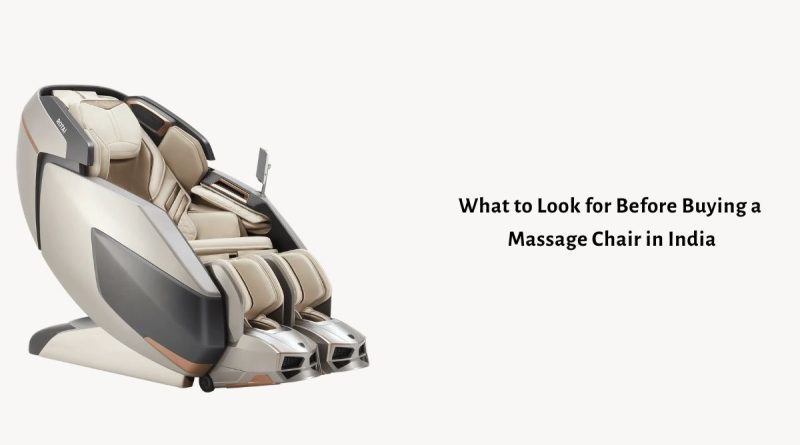
What to Look for Before Buying a Massage Chair in India
Buying a massage chair is a long-term investment in your health and comfort, not just another piece of furniture. With more brands entering the Indian market every year, the choices can feel overwhelming—different sizes, technologies, price points, and features all claiming to be “the best.” Before you swipe your card, here’s a clear, practical guide to what actually matters.
1. Understand the Type of Massage Chair You Need
Not all massage chairs are built the same, and the right one depends on your specific needs.
- Full body massage chair: If you want relief from head to toe—neck, shoulders, back, lumbar, arms, and legs—a full body massage chair is the most complete option. These typically use multiple airbag systems and rollers to target several muscle groups in a single session, making them ideal for people with widespread tension or chronic stiffness from long work hours.
- Zero gravity massage chair: This design reclines you into a position similar to what astronauts experience during launch, where your legs are elevated to roughly the same level as your heart. A zero gravity massage chair reduces spinal pressure, improves blood circulation, and lets the rollers work more effectively since your body weight is evenly distributed. If back pain or spinal decompression is your priority, this feature is non-negotiable.
- AI massage chair: The newest generation of chairs uses body-scanning sensors and artificial intelligence to map your body shape, detect tension points, and automatically adjust roller intensity and airbag pressure. An AI massage chair essentially customizes each session to your body in real time, rather than relying on a one-size-fits-all program.
Many premium chairs today combine all three—a full body, zero gravity, and AI massage chair—offering the most comprehensive experience.
2. Check the Roller Track and Coverage
The track (or rail) that the rollers move along determines how much of your body gets massaged. Look for:
- L-track: Extends from the neck down through the back and into the glutes/thighs, offering deeper, more continuous coverage.
- S-track: Follows the natural S-curve of the spine, offering better ergonomic contact for the neck and lower back.
- 4D rollers: These move not just up-down and side-to-side, but also in and out, mimicking a human masseuse’s hand pressure far more realistically than basic 2D or 3D rollers.
3. Airbag Count and Placement
Airbags are what compress your arms, calves, feet, hips, and shoulders. More airbags generally mean more targeted pressure and a more thorough massage. Check how many airbags the chair has and where they’re placed—foot and calf airbags are especially important if you’re on your feet all day or dealing with poor circulation.
4. Massage Techniques Offered
A good massage chair should replicate real massage therapy styles, such as :
- Kneading
- Tapping
- Shiatsu
- Rolling
- Air compression
- Heat therapy (especially useful for lower back pain and muscle stiffness)
The more techniques a chair offers, the more versatile it is for different needs—relaxation one day, deep tissue relief the next.
5. Body Scanning and Customization
This ties closely with AI massage chair technology. Look for chairs with automatic body scanning, which measures your height, shoulder width, and back curvature to adjust roller positioning precisely. Without this, taller or shorter users often find the massage missing key pressure points.
6. Size and Space Requirements
Indian homes and apartments often have space constraints, so measure before you buy. Zero gravity massage chairs need extra clearance when reclined—check both the footprint and the “wall clearance” or “zero wall” requirement, which tells you how much space is needed behind the chair for full recline.
7. Build Quality and Materials
Check the upholstery (PU leather is common and easier to maintain than fabric in India’s climate), frame material, and motor durability. A chair that will be used daily should have a sturdy steel frame and high-density foam padding that doesn’t sag over time.
8. Noise Level
Motors and rollers generate some noise, but excessive rattling or grinding is a red flag for poor build quality. If possible, test the chair in person or check verified customer reviews mentioning noise levels.
9. Warranty and After-Sales Service
This is critical in India, where service centers can be sparse outside major cities. Look for:
- Minimum 1-2 year warranty on parts and labor
- Availability of local service centers or technicians
- Easy access to spare parts (motors, airbags, remote controls)
Brands like ROTAI have built a reputation in the Indian market for combining functional massage technology with accessible after-sales support, which is worth factoring in alongside the chair’s features.
10. Price vs. Features
Massage chairs in India range from budget models under ₹50,000 to premium AI-powered, zero gravity, full body massage chairs costing several lakhs. Rather than chasing the cheapest option, compare:
- Number of airbags and rollers
- Track length (L-track vs S-track)
- Presence of AI body scanning
- Zero gravity positions (some chairs offer multiple recline angles)
- Warranty terms
A mid-range chair with solid fundamentals often outperforms an expensive chair with gimmicky extras.
11. Try Before You Buy (If Possible)
Photos and specs only tell half the story. If there’s a showroom or demo unit near you, test the chair for at least 10-15 minutes to check comfort, roller pressure, and seat width. If buying online, check the return/trial policy—many Indian brands now offer 7-15 day trial periods.
Quick Checklist Before You Buy
- Full body coverage (neck to feet)
- Zero gravity recline option
- AI body scanning for customization
- 4D rollers and multiple massage techniques
- Adequate airbag count and placement
- Space fits your room (including recline clearance)
- Solid warranty and local service support
- Verified reviews on durability and noise
Final Thoughts
A massage chair is meant to be a daily wellness tool, not a novelty that gathers dust after a month. Prioritize the fundamentals—coverage, adjustability, and build quality—over flashy marketing. Whether you choose a full body massage chair, a zero gravity massage chair, or a smart AI massage chair, matching the features to your actual physical needs (back pain, poor circulation, stress relief) will make the investment worthwhile for years to come.
