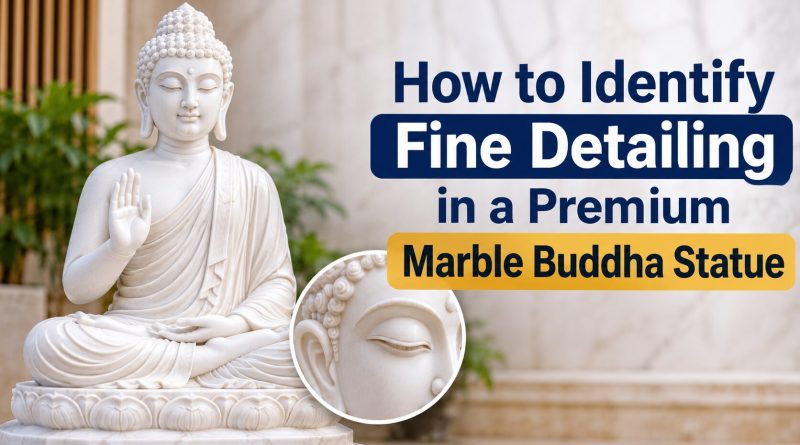
How to Identify Fine Detailing in a Premium Marble Buddha Statue
A marble Buddha statue is more than a decorative sculpture. It represents peace, wisdom, meditation, and artistic craftsmanship. Whether placed in a home, garden, meditation space, or spiritual area, the quality of a Buddha statue depends on several factors, including marble selection, carving precision, facial expressions, body proportions, and surface finishing.
However, identifying a premium-quality marble statue can be challenging, especially when different designs and finishes are available in the market. Small details such as the shape of the eyes, finger positioning, clothing patterns, and carving depth can make a significant difference in the overall appearance.
A carefully crafted White Marble Buddha Statue reflects the artisan’s attention to detail and ability to transform natural stone into a meaningful work of art. Understanding these craftsmanship elements can help buyers select a statue that offers both visual appeal and long-lasting quality.
1. Examine the Quality of Marble Used
The first step in identifying a premium marble Buddha statue is examining the quality of the stone. Natural marble is available in different varieties, textures, and shades. Its appearance and physical characteristics influence the final sculpture.
High-quality marble generally has a consistent structure, a suitable density, and a smooth surface. Buyers should carefully inspect the stone for visible cracks, unwanted fractures, and poorly repaired areas.
White marble is particularly popular for Buddha sculptures because its natural appearance highlights the fine carving details. A well-selected stone also provides artisans with a suitable surface for creating delicate facial features and intricate patterns.
When selecting a White Marble Buddha Statue, consider the natural colour, surface consistency, and overall stone quality rather than judging the product only by its photographs.
2. Check Facial Expressions and Carving Precision
The facial expression is one of the most important elements of a Buddha statue. A peaceful and balanced expression requires considerable skill and precision from the artisan.
Pay attention to the following facial features:
- Eyes: The eyes should have a balanced shape and a calm appearance.
- Nose: The nose should be proportionate to the overall facial structure.
- Lips: Carefully carved lips should appear symmetrical and naturally defined.
- Forehead: The forehead should have a smooth finish without uneven carving.
- Ears: Both ears should have balanced proportions and properly defined shapes.
Even small differences in facial detailing can affect the overall appearance of the sculpture. Skilled artisans carefully maintain symmetry while preserving the traditional artistic characteristics of Buddha sculptures.
3. Observe the Buddha’s Posture and Body Proportions
Buddha statues are created in different postures, each representing a particular aspect of Buddhist tradition. Common designs include sitting Buddha, standing Buddha, reclining Buddha, and meditation Buddha.
The posture should look natural and balanced. The relationship between the head, shoulders, arms, legs, and torso plays an important role in the statue’s appearance.
For example, a sitting Buddha statue should have properly aligned legs and a balanced upper body. Similarly, a standing Buddha sculpture should maintain natural body proportions and a stable overall structure.
When purchasing a Marble Buddha Statue for Home, consider its posture, dimensions, and available space. The statue should complement its surroundings without appearing disproportionate to the area.
4. Look for Detailed Hand Positions and Mudras
Hand positioning is another important feature of Buddha sculptures. Different hand gestures, commonly known as mudras, represent different symbolic meanings in Buddhist art.
Some commonly recognised mudras include:
- Dhyana Mudra: Represents meditation and concentration, generally shown with both hands resting in the lap.
- Abhaya Mudra: Represents protection and fearlessness, usually shown with one hand raised.
- Bhumisparsha Mudra: Represents enlightenment, with one hand reaching towards the ground.
- Dharmachakra Mudra: Symbolises the teaching of Dharma and is associated with the turning of the wheel of knowledge.
A premium sculpture should display properly shaped fingers, balanced hand proportions, and clearly defined gestures. Fingers should not look unusually thick, uneven, or poorly connected.
These details require patience and specialised carving techniques, particularly when artisans work with natural marble.
5. Inspect the Robe and Decorative Patterns
The robe is another feature that helps distinguish ordinary marble sculptures from finely detailed artworks. Traditional Buddha statues often include flowing robes with carefully carved folds and natural-looking fabric patterns.
Examine how the robe follows the body’s shape. The folds should appear smooth, balanced, and consistent rather than looking rough or randomly carved.
Some important details to check include:
- Natural-looking fabric folds.
- Consistent carving depth.
- Smooth transitions around the shoulders and arms.
- Properly defined robe edges.
- Balanced decorative patterns.
Fine robe detailing demonstrates the artisan’s understanding of sculpture design and their ability to work with different depths and textures.
6. Evaluate Surface Finishing and Polishing
Surface finishing has a major influence on the final appearance of a marble Buddha statue. After the carving process, artisans use different tools and polishing techniques to improve the stone’s smoothness.
A properly finished statue should have an even surface without excessive rough patches, visible tool marks, or unwanted scratches.
However, every statue does not need to have a highly glossy finish. Some buyers prefer a natural matte appearance because it highlights the traditional character of marble carving.
The polishing method should match the sculpture’s design and intended placement. Detailed areas such as fingers, facial features, and robe folds also require careful finishing to preserve their original shapes.
7. Check the Base and Overall Structural Stability
The base of a marble Buddha statue provides support and contributes to its overall appearance. A poorly designed base can affect the balance and stability of the sculpture.
Before purchasing, examine whether the base is properly aligned with the statue. It should have sufficient thickness and a suitable design to support the sculpture’s weight.
Also check for visible cracks, damaged corners, uneven surfaces, and poorly finished edges. For larger statues, structural stability becomes particularly important because of the weight of natural marble.
A properly designed base ensures that the sculpture remains stable when installed on an appropriate surface.
8. Understand the Importance of Skilled Marble Carving
Marble carving is a specialised craft that requires experience, patience, and knowledge of stone properties. Artisans begin by selecting suitable marble blocks and preparing them according to the required statue design.
The basic carving process generally includes:
- Stone selection: Choosing marble according to the required size, colour, and design.
- Initial shaping: Removing excess stone to create the basic structure.
- Detailed carving: Developing facial features, body proportions, hand positions, and clothing patterns.
- Surface refinement: Smoothing the carved areas and correcting minor imperfections.
- Polishing: Giving the sculpture its desired surface finish.
- Final inspection: Checking the statue for finishing quality, balance, and visible defects.
An experienced Marble Murti Manufacturer understands how to maintain the artistic details while working with natural stone. Skilled craftsmanship also helps ensure that the final sculpture follows the intended design and proportions.
9. Consider Size, Design, and Customisation Options
Apart from craftsmanship, buyers should consider the statue’s size and design before making a purchase. Marble Buddha statues are available in different dimensions, from small tabletop sculptures to large installations.
The right size depends on the available space, placement requirements, and personal preferences.
Customisation may also be useful when buyers require specific facial expressions, postures, dimensions, or decorative elements. Some manufacturers provide customised designs based on customer requirements.
Before placing an order, discuss the required dimensions, marble variety, finishing preferences, transportation arrangements, and installation requirements with the manufacturer.
10. Why Choosing the Right Manufacturer Matters
The quality of a marble statue depends not only on the raw material but also on the experience and craftsmanship involved in its production.
A reliable manufacturer should provide clear information about the marble variety, carving process, available designs, and customisation options. Buyers should also review actual product photographs to understand the finishing and detailing.
An established Marble Murti Manufacturer can help customers select suitable designs, sizes, and marble options according to their requirements.
It is also important to consider safe packaging and transportation, particularly when purchasing large marble sculptures. Since marble statues are heavy and can be damaged during handling, proper protective packaging is essential for safe delivery.
Conclusion
Identifying a premium marble Buddha statue requires attention to several craftsmanship details. Marble quality, facial expressions, body proportions, hand gestures, robe patterns, surface polishing, and structural stability all contribute to the final appearance of the sculpture.
By examining these features carefully, buyers can make better purchasing decisions and select a statue that reflects traditional artistry and quality workmanship. Whether choosing a decorative sculpture or a spiritual centrepiece, understanding the carving process helps in recognising the value of skilled marble craftsmanship.
Frequently Asked Questions (FAQs)
- How can I identify a high-quality marble Buddha statue?
Check the marble quality, facial expressions, body proportions, hand detailing, robe patterns, surface finishing, and structural stability before purchasing.
- Which marble is commonly used for Buddha statues?
White marble is commonly used because of its natural appearance and suitability for detailed carving. The specific variety depends on the design and manufacturing requirements.
- Why are facial expressions important in Buddha statues?
Facial expressions contribute significantly to the sculpture’s overall appearance. Balanced eyes, lips, nose, and facial proportions help create a peaceful expression.
- What are the common Buddha statue postures?
Common postures include sitting, standing, reclining, and meditation positions. Each design has its own artistic and traditional significance.
- How do I choose a Marble Buddha Statue for Home?
Consider the available space, statue dimensions, posture, marble quality, and finishing. Choose a design that complements the intended placement area.