Exploring the Craft Behind Durga Marble Statues with Lion Sculptures
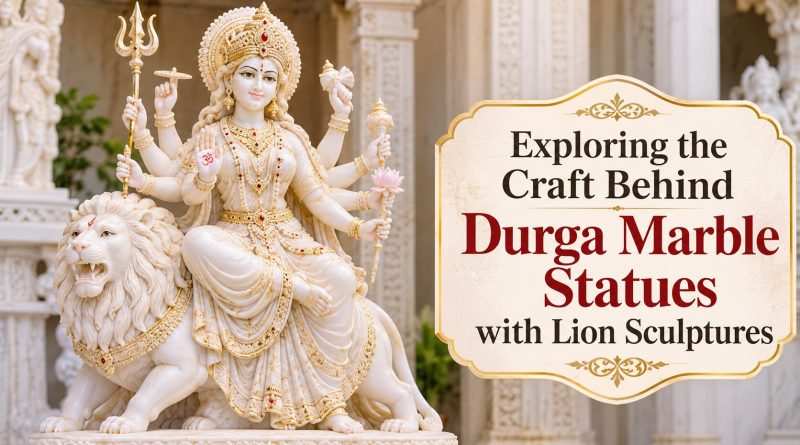
A Goddess Durga sculpture represents strength, courage, protection, and divine power. In traditional Indian art, Goddess Durga is often depicted riding a lion, which symbolises bravery and the victory of good over evil. Creating such a sculpture requires more than shaping a piece of marble. It involves careful stone selection, artistic planning, detailed carving, and skilled finishing.
A beautifully crafted Durga Marble Statue reflects the dedication of artisans who transform natural stone into an expressive religious sculpture. From the goddess’s facial features and multiple arms to the lion’s posture and decorative ornaments, every element contributes to the statue’s overall appearance.
Understanding the craftsmanship behind these sculptures helps buyers recognise quality, appreciate traditional artistry, and choose a design suitable for a home temple or larger religious installation.
1. Selecting the Right Marble for the Sculpture
Marble selection is one of the first and most important stages of statue making. The quality, texture, colour, and structure of the stone influence the final appearance and carving possibilities.
White marble is widely preferred for religious sculptures because it offers a clean, elegant appearance. Its natural surface also allows artisans to create detailed features, including facial expressions, jewellery, clothing patterns, and decorative elements.
Before carving begins, artisans examine the marble block for visible cracks, uneven textures, and structural weaknesses. Selecting a suitable stone is particularly important for sculptures with multiple arms, weapons, and detailed lion figures because these elements require careful shaping.
The marble should be appropriate for the statue’s intended size and design. Larger sculptures may require stronger and carefully selected stone blocks to support their overall structure.
2. Creating the Goddess Durga’s Facial Expressions
The face is among the most noticeable features of a Goddess Durga sculpture. Her expression generally combines calmness, confidence, and strength, reflecting her protective and powerful nature.
Artisans pay close attention to several facial details:
- Eyes: The eyes should have balanced shapes and a clearly defined appearance.
- Nose: The nose should be proportionate to the face.
- Lips: Carefully shaped lips help create a natural expression.
- Forehead: Smooth carving and properly defined features improve facial balance.
- Ears: Both ears should have consistent proportions and detailed contours.
Maintaining facial symmetry requires patience and experience. Even small differences in the placement of facial features can affect the sculpture’s overall expression.
A well-carved Durga face should look composed and graceful rather than overly sharp or uneven.
3. Understanding the Lion’s Role in Durga Sculptures
The lion is an important part of traditional Goddess Durga imagery. It represents courage, authority, strength, and the ability to overcome negative forces.
Carving the lion requires a different set of artistic skills from shaping the goddess’s figure. Artisans must carefully develop its facial structure, body proportions, mane, legs, and overall posture.
Some important details include:
- Facial structure: The lion’s face should appear well-defined and proportionate.
- Mane detailing: Properly carved patterns create a natural appearance.
- Body posture: The body should look balanced and connected to the overall composition.
- Leg positioning: The legs should provide a stable and visually consistent structure.
- Expression: The lion’s expression should reflect strength and alertness.
The lion should complement the goddess rather than appear disconnected from the main sculpture. Its size, position, and posture must be planned according to the statue’s design.
4. The Importance of Multiple Arms and Weapon Detailing
Goddess Durga is traditionally depicted with multiple arms holding different symbolic objects and weapons. These elements represent divine powers and the ability to protect the world from evil.
Carving multiple arms is a technically demanding part of the process. Each arm must maintain proper proportions, and the positioning should look natural within the overall sculpture.
The weapons and symbolic objects also require careful detailing. Their shapes, edges, and placement should be clearly recognisable without making the sculpture appear crowded.
Artisans need to consider the distance between the arms, the direction of each hand, and the connection between the arms and the main body. These details are particularly important in larger sculptures, where every element is more visible.
5. Carving Jewellery, Clothing, and Decorative Elements
Traditional Goddess Durga sculptures often feature detailed crowns, necklaces, earrings, bangles, and decorative clothing. These elements enhance the sculpture’s visual richness and reflect the artistic traditions associated with religious marble carving.
The crown is generally one of the most detailed decorative features. It may include floral patterns, layered designs, and carefully shaped ornamental elements.
Clothing details also require attention. The folds should follow the body’s natural shape and maintain consistent carving depth. Similarly, necklaces and other ornaments should appear properly positioned rather than looking randomly attached.
When evaluating a Durga marble murti, buyers should examine the finishing of the crown, jewellery, clothing patterns, and decorative borders. These details can provide a useful indication of the artisan’s carving skills and attention to precision.
6. Maintaining Proper Proportions and Composition
A well-designed sculpture requires a balanced relationship between all its elements. The goddess, lion, arms, ornaments, and base should form a visually consistent composition.
For example, the lion should not appear disproportionately small or large compared with the goddess. Similarly, the goddess’s head, shoulders, torso, and legs should maintain suitable proportions.
The positioning of the weapons and decorative elements also affects the sculpture’s overall balance.
Artisans generally plan the basic structure before beginning detailed carving. This helps them maintain the intended design throughout the manufacturing process.
Proper proportions are especially important for large temple installations because the sculpture may be viewed from different distances and angles.
7. Understanding the Marble Carving and Finishing Process
Creating a detailed religious marble sculpture involves several stages. Each stage contributes to the final quality and appearance.
Stone preparation: The selected marble block is inspected and prepared according to the required dimensions.
Initial shaping: Excess stone is removed to develop the basic outline of the goddess and lion.
Detailed carving: Artisans shape the facial features, arms, weapons, ornaments, clothing, and lion structure.
Surface refinement: Carved areas are carefully smoothed to improve the overall finish.
Polishing: The marble receives a suitable finish according to the design and customer requirements.
Final inspection: The completed sculpture is checked for visible defects, uneven surfaces, structural concerns, and finishing quality.
A skilled artisan must understand how natural marble responds to carving tools. Excessive pressure or incorrect techniques can damage delicate sections, particularly around fingers, ornaments, and facial features.
8. Choosing the Right Size and Design
The size of a Goddess Durga sculpture should match its intended placement. Small sculptures may be suitable for home temples, while larger designs are often selected for temples, religious institutions, and spacious devotional areas.
Before purchasing, consider the following factors:
- Available installation space.
- Required height, width, and depth.
- Traditional or customised design preferences.
- Lion posture and overall sculpture composition.
- Marble colour and surface finish.
- Transportation and installation requirements.
A Durga Marble Statue should be selected according to its placement, dimensions, and design requirements. Buyers should also check whether the statue can be customised to suit a particular temple layout or architectural setting.
9. Why Skilled Manufacturing Matters
The final quality of a marble sculpture depends on the experience of the artisans and the manufacturing process. Detailed religious sculptures require knowledge of traditional designs, stone properties, carving methods, and finishing techniques.
An experienced Marble Murti Manufacturer understands how to maintain the proportions of the goddess and lion while creating intricate decorative details. The manufacturer should also be able to explain the available marble varieties, sizes, designs, and customisation possibilities.
Before placing an order, buyers should review actual product photographs and discuss important requirements such as dimensions, finishing, packaging, delivery, and installation.
Safe transportation is another important consideration. Marble sculptures are heavy and may contain delicate carved sections. Proper protective packaging and careful handling help reduce the risk of damage during delivery.
10. Appreciating Traditional Artistry in Durga Marble Sculptures
Traditional marble sculpture making combines artistic knowledge with practical craftsmanship. Every stage, from selecting the stone to refining the smallest decorative feature, contributes to the final result.
The goddess’s expression, the lion’s posture, the positioning of weapons, and the detailed ornaments all work together to communicate the sculpture’s traditional significance.
A carefully crafted sculpture is not judged only by its size or decorative appearance. Its overall balance, carving precision, marble quality, and finishing are equally important.
Conclusion
Creating a Goddess Durga sculpture with a lion involves several specialised carving techniques and careful artistic planning. Marble selection, facial expressions, lion detailing, multiple arms, weapons, jewellery, and body proportions all influence the final appearance.
By understanding these craftsmanship elements, buyers can better evaluate the quality of a marble sculpture before making a purchase. Choosing experienced artisans and suitable marble helps ensure that the finished artwork reflects traditional design, careful detailing, and lasting visual appeal.
Frequently Asked Questions (FAQs)
- Why is the lion included in Goddess Durga marble sculptures?
The lion symbolises courage, strength, authority, and the power to overcome evil. It is traditionally depicted as Goddess Durga’s vehicle.
- Which marble is commonly used for Durga statues?
White marble is commonly used because of its elegant appearance and suitability for detailed carving. The exact variety depends on the design and manufacturing requirements.
- What details should I check before buying a Durga marble murti?
Examine the facial expression, lion carving, hand positioning, weapons, jewellery, clothing patterns, marble quality, and surface finishing.
- Can Durga marble statues be customised?
Yes. Depending on the manufacturer, buyers may request specific dimensions, postures, decorative details, and finishing options.
- Why is lion detailing important in a Durga statue?
The lion is an important part of the sculpture’s traditional composition. Its facial features, mane, body proportions, and posture contribute to the overall artistic balance.
- How can I identify a skilled marble murti manufacturer?
Review actual product photographs, examine carving quality, ask about marble varieties, and discuss customisation, packaging, and delivery arrangements before placing an order.