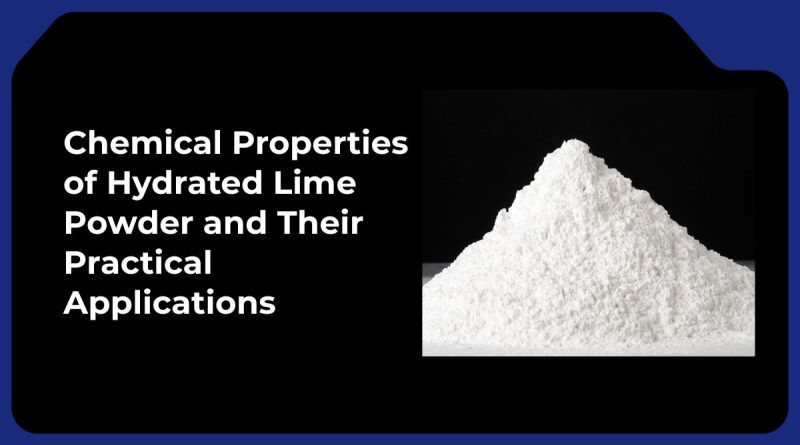
Chemical Properties of Hydrated Lime Powder and Their Practical Applications
Hydrated lime is one of the most versatile and widely used chemical compounds in various industries, from construction to environmental management. Known for its high reactivity and alkaline nature, hydrated lime powder plays a crucial role in improving processes, enhancing material performance, and ensuring safety across applications.
In this blog, we will explore the chemical properties of hydrated lime, understand how these properties influence its behavior, and examine its practical applications in real-world scenarios.
What is Hydrated Lime?
Hydrated lime, chemically known as calcium hydroxide (Ca(OH)₂), is produced by adding water to quicklime (calcium oxide). This process is called slaking and results in a fine, dry powder with strong alkaline properties.
Industries rely on hydrated lime powder for its purity, consistency, and ability to react efficiently with various substances.
Key Chemical Properties of Hydrated Lime
Understanding the chemical nature of hydrated lime helps explain why it is so widely used. Below are the primary chemical properties that define its behavior:
1. Strong Alkalinity (High pH)
Hydrated lime is highly alkaline, with a pH value typically around 12.4. This strong alkalinity allows it to neutralize acids effectively.
Why it matters:
This property makes hydrated lime ideal for applications like water treatment, soil stabilization, and waste neutralization.
2. Reactivity with Carbon Dioxide (Carbonation)
One of the most important reactions of hydrated lime is its ability to react with carbon dioxide (CO₂) from the air to form calcium carbonate (CaCO₃).
Chemical Reaction:
Ca(OH)₂ + CO₂ → CaCO₃ + H₂O
Why it matters:
This carbonation process is essential in construction, as it helps materials harden and gain strength over time.
3. Low Solubility in Water
Hydrated lime is only slightly soluble in water, forming a solution known as limewater.
Why it matters:
This controlled solubility ensures gradual chemical reactions, making it suitable for long-term applications such as water purification and environmental remediation.
4. Thermal Stability
Hydrated lime remains stable at normal temperatures but decomposes into calcium oxide and water when exposed to high heat.
Why it matters:
This property allows it to be used in processes involving heat without losing its effectiveness under standard conditions.
5. Antimicrobial Properties
Due to its high pH, hydrated lime creates an environment that is hostile to bacteria, fungi, and pathogens.
Why it matters:
This makes it valuable in sanitation, agriculture, and waste management.
Practical Applications of Hydrated Lime
The chemical properties of hydrated lime translate into a wide range of practical uses across industries. Let’s explore some of the most important applications:
1. Water and Wastewater Treatment
Hydrated lime is extensively used to treat drinking water and industrial wastewater. It helps in:
- Removing impurities
- Neutralizing acidic water
- Precipitating heavy metals
- Reducing turbidity
Municipal treatment plants often depend on a reliable hydrated lime supplier to ensure consistent quality and performance.
2. Construction and Building Materials
In construction, hydrated lime is used in:
- Mortars and plasters
- Soil stabilization
- Whitewashing
- Cement production
The carbonation property allows building materials to become stronger and more durable over time. Builders prefer sourcing from a trusted hydrated lime manufacturer to maintain structural quality.
3. Environmental Protection
Hydrated lime plays a key role in environmental management, especially in:
- Flue gas treatment (removal of sulfur dioxide)
- Acid mine drainage treatment
- Soil remediation
Its ability to neutralize harmful substances makes it an eco-friendly solution for pollution control.
4. Agriculture and Soil Improvement
Farmers use hydrated lime to improve soil quality by:
- Reducing soil acidity
- Enhancing nutrient availability
- Improving crop yield
By balancing soil pH, hydrated lime ensures healthier plant growth and better agricultural productivity.
5. Industrial Applications
Hydrated lime is widely used in industries such as:
- Steel manufacturing (removal of impurities)
- Sugar refining (clarification process)
- Paper production
- Chemical processing
Its reactivity and purity make it a reliable compound for industrial processes.
6. Sanitation and Waste Management
Thanks to its antimicrobial properties, hydrated lime is used in:
- Treating sewage sludge
- Controlling odors
- Disinfecting waste
It helps create safer and cleaner environments, especially in urban and industrial areas.
Advantages of Using Hydrated Lime
The popularity of hydrated lime is driven by several advantages:
- Cost-effective: Widely available and economical
- Eco-friendly: Reduces environmental pollution
- Multi-purpose: Suitable for diverse applications
- Safe handling: Stable under normal conditions
- High efficiency: Delivers consistent results
These benefits make it a preferred choice across industries.
Safety and Handling Considerations
While hydrated lime is highly useful, it must be handled carefully:
- Avoid direct contact with skin and eyes
- Use protective equipment (gloves, masks)
- Store in dry conditions to prevent moisture absorption
Proper handling ensures both safety and product effectiveness.
Conclusion
Hydrated lime is a powerful and versatile compound whose chemical properties—such as high alkalinity, controlled solubility, and reactivity—make it indispensable across industries. From water treatment and construction to agriculture and environmental protection, its applications are both diverse and essential.
Understanding the science behind hydrated lime not only helps industries optimize its use but also highlights its importance in sustainable development. Whether you are in construction, agriculture, or industrial processing, incorporating high-quality lime can significantly improve efficiency and outcomes.
As industries continue to evolve, the demand for reliable and high-performance materials like hydrated lime will only grow, reinforcing its position as a cornerstone of modern applications.

