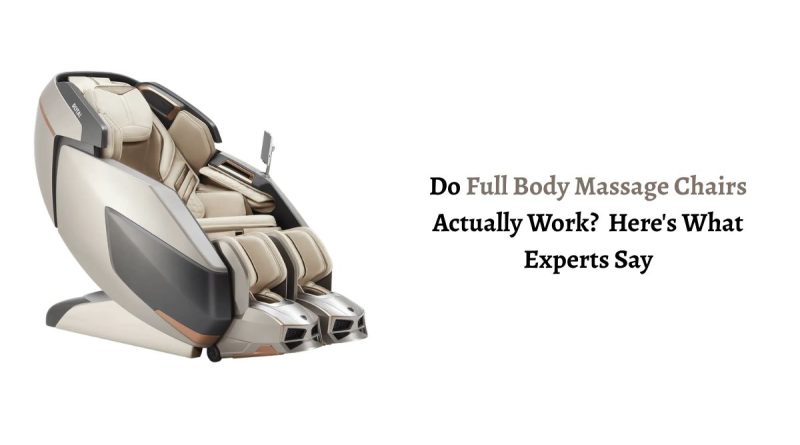
Do Full Body Massage Chairs Actually Work? Here’s What Experts Say
If you’ve ever stood in a showroom, sunk into a full body massage chair, and felt every knot in your back melt away, you’ve probably asked yourself: is this actually doing something therapeutic, or is it just an expensive way to relax for fifteen minutes? It’s a fair question — especially when a good massage chair can cost as much as a used car.
The short answer: yes, full body massage chair work, but “work” means something specific. They’re not a replacement for medical treatment, but there’s real physiological and clinical evidence behind what they do. Here’s what physical therapists, chiropractors, and sleep researchers actually say about them.
What a Full Body Massage Chair Is Designed to Do
A modern electric massage chair isn’t just a vibrating recliner. It typically combines several mechanisms working together:
- Kneading and rolling rollers that mimic a therapist’s hands along the spine
- Air compression bags in the arms, calves, and feet that squeeze and release rhythmically
- Heat therapy to loosen tight muscles before mechanical massage begins
- Zero-gravity recline that redistributes body weight and reduces spinal pressure
- Vibration and tapping (tapotene) modes for surface-level muscle stimulation
The goal isn’t just relaxation — it’s mimicking the core techniques of manual massage therapy (kneading, tapping, rolling, and compression) using motors, airbags, and rollers instead of human hands.
What the Research Actually Shows
Physical therapists generally agree that mechanical massage delivers several measurable benefits, even if it can’t fully replicate a skilled human therapist:
- Improved circulation. The compression and rolling action helps push blood through tissue, which can reduce swelling in the legs and feet — something particularly useful for people who sit or stand for long hours.
- Reduced muscle tension. Kneading rollers applied consistently to the same trigger points can help release tight fascia and reduce the perception of stiffness, especially in the lower back and shoulders.
- Lower cortisol and stress response. Several small studies on massage therapy (manual and mechanical) have shown reductions in cortisol levels and increases in serotonin and dopamine after a session — which is part of why a massage chair session can genuinely improve mood, not just muscle feel.
- Better sleep onset. The zero-gravity position combined with heat and gentle vibration has been linked to easier sleep onset for people with mild insomnia or restlessness, largely because it lowers heart rate and encourages parasympathetic (“rest and digest”) activation.
Where experts are more cautious: a massage chair cannot diagnose an injury, adjust a joint, or replace physical therapy for a herniated disc, sciatica, or post-surgical rehab. It’s a maintenance and recovery tool, not a treatment for acute medical conditions.
Why AI Body Scan Technology Changes the Equation
One of the biggest complaints about older massage chairs was generic programming — a 5’2″ user and a 6’4″ user got the same roller path, which meant the rollers often missed the shoulder blades or dug into the wrong spot entirely.
This is where the AI body scan massage chair category has made a real difference. Instead of a fixed program, these chairs use infrared or 3D sensors to map your spine curvature, shoulder width, and body contour before the session starts, then adjust roller position and pressure in real time.
Experts in ergonomic design point to this as the single biggest improvement in massage chair technology over the last decade, because personalized targeting means the mechanical massage actually lands on the muscles that need it — closer to what a trained therapist would find by touch. In practice, this translates to fewer “dead zones” and less risk of the rollers pressing directly on the spine instead of the surrounding muscle.
So, Do They Actually Work? A Realistic Verdict
Here’s the honest breakdown, based on what physical therapists and chiropractors consistently say:
|
Claim |
Verdict |
|
Reduces everyday muscle tension and stiffness |
Yes — well supported |
|
Improves circulation in legs and feet |
Yes — supported by compression therapy research |
|
Lowers stress and improves mood short-term |
Yes — consistent with massage therapy studies |
|
Improves sleep quality |
Likely, especially for tension-related sleep issues |
|
Treats chronic pain conditions (herniated disc, sciatica) |
No — consult a medical professional |
| Replaces professional massage therapy entirely |
No — complements it, doesn’t replace it |
Getting the Most Out of Your Chair
If you already own or are considering a full body massage chair, experts recommend:
- Use it consistently, not occasionally. Daily 15–20 minute sessions build more lasting benefit than one long session a week.
- Combine heat with kneading modes for tight areas rather than relying on vibration alone.
- Prioritize models with body scanning if you have a partner or family member with a very different body type — it prevents mismatched roller pressure.
- Don’t skip stretching. A massage chair loosens muscles; stretching afterward helps lock in that flexibility.
Frequently Asked Questions
Is a massage chair as good as a real massage?
Not entirely. A licensed massage therapist can adapt pressure and technique in real time based on feel, which a chair can only approximate. But for daily maintenance between professional sessions, a chair offers convenience and consistency a therapist visit can’t.
How often should you use a massage chair?
Most experts suggest 15–20 minutes per session, up to once or twice daily. Longer or more frequent use isn’t necessarily better and can occasionally cause soreness similar to overworking a muscle.
Are AI body scan chairs worth the extra cost?
For households with multiple users of different heights and builds, yes — the personalized fit noticeably improves how accurately the rollers target real problem areas.
Bottom Line
A full body massage chair isn’t a gimmick, but it’s also not a miracle cure. Backed by real mechanisms — compression, kneading, heat, and increasingly, AI-driven body mapping — it offers genuine, research-supported benefits for everyday tension, circulation, and stress relief. For chronic or acute pain conditions, it’s best used alongside professional care, not instead of it.
If you’re relaxing after a long day or maintaining a healthy back between workouts, the science says: yes, it actually works.