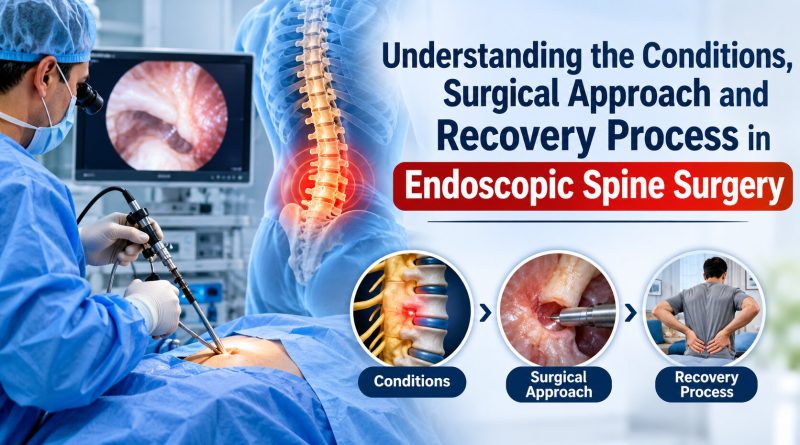
Understanding the Conditions, Surgical Approach and Recovery Process in Endoscopic Spine Surgery
Spinal problems can affect everyday activities such as walking, sitting, bending, standing, and sleeping. Conditions involving slipped discs, nerve compression, and spinal canal narrowing may cause persistent back pain, neck pain, tingling, numbness, or weakness in the arms and legs. When these symptoms do not improve with appropriate non-surgical treatment, doctors may consider surgical options depending on the underlying condition.
Endoscopic spine surgery is a minimally invasive surgical technique used to treat selected spinal disorders. It involves specialised instruments and a small camera that allows the surgeon to view the affected area and perform the required procedure through a small incision. Compared with many conventional open procedures, this approach may reduce disruption to surrounding muscles and soft tissues.
However, not every spinal condition requires surgery, and endoscopic techniques are not suitable for every patient. Understanding the conditions treated, surgical approach, patient selection, and recovery process can help individuals make informed decisions about their treatment.
1. What Is Endoscopic Spine Surgery?
Endoscopic spine surgery is a minimally invasive procedure in which a surgeon uses an endoscope, a thin instrument equipped with a camera and light source, to examine and treat specific problems affecting the spine.
The endoscope provides magnified visual guidance, allowing the surgeon to access the targeted area through a small incision. Specialised surgical instruments are used to remove or treat the tissue responsible for nerve compression or other selected spinal problems.
The procedure may be performed on different regions of the spine, depending on the patient’s diagnosis and the surgical technique being considered.
Some important characteristics include:
- A small surgical incision compared with many open procedures.
- Camera-assisted visualisation of the affected spinal structures.
- Specialised instruments for precise surgical work.
- Less disruption to surrounding muscles in appropriately selected cases.
- A recovery plan based on the patient’s condition and procedure.
The primary objective is to address the underlying spinal problem while limiting unnecessary damage to surrounding tissues.
2. Which Spinal Conditions Can Be Treated with Endoscopic Techniques?
Endoscopic spine surgery may be recommended for certain conditions that cause nerve compression, pain, or restricted movement. The suitability of the procedure depends on the location, severity, and nature of the spinal problem.
Herniated or Slipped Disc
A herniated disc occurs when the soft inner material of an intervertebral disc pushes through its outer covering. If the displaced material presses against a nearby nerve, it may cause back pain, leg pain, numbness, or weakness.
Endoscopic discectomy may be considered in selected cases to remove the portion of disc material responsible for nerve compression.
Lumbar Spinal Stenosis
Lumbar spinal stenosis refers to narrowing of the spinal canal or nerve passageways in the lower back. This narrowing can put pressure on spinal nerves and may cause pain, numbness, or weakness in the legs.
In selected patients, endoscopic decompression may help create additional space for compressed nerves.
Sciatica
Sciatica describes pain that travels along the sciatic nerve, usually from the lower back into one or both legs. It commonly occurs due to disc herniation or other conditions that irritate or compress the nerve roots.
Treatment focuses on identifying the actual cause of nerve irritation. Endoscopic surgery may be considered when an appropriate structural problem is identified and non-surgical treatment has not provided sufficient relief.
Foraminal Stenosis
The neural foramina are small openings through which spinal nerves exit the spinal column. When these openings become narrow, the nerves may become compressed.
Selected patients may benefit from endoscopic procedures that remove structures contributing to this compression.
Certain Degenerative Spine Conditions
Age-related changes in spinal discs, joints, and surrounding structures can contribute to nerve compression and discomfort. Depending on the condition, endoscopic techniques may be used to treat specific problems.
3. How Doctors Determine Whether Surgery Is Necessary
Not every patient experiencing back pain or neck pain requires an operation. Doctors generally begin with a detailed assessment to understand the source of symptoms and determine whether surgical treatment is appropriate.
The evaluation may include:
- Medical history: Understanding when symptoms started, how they have progressed, and whether previous treatments have helped.
- Physical examination: Checking muscle strength, reflexes, sensation, walking ability, and movement.
- MRI scanning: Identifying disc herniation, nerve compression, spinal canal narrowing, and other soft-tissue abnormalities.
- CT scanning: Providing detailed information about bones and certain structural abnormalities when required.
- Additional investigations: X-rays or other tests may be recommended depending on the suspected condition.
Doctors also consider the relationship between imaging findings and the patient’s symptoms. An abnormality on an MRI does not automatically mean surgery is required.
An experienced Endoscopic Spine Surgeon evaluates these findings before recommending a particular procedure. Factors such as overall health, severity of nerve compression, previous treatments, and spinal stability also influence the treatment decision.
4. How Is Endoscopic Spine Surgery Performed?
The surgical approach depends on the location of the affected disc, the type of nerve compression, and the patient’s individual diagnosis. Although techniques may differ, the procedure generally involves several stages.
Step 1: Anaesthesia and Patient Preparation
The patient is prepared for surgery, and anaesthesia is administered according to the planned procedure and medical requirements. The surgical team positions the patient to provide appropriate access to the affected spinal region.
Step 2: Making a Small Incision
The surgeon makes a small incision near the targeted spinal area. The endoscope and specialised instruments are carefully introduced through this opening.
Step 3: Visualising the Affected Area
A camera attached to the endoscope transmits magnified images to a monitor. This allows the surgeon to identify the affected structures, including compressed nerves and problematic disc material.
Step 4: Treating the Spinal Problem
Depending on the diagnosis, the surgeon may remove displaced disc material, trim selected bone or ligament tissue, or create additional space around compressed nerves.
The objective is to relieve the pressure responsible for the patient’s symptoms while preserving healthy surrounding structures as much as possible.
Step 5: Completing the Procedure
After completing the required surgical work, the instruments are removed and the incision is closed. The patient is then monitored during the initial recovery period.
5. Potential Benefits of Endoscopic Spine Surgery
Endoscopic techniques offer several potential advantages for appropriately selected patients. However, the actual benefits depend on the spinal condition, surgical technique, and individual health factors.
Some potential benefits include:
- Smaller incision: The procedure generally requires a smaller skin opening than conventional open surgery.
- Reduced muscle disruption: Accessing the targeted area through specialised instruments may limit damage to surrounding muscles.
- Less postoperative discomfort: Some patients experience less surgical-site discomfort compared with certain open procedures.
- Shorter hospital stay: Selected patients may be discharged sooner, depending on their condition and recovery.
- Earlier mobilisation: Some patients can begin walking and performing basic activities relatively early under medical supervision.
- Targeted treatment: Magnified visualisation helps the surgeon work around specific affected structures.
It is important to understand that minimally invasive surgery does not mean risk-free surgery. Complications and recovery experiences can vary from one patient to another.
6. Possible Risks and Limitations
Like other surgical procedures, endoscopic spine surgery has potential risks. Patients should understand these possibilities before making a treatment decision.
Possible complications include:
- Infection at the surgical site.
- Bleeding or blood collection.
- Nerve irritation or injury.
- Dural tear and cerebrospinal fluid leakage.
- Persistent or recurring pain.
- Incomplete relief of symptoms.
- Recurrent disc herniation.
- Need for additional surgery in certain cases.
There are also limitations regarding which conditions can be treated using endoscopic methods. Severe spinal instability, certain complex deformities, extensive compression, or conditions requiring more extensive reconstruction may need a different surgical approach.
A detailed consultation helps determine whether the expected benefits of an endoscopic procedure justify its potential risks.
7. What to Expect During the Recovery Process
Recovery after endoscopic spine surgery varies according to the procedure performed, the severity of the original condition, and the patient’s general health.
Initial Recovery
During the first few hours after surgery, the medical team monitors the patient’s comfort, movement, and neurological condition. Some patients may be encouraged to stand or walk with assistance when medically appropriate.
First Few Days
Mild discomfort around the incision area may occur. Patients receive instructions regarding wound care, medication, movement, and activities that should temporarily be avoided.
First Few Weeks
Gradual improvement in daily activities may occur. Patients should follow medical advice about walking, sitting, lifting objects, and returning to work. Heavy lifting and sudden twisting movements may need to be restricted temporarily.
Rehabilitation and Physiotherapy
Depending on the procedure and individual condition, a doctor may recommend physiotherapy or guided exercises. These activities can help improve flexibility, strength, posture, and movement.
Long-Term Recovery
Follow-up appointments help doctors assess healing, neurological improvement, and the return of normal activities. Some symptoms may take longer to improve, particularly when nerve compression has been present for an extended period.
Patients should not independently increase their activity levels or discontinue prescribed medication without medical guidance.
8. How to Choose the Right Spine Surgeon
Choosing an appropriately qualified surgeon is an important part of spinal treatment. Patients should consider the surgeon’s qualifications, neurosurgical or spine surgery experience, knowledge of minimally invasive techniques, and experience in managing the specific condition.
An Endoscopic Spine Surgeon should carefully explain the diagnosis, proposed surgical technique, expected benefits, possible complications, and alternative treatment options.
Patients searching for the Best neurosurgeon in Jaipur should also consider:
- Relevant medical qualifications and specialisation.
- Experience in treating similar spinal conditions.
- Familiarity with endoscopic and other minimally invasive techniques.
- Availability of appropriate diagnostic facilities.
- Clear communication about treatment expectations.
- Postoperative monitoring and rehabilitation support.
It is also important to understand that spine surgery and brain surgery involve different anatomical areas and surgical considerations. An Endoscopic Brain Surgeon in Jaipur focuses on selected procedures involving the brain, whereas endoscopic spine surgery addresses conditions affecting the spinal column and related nerves. Patients should consult a specialist whose expertise matches their diagnosed condition.
9. When Should You Consult a Spine Specialist?
Persistent back pain, neck pain, or pain radiating into the arms or legs should not be ignored, especially when accompanied by tingling, numbness, or muscle weakness.
Medical evaluation is particularly important when:
- Back or leg pain continues despite appropriate treatment.
- Numbness or tingling affects daily activities.
- Walking becomes difficult because of spinal symptoms.
- Pain repeatedly returns or becomes more severe.
- Muscle weakness develops in the arms or legs.
New bladder or bowel control problems, numbness around the groin or saddle area, or rapidly progressing leg weakness require urgent medical assessment.
Early diagnosis can help identify the underlying cause and determine the most appropriate treatment before symptoms become more complicated.
Conclusion
Endoscopic spine surgery is an important minimally invasive treatment option for selected spinal conditions involving disc herniation, nerve compression, and spinal canal narrowing. Its approach combines specialised instruments, camera-assisted visualisation, and targeted surgical techniques to address specific spinal problems.
Understanding the diagnosis, surgical procedure, possible risks, and recovery expectations helps patients make informed treatment decisions. Consulting an experienced specialist is essential to determine whether endoscopic surgery or another treatment approach is appropriate for an individual’s condition.
Frequently Asked Questions (FAQs)
- What conditions can be treated with endoscopic spine surgery?
Selected cases of herniated discs, lumbar spinal stenosis, foraminal stenosis, sciatica caused by structural nerve compression, and certain degenerative spine conditions may be treated using endoscopic techniques.
- Is endoscopic spine surgery a minimally invasive procedure?
Yes. It uses a small incision, an endoscopic camera, and specialised instruments to access the affected spinal area while limiting disruption to surrounding tissues.
- How long does recovery take after endoscopic spine surgery?
Recovery varies depending on the procedure, patient’s health, and severity of the spinal condition. Some patients resume light activities relatively early, while complete recovery may take several weeks or longer.
- Is endoscopic spine surgery suitable for every patient?
No. Suitability depends on the type of spinal condition, location of nerve compression, spinal stability, medical history, and response to previous treatments.
- What are the possible risks of endoscopic spine surgery?
Possible risks include infection, bleeding, nerve injury, dural tear, persistent pain, recurrent disc herniation, and incomplete symptom relief.
Source :
https://www.neurosurgeonsandeep.com/blog/endoscopic-spine-surgery-guide