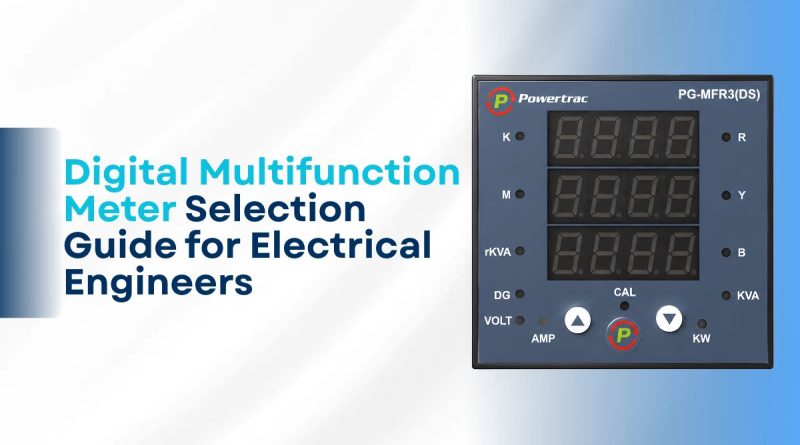
Digital Multifunction Meter Selection Guide for Electrical Engineers
Electrical measurement is an essential part of modern power distribution, industrial automation, and energy management. Electrical engineers need reliable instruments to monitor voltage, current, power, frequency, and other electrical parameters to maintain system performance and identify potential issues. Choosing the right measuring instrument helps improve operational visibility, simplify panel monitoring, and support effective maintenance.
A Digital Multifunction Meter is widely used in industrial plants, commercial buildings, electrical control panels, and power distribution systems because it can measure multiple electrical parameters through a single device. However, selecting the right meter requires careful consideration of measurement requirements, system compatibility, accuracy, installation conditions, and communication features.
This guide explains the key factors electrical engineers should evaluate when choosing a multifunction meter for their applications.
1. Understand the Purpose of a Digital Multifunction Meter
A multifunction meter is an electrical measuring instrument designed to monitor several parameters within one device. Instead of installing separate instruments for voltage, current, frequency, and power, engineers can use one meter to access multiple readings.
A Digital Multifunction Meter commonly measures:
- Voltage across electrical phases
- Current flowing through electrical circuits
- Active power and apparent power
- Power factor
- Supply frequency
- Electrical energy consumption
- Reactive power, depending on the model
These measurements help engineers understand electrical system performance and identify abnormal operating conditions. For example, monitoring voltage and current can help detect unusual variations, while power factor readings provide useful information about how effectively electrical power is being utilized.
Before selecting a meter, engineers should identify which parameters are essential for their application. A basic installation may require voltage and current monitoring, whereas a large industrial facility may need energy measurement, demand monitoring, and communication capabilities.
2. Identify the Electrical System Requirements
The first step in selecting a meter is understanding the electrical system where it will be installed. Different applications have different measurement requirements, and choosing an incompatible instrument may result in inaccurate readings or improper operation.
Electrical engineers should consider the following factors:
Single-phase or three-phase supply: Determine whether the meter supports the electrical configuration used in the installation. Three-phase industrial systems generally require measurement of phase voltages, line voltages, phase currents, and total power.
Voltage rating: Confirm that the meter’s specified input range matches the system voltage. If direct voltage measurement is unsuitable, compatible voltage transformers may be required.
Current measurement: Check whether the meter accepts direct current inputs or requires external current transformers (CTs). Larger industrial installations commonly use CTs to scale high currents to the meter’s specified input range.
Frequency: Verify compatibility with the system’s operating frequency, such as 50 Hz or 60 Hz.
Engineers should always compare the manufacturer’s specifications with actual installation requirements before purchasing an instrument.
3. Evaluate Measurement Accuracy
Accuracy is one of the most important considerations when selecting electrical measurement equipment. A meter used for general operational monitoring may have different accuracy requirements from an instrument used for energy analysis, billing-related measurements, or detailed power-quality assessments.
Measurement accuracy can vary depending on the parameter being measured. Voltage, current, active power, and energy measurements may have separate accuracy specifications.
When comparing meters, engineers should examine:
- Accuracy class for each relevant parameter
- Measurement range and resolution
- Specified operating temperature
- Performance under changing electrical loads
- Applicable testing standards and certifications
A higher accuracy specification can be beneficial where precise measurements are necessary, but it should not be the only selection criterion. Installation quality, correct CT ratios, wiring, and appropriate configuration also influence measurement results.
For critical applications, engineers should review the technical datasheet and verify whether the instrument meets the project’s measurement and compliance requirements.
4. Compare Display Types and Readability
The display is the main interface between the instrument and the person monitoring the electrical system. A clear display allows technicians and engineers to interpret measurements quickly, especially in busy industrial environments.
A Digital Panel Meter typically displays numerical readings on an electronic screen. Depending on the model, it may support multiple measurement screens, selectable parameters, programmable settings, and status indicators.
When evaluating a display, consider:
- Readability under the lighting conditions of the installation
- Character size and screen visibility
- Ease of navigating between measured parameters
- Availability of phase-wise readings
- Clear indication of units and measurement values
- Accessibility of configuration menus
Some meters provide automatic scrolling between parameters, while others allow users to select readings manually. The preferred option depends on how frequently the equipment will be monitored and who will operate it.
Engineers should also check the panel cutout dimensions, mounting depth, and front-panel protection rating to ensure the instrument fits the intended enclosure.
5. Understand the Difference Between Digital and Analog Meters
Digital and analog instruments serve related measurement purposes, but their operating methods and practical features differ.
An Analog Amp volt Meter for Panel typically uses a pointer and graduated scale to indicate current or voltage. These instruments can be useful where simple, continuous visual indication is sufficient and operators are familiar with reading a scale.
Digital meters display numerical measurements, which can make exact values easier to read. Multifunction models may also combine several measurement capabilities and offer communication options.
The key differences include:
- Display: Analog meters use a pointer and scale, while digital meters show numerical values.
- Measurement range: Both types have specified ranges, which must match the application.
- Multiple parameters: Multifunction digital models can monitor several electrical quantities in one device.
- Remote monitoring: Digital models with suitable communication interfaces can transmit readings to compatible monitoring systems.
- Simplicity: Basic analog meters can be suitable for straightforward local indication.
The best choice depends on the application’s requirements, budget, monitoring needs, and existing panel design. Some electrical panels use both digital multifunction instruments and analog indicators where separate local readings are useful.
6. Check Communication and Integration Features
Modern electrical installations increasingly use centralized monitoring systems to collect operational data from different panels and devices. Communication capabilities can therefore be an important selection factor.
Depending on the model, a multifunction meter may support RS-485 communication, Modbus RTU, Ethernet, or other industrial communication protocols.
These features can help integrate measurements with building management systems, supervisory control and data acquisition (SCADA) systems, energy monitoring platforms, and industrial automation equipment.
Before choosing a meter, engineers should confirm:
- Supported communication protocols
- Available communication ports
- Compatibility with the existing monitoring software
- Addressing and configuration options
- Data update intervals and register documentation
- Cybersecurity and network requirements for connected devices
7. Consider Installation and Wiring Requirements
Correct installation is essential for reliable measurement and safe operation. Even a high-quality instrument may produce incorrect readings if the wiring, phase sequence, or configuration is incorrect.
Before installation, engineers should review the manufacturer’s wiring diagram and installation instructions. They should also verify the required auxiliary supply, voltage inputs, current inputs, CT connections, and earthing arrangements where applicable.
Important checks include:
- Correct phase identification and wiring
- Suitable CT ratio and polarity
- Correct voltage and current input connections
- Appropriate fuse and protective-device arrangements
- Proper panel cutout and mounting
- Compliance with applicable electrical safety procedures
Current-transformer secondary circuits require particular care. They must never be left open-circuited while the primary conductor is energized; approved shorting and isolation procedures should be followed by qualified personnel.
After installation, the meter should be configured according to the system requirements. Engineers should verify phase readings, current direction, power values, and communication settings before placing the equipment into routine service.
8. Assess Data Logging and Energy Monitoring Features
Some multifunction meters provide maximum-demand monitoring, energy counters, event records, or data logging. These functions can be valuable for facilities that want to understand consumption patterns and improve energy management.
For example, demand readings can help identify periods when electrical loads reach high levels. Energy counters can support consumption tracking, while historical records—where available—can assist with reviewing operating patterns.
However, engineers should distinguish between basic electrical measurement and advanced power-quality analysis. A standard multifunction meter may not provide detailed harmonic analysis, transient capture, waveform recording, or comprehensive disturbance monitoring.
If the application requires these functions, the relevant specifications should be evaluated separately.
9. Evaluate Build Quality, Protection, and Operating Conditions
Electrical panels may experience heat, dust, vibration, and electrical interference. The selected instrument should be suitable for the environment in which it will operate.
Consider the specified operating temperature, humidity limits, front-panel ingress protection, electromagnetic compatibility, and applicable safety approvals.
Engineers should also evaluate the expected service life, availability of technical documentation, warranty terms, and support for configuration or troubleshooting.
A meter installed in a controlled commercial environment may have different requirements from one used in a demanding industrial setting. Selecting a model designed for the actual operating conditions can help reduce maintenance difficulties.
Conclusion
Selecting the right electrical measuring instrument requires a clear understanding of the application, electrical system, accuracy requirements, installation environment, and monitoring objectives. Electrical engineers should compare measurement capabilities, display readability, communication features, safety requirements, and long-term operating costs before making a decision.
A suitable Digital Multifunction Meter can provide convenient access to several electrical parameters and support effective power monitoring. For simpler applications, a digital or analog panel instrument may be sufficient, depending on the required measurements and operating conditions.
By reviewing technical datasheets carefully and following proper installation practices, engineers can select a reliable instrument that supports safe, efficient, and well-informed electrical system management.
Frequently Asked Questions
1. What is a digital multifunction meter?
A digital multifunction meter is an electrical measuring instrument that can measure multiple parameters, such as voltage, current, frequency, power, power factor, and energy, depending on the model.
2. What factors should engineers consider when selecting a multifunction meter?
Engineers should evaluate the electrical system configuration, voltage and current ratings, measurement accuracy, display readability, communication protocols, installation dimensions, environmental conditions, and budget.
3. What is the difference between a digital panel meter and a multifunction meter?
A digital panel meter is a broad category of instruments that display electrical or process measurements. A multifunction meter is designed to measure several electrical parameters in one device. Some digital panel meters measure only one parameter.
4. When should an analog amp volt meter be used in an electrical panel?
An analog amp volt meter can be suitable when simple local indication of current or voltage is required. The instrument must have an appropriate measurement range and be installed according to the manufacturer’s instructions.
5. Can a multifunction meter monitor three-phase electrical systems?
Yes. Models designed for three-phase applications can monitor parameters such as phase voltage, line voltage, current, power, and frequency. The supported measurements depend on the meter’s specifications and wiring configuration.