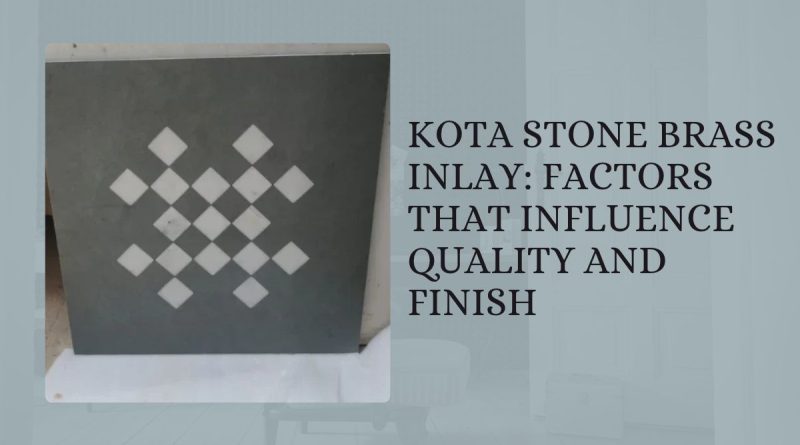
Kota Stone Brass Inlay: Factors That Influence Quality and Finish
Kota stone is widely used in residential, commercial, and architectural projects because of its durability, natural appearance, and versatility. When combined with decorative brass detailing, it can create distinctive flooring, borders, geometric patterns, and artistic surfaces. However, the final appearance depends on more than the quality of the stone itself. Material selection, design accuracy, brass quality, installation techniques, and finishing methods all influence the result.
Kota Stone Brass Inlay is a decorative flooring technique in which brass elements are incorporated into Kota stone surfaces to create attractive patterns and refined details. This combination brings together the natural texture of stone and the warm metallic appearance of brass. With careful planning and skilled workmanship, it can complement traditional architecture as well as contemporary interiors.
Understanding the factors that affect quality and finish helps property owners, architects, interior designers, and contractors make better decisions when planning an inlay project.
1. Quality and Selection of Kota Stone
The quality of the base stone is one of the most important factors influencing the final result. Kota stone is generally available in shades of greenish-blue, brown, and other natural variations, depending on the material source and selection. Its colour, surface consistency, thickness, and structural condition should be evaluated before installation.
Good-quality stone should have suitable strength for the intended application and a relatively consistent surface. Cracks, weak edges, excessive surface irregularities, and unsuitable thickness can create installation challenges. These issues may also affect the alignment of brass components and the overall appearance of the finished floor.
Before selecting the stone, consider the location where it will be installed. Flooring in high-traffic areas requires appropriate thickness, secure fixing, and a finish that suits regular use. Decorative applications in low-traffic spaces may allow more flexibility in pattern and surface treatment.
Selecting compatible stone pieces also helps create a balanced appearance across the installation.
2. Brass Quality and Material Specifications
The brass used in an inlay design plays a major role in its durability, colour, and visual appeal. Brass components may be supplied as strips, profiles, or custom-cut shapes, depending on the complexity of the pattern.
The thickness, width, composition, and finish of the brass should be selected according to the project requirements. Thin or poorly manufactured strips may bend during handling or become difficult to position accurately. Components with inconsistent dimensions can create uneven lines and affect the finished appearance.
Brass is also affected by environmental conditions. Depending on its composition and exposure, it may develop tarnishing or changes in colour over time. Therefore, it is important to understand the maintenance requirements of the selected material before installation.
For a refined finish, the brass should be compatible with the intended stone surface and installation method. The metal should sit securely within the designed grooves rather than projecting excessively above the surrounding floor.
3. Accuracy of Design and Pattern Planning
A successful inlay project begins with a well-planned design. Geometric borders, floral motifs, decorative lines, and custom patterns can all be created using brass detailing. However, complex designs require greater precision during measurement, cutting, and installation.
Design planning should consider the size of the room, the direction of movement, existing architectural features, and the placement of furniture. A large decorative pattern may work well in a spacious entrance or lobby, while a simpler border may be more appropriate for a compact room.
When planning Kota Stone Brass Inlay, designers should prepare accurate measurements and clear drawings before any cutting begins. This helps ensure that the pattern remains consistent across corners, doorways, and adjoining stone sections.
The design should also account for joints in the flooring. Poorly planned patterns may appear interrupted or misaligned when they cross joints or meet walls.
A carefully prepared layout reduces material waste, simplifies installation, and supports a more professional finish.
4. Precision in Cutting and Grooving
Accurate cutting is essential for achieving clean edges and a consistent decorative pattern. The stone must be cut or grooved according to the dimensions of the brass components. If the grooves are too wide, the brass may not remain firmly positioned. If they are too narrow, the material may be difficult to fit correctly.
Professional fabricators use suitable cutting tools and measuring equipment to maintain the required dimensions. Straight lines should remain consistent, while curves and intricate patterns require careful execution.
The depth of the groove also matters. It should accommodate the brass component and fixing material without compromising the strength of the stone. Excessively deep cuts may weaken narrow sections, whereas shallow grooves can cause the brass to sit unevenly.
Checking the dimensions before fixing the brass helps reduce errors and improves the overall appearance.
5. Installation Technique and Workmanship
Even high-quality materials can produce disappointing results when installation is not carried out correctly. Skilled workmanship is particularly important when brass details need to fit closely against stone edges and meet at precise angles.
During installation, the stone should be placed on a properly prepared base. The surface must be sufficiently level, stable, and clean to support the flooring system. Appropriate fixing materials should be selected according to the site conditions and product specifications.
The brass elements must be aligned carefully before they are secured. Excessive gaps, loose sections, uneven joints, and visible adhesive residues can reduce the quality of the finish.
The installation team should also check that adjoining stone pieces maintain a consistent level. Any significant difference in height can affect both appearance and everyday usability.
When considering Kota Stone Marble Inlay, property owners should review the fabricator’s previous work, attention to detail, and experience with decorative stone installations. Photographs of completed projects and physical samples can help assess workmanship before making a decision.
6. Surface Polishing and Final Finishing
Polishing determines how the stone reflects light and how clearly the decorative brass details stand out. Depending on the intended appearance, the stone may be finished with a polished, honed, or other suitable surface treatment.
Polishing should be performed using an appropriate process for the selected stone. Uneven polishing can create dull patches, visible marks, or inconsistent reflections. Excessive polishing may also make certain flooring surfaces more slippery, particularly when wet.
The brass requires attention during the finishing stage as well. Residual adhesive, scratches, and polishing compounds should be removed using methods compatible with the metal and stone.
A final inspection should confirm that the brass lines are clean, the stone surface is even, and the pattern looks consistent under normal lighting conditions. The selected finish should balance visual appeal with the practical requirements of the space.
7. Choice of Inlay Pattern and Design Complexity
Pattern complexity influences the time, skill, and cost required for an inlay project. Straight borders and simple geometric arrangements are generally easier to execute than intricate floral motifs or detailed custom artwork.
For residential interiors, brass borders can define room boundaries, highlight entrance areas, or create decorative features around a central flooring design. In hotels, offices, and commercial spaces, larger geometric patterns may be used to complement the architectural layout.
The best design is not necessarily the most complicated one. It should suit the available space and work harmoniously with the colour of the stone, wall finishes, lighting, and furniture.
A carefully designed Kota Stone Inlay pattern can create an elegant appearance without overwhelming the room. Samples or scaled drawings should be reviewed before fabrication so that the proportions and brass colour can be evaluated in advance.
8. Environmental Conditions and Site Preparation
The installation environment can affect the durability and appearance of the finished floor. Uneven subfloors, moisture-related problems, dust, and unsuitable fixing conditions can interfere with proper installation.
Before work begins, the contractor should assess the substrate and address any defects that may affect stability. Stone and brass components should be stored safely to prevent damage, contamination, or unnecessary exposure to moisture.
Outdoor or semi-open installations require additional attention to drainage, temperature variations, and weather exposure. The materials and fixing system should be suitable for the intended environment.
For interior projects, protecting the completed surface from construction debris, heavy impacts, and other trades is equally important. A suitable protective covering can help prevent scratches and stains while the surrounding work is completed.
9. Maintenance and Long-Term Appearance
Regular maintenance helps preserve the appearance of both Kota stone and brass. Dust and loose dirt should be removed using a soft broom or suitable vacuum attachment. Routine cleaning can be carried out with a pH-neutral cleaner appropriate for the stone and a soft cloth or mop.
Avoid harsh acidic cleaners, abrasive pads, and chemicals that may damage the stone surface or alter the brass finish. If the brass develops tarnishing, use a cleaning method recommended for the specific brass composition and any protective coating.
Spills should be cleaned promptly, particularly when they contain substances that may stain or react with the surface. Heavy furniture should be moved carefully to avoid scratching or chipping the flooring.
Periodic inspection can help identify loose inlay sections, damaged edges, or worn protective finishes. Minor issues are usually easier to address before they develop into larger repairs.
Maintenance requirements vary according to the location, frequency of use, and type of finish. Following the installer’s care instructions is therefore an important part of preserving the investment.
10. Budget, Fabrication Time, and Professional Expertise
The overall cost of an inlay project depends on several factors, including stone quality, brass specifications, design complexity, installation area, and labour requirements. Custom patterns generally require more detailed measurement and fabrication than standard borders.
Additional expenses may include surface preparation, specialised cutting, polishing, transportation, and protective treatments. Requesting an itemised quotation helps clarify which services and materials are included.
When comparing contractors, price should not be the only consideration. Review the quality of completed projects, the precision of their work, the materials proposed, and the maintenance guidance they provide.
An experienced team can help identify potential design or installation problems before work begins. This may reduce wastage, avoid unnecessary rework, and improve the consistency of the final finish.
Frequently Asked Questions
1. What is Kota Stone Brass Inlay?
Kota Stone Brass Inlay is a decorative technique in which brass strips or shaped metal components are fitted into grooves in Kota stone to create borders, geometric designs, and other decorative patterns.
2. What factors determine the quality of brass inlay flooring?
The primary factors include stone quality, brass specifications, design accuracy, groove dimensions, installation workmanship, surface polishing, and regular maintenance.
3. Is Kota stone suitable for decorative inlay work?
Yes. Kota stone can be used for decorative inlay applications when the material is suitable for the intended location and the fabrication and installation are carried out carefully.
4. How does Kota Stone Marble Inlay differ from brass inlay?
Kota Stone Marble Inlay may involve combining different stone or marble pieces to create a decorative pattern. Brass inlay uses metal elements within the stone surface. Both approaches can create attractive designs, but their materials and finishing requirements differ.
5. How can I maintain Kota Stone Inlay flooring?
Clean the floor regularly with a suitable pH-neutral cleaner, avoid harsh chemicals and abrasive materials, and inspect the brass detailing periodically for damage or looseness.
Conclusion
The quality and finish of a brass inlay project depend on the combined performance of the materials, design, fabrication, installation, and maintenance. Choosing suitable Kota stone, specifying reliable brass components, and ensuring accurate cutting and polishing can make a significant difference to the final appearance.
Whether the project involves a simple border or an intricate decorative motif, careful planning and professional workmanship are essential. By considering these factors before installation, property owners and designers can create stone flooring that combines natural character with decorative detail and remains attractive with appropriate care.
A well-executed Kota Stone Inlay project should provide a balanced combination of design, practicality, and finish. Selecting the right materials and experienced professionals helps achieve a result that complements the space and meets its long-term requirements.