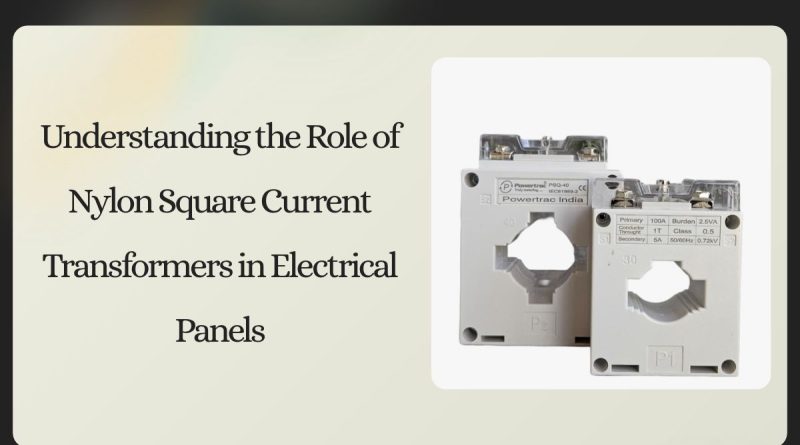
Understanding the Role of Nylon Square Current Transformers in Electrical Panels
Electrical panels are an essential part of modern power distribution systems. They help manage electrical circuits, monitor current flow, and support the safe operation of industrial and commercial equipment. Accurate current measurement is particularly important in these systems because it allows operators to monitor electrical loads, identify abnormal conditions, and maintain reliable performance. Current transformers play a key role in making this measurement possible.
A Nylon Square Current Transformer is used in suitable electrical measurement applications to convert high primary current into a lower, proportional secondary current that can be measured by instruments such as ammeters, energy meters, and monitoring devices. Its square-shaped design and insulating housing make it a practical option for certain electrical panel configurations.
Understanding how these transformers work, where they are used, and how to select them can help electrical engineers, panel manufacturers, and maintenance professionals make informed decisions. This guide explains their role in electrical panels and the factors that matter when choosing a suitable current transformer.
What Is a Nylon Square Current Transformer?
A current transformer, commonly known as a CT, is an instrument transformer designed to reduce a large electrical current to a smaller, standardized value for measurement or protection equipment. It operates through electromagnetic induction and helps isolate measuring instruments from the high-current primary circuit when installed correctly.
A Nylon Square Current Transformer is a current transformer that uses a nylon-based housing or insulating structure and a square-style form factor. Depending on the model, it may be designed to fit around a conductor or busbar within an electrical panel. Its exact construction, current rating, aperture dimensions, and insulation characteristics depend on the manufacturer’s specifications.
These transformers are used in applications where panel space, mechanical fit, insulation, and measurement requirements must be considered together.
How Does a Nylon Square Current Transformer Work?
The operating principle of a current transformer is based on electromagnetic induction. When alternating current flows through the primary conductor, it generates a magnetic field around the conductor. The transformer core responds to this field and induces a proportional current in its secondary winding.
The secondary current can then be supplied to a compatible measuring instrument or monitoring system.
For example, a CT with a 100/5 A ratio is designed to convert a primary current of 100 amperes into a secondary current of 5 amperes under its specified operating conditions. This allows instruments designed for the secondary rating to measure the electrical load indirectly.
The basic working process includes:
- Primary current flow: Current passes through the conductor or busbar associated with the transformer.
- Magnetic induction: The magnetic core responds to the current flowing through the primary circuit.
- Secondary current generation: The secondary winding produces a proportional current.
- Measurement: A compatible meter or monitoring device uses the secondary signal to display or record electrical current.
Correct wiring, polarity, ratio selection, and installation are essential for reliable measurements. A current transformer must never have its secondary circuit left open while primary current is flowing, unless the manufacturer has specifically designed the equipment for that condition. An open CT secondary can develop a dangerously high voltage.
Why Are Current Transformers Important in Electrical Panels?
Electrical panels may serve lighting circuits, motors, pumps, manufacturing equipment, distribution systems, and other electrical loads. Measuring current helps operators understand how these systems are performing.
Current transformers support several important functions.
1. Accurate Electrical Measurement
Electrical engineers use current transformers to obtain current readings without routing the full primary current through conventional measuring instruments. This supports the use of appropriately rated ammeters, digital panel meters, and energy monitoring equipment.
A correctly selected CT helps provide dependable readings within its specified accuracy class and operating range.
2. Electrical Load Monitoring
Monitoring current helps identify changes in equipment demand. For example, an unexpected increase in motor current may indicate a change in operating conditions, mechanical loading, or a developing equipment issue.
Current measurements should be evaluated alongside other information, such as voltage, temperature, operating conditions, and manufacturer recommendations, before drawing conclusions.
3. Support for Energy Management
In suitable metering arrangements, current transformers supply measurements to energy meters and power monitoring systems. When combined with voltage measurements and the appropriate meter configuration, these systems can calculate electrical quantities such as power, energy consumption, and power factor.
This information can help facilities understand consumption patterns and make informed energy-management decisions.
4. Integration With Monitoring and Protection Equipment
Some current transformers are designed for metering, while others are intended for protection applications. Protection CTs provide signals to compatible protective relays that detect specified electrical fault conditions.
The selected CT must match the relay or meter requirements. A metering transformer should not automatically be assumed suitable for protection duties, because their accuracy and saturation characteristics may differ.
Key Features of Nylon Square Current Transformers
The suitability of a transformer depends on its design and the electrical conditions in which it will operate. Several features are worth reviewing before selecting a model.
Insulating Housing
A nylon-based housing can provide electrical insulation and mechanical support when the material and design are appropriate for the intended application. The housing’s temperature rating, flame-retardant properties, and resistance to environmental conditions should be checked against the manufacturer’s technical documentation.
Compact, Square-Shaped Design
A square-style construction may be convenient for electrical panels where the available mounting space and conductor arrangement favour this shape. However, the actual dimensions and aperture size must be checked before installation.
Compatibility With Measuring Instruments
Current transformers are manufactured with different primary and secondary current ratings. Selecting a CT with the correct ratio and accuracy class helps ensure compatibility with the connected meter or monitoring system.
Suitability for Specific Operating Conditions
A transformer must be suitable for the system voltage, frequency, insulation requirements, expected current, and installation environment. Product specifications should always take priority over assumptions based on appearance or housing material.
Applications in Industrial and Commercial Electrical Systems
Current transformers are used in many electrical installations, provided the selected model meets the relevant technical requirements.
- Industrial control panels: For monitoring current drawn by machinery and production equipment.
- Power distribution panels: For measuring current across outgoing feeders and distribution circuits.
- Commercial buildings: For electrical consumption monitoring and distribution management.
- Motor control centres: For measuring motor current and supporting compatible monitoring or protection systems.
- Energy monitoring systems: For providing current inputs to compatible meters and electrical monitoring devices.
- Electrical testing and maintenance: For assisting qualified technicians with load assessment and electrical system analysis.
In medium- and high-voltage installations, the transformer must also meet the applicable insulation, fault withstand, and equipment coordination requirements. A low-voltage panel CT should not be used in a higher-voltage application unless it is specifically rated and approved for that purpose.
Nylon Square CT vs. Other Types of Current Transformers
Different current transformer designs are available for different installation environments. Understanding their general differences helps buyers identify the appropriate product category.
Nylon Square Current Transformer
This type may be suitable for certain panel-mounted measurement applications where the housing design, dimensions, current ratio, and insulation specifications meet the system requirements. Its suitability cannot be determined by housing material alone.
HT Current Transformer
An HT Current Transformer is intended for high-tension electrical systems and must be designed for the relevant system voltage, insulation level, fault conditions, and measurement or protection duty. Such transformers are used in applications including substations, high-voltage switchgear, and electrical distribution installations.
An HT current transformer is not interchangeable with a low-voltage panel CT. Voltage class, insulation coordination, short-time thermal current, and dynamic withstand ratings must be considered during selection.
Resin Cast Current Transformer
A Resin Cast Current Transformer uses cast resin as an insulating material around its internal components. Depending on its design and rating, it may be used in indoor switchgear, distribution equipment, and other electrical installations requiring a specified insulation system.
Resin-cast construction differs from a nylon-housed design in its insulation structure and manufacturing approach. The correct choice depends on operating voltage, environmental conditions, space, electrical performance, and applicable standards rather than on the material name alone.
Factors to Consider When Selecting a Current Transformer
Choosing a suitable CT requires more than matching its physical dimensions. The following factors should be reviewed before placing an order.
- Primary current rating: Select a rating appropriate for the expected operating current and the measurement requirements of the system.
- Secondary current rating: Confirm whether the connected equipment requires a 1 A or 5 A secondary input, or another specified output.
- Accuracy class: Choose the appropriate class for metering or protection, based on the intended duty.
- Rated system voltage: Verify that the CT’s insulation and design are suitable for the installation’s voltage class.
- Physical dimensions: Check the opening size, conductor or busbar dimensions, mounting arrangement, and available panel space.
- Frequency and burden: Ensure compatibility with the system frequency and the total connected secondary burden, including wiring and instruments.
- Environmental conditions: Review operating temperature, humidity, pollution level, enclosure requirements, and any relevant material ratings.
- Applicable standards: Confirm compliance with the relevant electrical standards and project specifications.
For a Nylon Square Current Transformer, these checks help confirm whether the product is appropriate for the intended panel. For specialised medium- or high-voltage duties, the required transformer design and insulation system must be verified independently.
Installation and Maintenance Best Practices
Proper installation is essential for reliable readings and electrical safety. Current transformers should be installed by qualified personnel following the manufacturer’s instructions and the applicable electrical safety procedures.
- Verify the CT ratio, polarity markings, terminal identification, and wiring diagram before installation.
- Ensure the primary conductor is positioned correctly and that the mounting arrangement is secure.
- Use suitable secondary wiring and compatible measuring instruments.
- Never open-circuit an energised CT secondary. Isolate the primary circuit or use an approved shorting arrangement before disconnecting secondary wiring.
- Inspect terminals, insulation, mounting hardware, and visible signs of overheating or physical damage during scheduled maintenance.
- Check readings against expected operating conditions and investigate unusual deviations.
- Follow the manufacturer’s requirements for testing, servicing, and replacement.
Maintenance intervals should reflect the equipment manufacturer’s recommendations, operating environment, and facility maintenance programme. Any work on energised electrical equipment must follow approved safety procedures.
Frequently Asked Questions (FAQs)
1. What is a Nylon Square Current Transformer used for?
A Nylon Square Current Transformer is used in suitable electrical panels to convert primary current into a proportional secondary current for measurement, monitoring, or compatible protection equipment.
2. How do I choose the correct current transformer ratio?
Choose the ratio according to the expected primary current and the requirements of the connected meter or relay. The secondary rating, accuracy class, burden, and operating conditions must also be considered.
3. What is the difference between a metering CT and a protection CT?
A metering CT is designed to provide accurate measurements within its specified operating range. A protection CT is designed to supply suitable current signals to protective relays during normal and fault conditions. Their performance requirements can differ.
4. Where is an HT Current Transformer commonly used?
An HT Current Transformer is used in appropriately rated high-voltage electrical systems, including substations, switchgear, and power distribution installations. Its voltage and insulation ratings must match the intended application.
5. What are the benefits of a Resin Cast Current Transformer?
A Resin Cast Current Transformer uses cast resin as part of its insulation system. Depending on its design, it can provide a compact construction and suitable insulation performance for specified electrical applications.
Conclusion
Current transformers are important components of electrical panels because they support current measurement, load monitoring, energy management, and compatible protection systems. Selecting the right model requires careful consideration of current ratio, accuracy, insulation, dimensions, burden, and operating conditions.
Whether evaluating a square-style panel CT, an HT transformer, or a resin-insulated model, engineers and panel manufacturers should rely on verified specifications rather than appearance alone. Correct installation, safe secondary-circuit handling, and regular maintenance help maintain dependable electrical measurements and support the long-term performance of the electrical system.