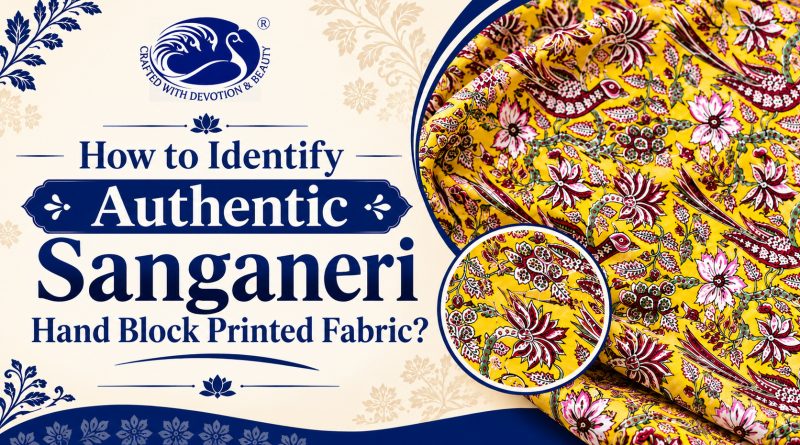
How to Identify Authentic Sanganeri Hand Block Printed Fabric?
Sanganeri hand block printing is one of Rajasthan’s most recognised traditional textile crafts, admired for its delicate floral patterns, fine detailing, vibrant colours, and handcrafted appeal. Originating in Sanganer, near Jaipur, this printing technique has earned a special place in India’s textile heritage. From everyday cotton clothing to elegant home furnishings, Sanganeri printed fabrics are widely appreciated for their traditional designs and artistic craftsmanship.
However, with the growing popularity of printed textiles, it can sometimes be difficult to distinguish authentic handmade prints from machine-printed imitations. Understanding the characteristics of genuine Sanganeri fabric helps buyers, retailers, designers, and textile businesses make informed purchasing decisions. Whether you are sourcing fabrics for personal use or looking for a reliable Sanganeri hand block printing manufacturer, knowing what to check can help you recognise quality craftsmanship.
What Is Sanganeri Hand Block Printing?
Sanganeri hand block printing is a traditional textile printing technique associated with Sanganer, Jaipur, Rajasthan. It involves using specially carved wooden blocks to transfer decorative patterns onto fabric with the help of dyes and printing colours. Skilled artisans carefully apply colour to the wooden blocks and press them onto the fabric to create repeating motifs and intricate designs.
Traditional Sanganeri printing is particularly known for its delicate floral patterns, including flowers, leaves, vines, buds, and botanical arrangements. Fine lines, detailed motifs, and balanced layouts are important characteristics of this craft.
Unlike digital or screen printing, traditional hand block printing involves manual effort at different stages. Each impression is applied by an artisan, making the printing process a combination of technical skill, patience, and artistic experience.
1. Look for Slight Variations in Printed Patterns
One of the first ways to recognise authentic Sanganeri hand block printed fabric is by examining its patterns closely. Traditional block printing involves manually placing wooden blocks on the fabric. Although experienced artisans maintain consistency, slight variations in alignment, pressure, and colour application may occur.
These minor differences are a natural part of the handmade process. Machine-printed fabrics, on the other hand, often display highly uniform patterns because the designs are reproduced mechanically.
Look for carefully repeated floral motifs, fine decorative details, and small variations between individual impressions. However, imperfections alone should not be considered proof of authenticity. The printing method and manufacturing process should also be verified.
2. Examine the Traditional Floral Motifs
Sanganeri block printing is widely recognised for its floral and nature-inspired designs. Traditional motifs often include delicate flowers, small leaves, flowering vines, paisleys, and other botanical elements.
These designs usually feature detailed arrangements with balanced spacing and fine outlines. Many patterns are inspired by nature and traditional Rajasthani artistic influences.
When examining Sanganeri hand block printed fabric, pay attention to the clarity of the floral elements, the arrangement of motifs, and the detailing within each pattern. Authentic traditional designs often demonstrate the precision and experience of skilled artisans.
The presence of floral motifs alone does not establish authenticity, as similar designs can also be reproduced using modern printing techniques. It is important to consider the overall craftsmanship and production method.
3. Check the Colour Application and Printing Quality
Colour application is another important factor when evaluating authentic Sanganeri fabric. Traditional printing uses dyes and printing colours that are applied through wooden blocks. Artisans carefully manage the amount of colour and pressure required to create clear impressions.
Examine whether the colours are distributed evenly and whether the printed details remain visible. Look for well-defined outlines, properly filled motifs, and a balanced combination of colours.
Traditional Sanganeri textiles are often associated with soft backgrounds and vibrant or contrasting floral patterns. Red, blue, green, yellow, and other colours may appear depending on the design and printing style.
It is also important to understand that authentic handmade fabric does not always have perfectly identical colour distribution. Small variations can occur during manual printing. Buyers should check colourfastness separately through appropriate fabric-care or supplier information rather than assuming that traditional printing automatically guarantees colour durability.
4. Understand the Fabric and Its Texture
The base fabric plays an important role in the appearance and usability of hand block printed textiles. Cotton is commonly used for Sanganeri printing because its surface can support detailed patterns and is suitable for different clothing and furnishing applications.
When evaluating fabric quality, consider its softness, thickness, weave, and overall finishing. A good-quality textile should feel appropriate for its intended purpose, whether it is being purchased for dresses, kurtas, sarees, bedsheets, cushion covers, or other products.
Check the fabric for consistent weaving, unwanted damage, and finishing irregularities. Also, ask the manufacturer about the fabric composition and whether the material is pure cotton or a cotton blend.
Remember that Sanganeri printing describes a printing tradition, not a specific fabric composition. Therefore, buyers should evaluate the material and printing technique separately.
5. Look for Evidence of Wooden Block Printing
The use of hand-carved wooden blocks is central to traditional Sanganeri printing. Artisans use blocks containing carefully carved designs to transfer motifs onto fabric.
Inspect the printed patterns for signs of repeated impressions and individual motif detailing. Traditional block printing can create subtle differences in pressure and placement that distinguish it from many mechanically reproduced designs.
For wholesale purchases, asking the manufacturer about the wooden blocks, printing setup, and production process can provide useful information. Established manufacturers should be able to explain whether the fabric is hand block printed, screen printed, digitally printed, or produced using a combination of techniques.
This distinction is particularly important for retailers and businesses that market products as handmade or traditionally crafted textiles.
6. Compare Handmade Printing with Machine Printing
Understanding the difference between handmade and machine printing makes fabric selection easier. Both techniques can produce attractive designs, but their production processes and characteristics are different.
Hand block printing is done with manually operated wooden blocks, and it requires the involvement of skilled artisans. Because each impression is applied by hand, minor variations may occur in the pattern, which gives the fabric its individual character. The quality of the design detailing depends on the carving of the blocks and the skill of the artisan. This also makes the process generally slower, and craftsmanship, based on manual printing skills, is at the heart of the final product.
Machine printing, on the other hand, uses mechanical, digital, or screen-based processes with automated or semi-automated equipment. The patterns are generally more uniform from one meter of fabric to the next, and design detailing depends on the printing technology used. It is usually faster, which makes it better suited to large quantities, and the final result depends on the technology and the production method.
This comparison helps buyers understand why traditional handmade textiles have a distinctive character. However, machine printing can also produce high-quality fabric, so the choice should depend on design requirements, production volume, budget, and customer preferences.
7. Verify the Manufacturer’s Production Process
One of the most reliable ways to identify authentic Sanganeri hand block printed fabric is to understand who manufactured it and how it was produced.
A trustworthy Sanganeri hand block printing manufacturer should be able to provide information about the printing location, artisans, wooden blocks, fabric materials, dyes, and finishing processes.
Before placing a bulk order, ask questions such as:
- Is the fabric printed manually using traditional wooden blocks?
- Where does the printing process take place?
- What type of fabric is used?
- Are the designs created using traditional Sanganeri motifs?
- What dyes or printing colours are used?
- Can the manufacturer provide fabric samples?
- Are custom designs and bulk production available?
Requesting samples is particularly useful for businesses purchasing textiles in large quantities. It allows buyers to inspect the print quality, fabric texture, colour consistency, and finishing before confirming an order.
8. Choose Experienced Hand Block Printing Manufacturers in Jaipur
Jaipur is an important centre for traditional Rajasthani textile printing, with Sanganer holding a special place in the region’s handcrafted textile industry. Buyers looking for authentic printed fabrics can explore manufacturers and suppliers with established experience in traditional printing techniques.
When searching for the best hand block printed fabric manufacturers in Jaipur, consider their manufacturing experience, design collection, product quality, production capacity, and transparency about printing methods.
Businesses sourcing textiles from different regions should also compare hand block printed fabric manufacturers from India based on their craftsmanship, material specifications, quality-control practices, and ability to fulfil wholesale requirements.
A reliable manufacturer should provide clear product details and explain the difference between handmade block printing and other printing techniques. This helps buyers maintain product authenticity and communicate accurate information to their customers.
Why Is Authentic Sanganeri Hand Block Printing Valuable?
Authentic Sanganeri printing represents more than a decorative textile technique. It reflects the traditional knowledge, artistic skills, and cultural heritage of Rajasthan. Every stage, from preparing the fabric to applying wooden block impressions, requires attention and experience.
The craft also supports artisan communities and helps preserve traditional textile-making practices. Its floral patterns and handcrafted appearance make Sanganeri textiles suitable for contemporary fashion, ethnic clothing, accessories, and home décor.
As interest in handmade and culturally rooted products grows, authentic Sanganeri printed fabrics continue to attract designers, retailers, exporters, and customers who appreciate traditional craftsmanship.
Conclusion
Identifying authentic Sanganeri hand block printed fabric requires more than simply looking at its colours and patterns. Buyers should examine the traditional motifs, printing impressions, fabric quality, colour application, and manufacturing process. Most importantly, they should verify whether the textile has genuinely been printed using traditional wooden blocks.
For retailers, designers, wholesalers, and textile businesses, choosing an experienced hand block printing manufacturer is an important step towards sourcing quality handcrafted products. By understanding the characteristics of Sanganeri printing and asking the right questions, buyers can make informed decisions while supporting Rajasthan’s valuable textile heritage.
Authentic Sanganeri hand block printing continues to connect traditional artistry with modern textile preferences, making it an enduring part of India’s handcrafted fabric.