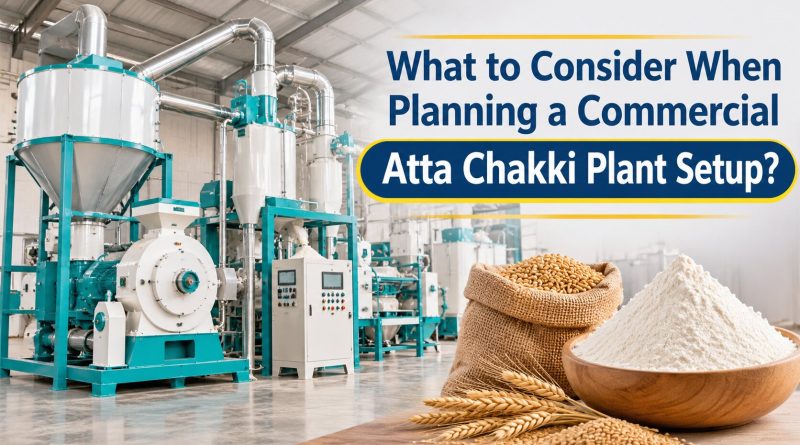
What to Consider When Planning a Commercial Atta Chakki Plant Setup?
Starting a commercial flour milling business requires careful planning, suitable machinery, proper infrastructure, and an understanding of grain processing requirements. Wheat flour is widely used in households, restaurants, bakeries, food processing units, and commercial kitchens. This consistent demand makes flour milling an important segment of the food processing industry. However, establishing a successful flour mill involves more than purchasing grinding equipment. Business owners need to evaluate production capacity, machinery configuration, raw material availability, power requirements, installation space, and operational costs before starting the project.
A well-planned commercial setup can help maintain consistent flour quality, improve production efficiency, and manage day-to-day operations. Whether establishing a small commercial unit or a large-scale milling facility, understanding the essential requirements helps business owners make informed investment decisions.
1. Evaluate the Business Requirements and Production Capacity
The first step in planning a commercial flour mill is identifying the intended business requirements. Production capacity should be selected according to the expected demand, target customers, available investment, and future expansion plans.
A small flour milling unit may serve local retailers, households, and nearby food businesses, whereas a larger facility may supply distributors, wholesalers, bakeries, and institutional buyers.
Before selecting equipment, consider:
- Expected daily and monthly flour production.
- Availability of wheat and other grains.
- Target market and distribution requirements.
- Available investment and operating budget.
- Possibility of increasing production in the future.
Choosing an appropriate capacity helps avoid unnecessary machinery expenses and prevents production limitations when customer demand increases.
2. Select the Right Atta Chakki Plant Machine
Machinery selection is one of the most important decisions when establishing a commercial flour mill. The equipment should match the required production capacity, grain type, grinding requirements, and expected operating hours.
A suitable atta chakki plant machine generally includes grinding equipment and supporting components required for processing wheat into flour. Depending on the plant configuration, additional machinery may be needed for grain cleaning, feeding, material transportation, sieving, and packaging.
Different grinding technologies are available for commercial applications. Traditional stone grinding systems and modern industrial grinding equipment may offer different operating characteristics. The selection should depend on the desired flour texture, production volume, maintenance requirements, and available space.
Business owners should also evaluate machine construction, component quality, operating controls, spare part availability, and after-sales technical support before making a purchase.
3. Understand the Importance of Plant Layout
A properly planned plant layout supports smoother material movement and makes daily operations easier to manage. The arrangement of machinery should follow the natural sequence of flour production, beginning with raw grain storage and continuing through cleaning, grinding, sieving, and packaging.
An efficient layout should provide:
- Separate space for incoming wheat and finished flour.
- Adequate room for machinery installation.
- Clear pathways for workers and material movement.
- Accessible areas for equipment inspection and maintenance.
- Suitable storage arrangements for packaging materials.
- Proper ventilation and dust management.
The placement of machinery should also allow workers to operate equipment safely. Leaving sufficient space around machines can simplify cleaning, servicing, and replacement of components.
4. Check Wheat Quality and Raw Material Availability
The quality of finished flour depends significantly on the condition of the wheat used during processing. Therefore, commercial flour mill operators should establish reliable sources of raw materials before beginning production.
Wheat quality may vary according to variety, moisture content, storage conditions, and grain cleanliness. Impurities such as stones, dust, straw, and other unwanted materials should be removed before grinding.
Businesses should evaluate suppliers based on grain quality, availability, transportation arrangements, pricing, and consistency of supply.
Proper storage is equally important. Wheat should be stored in clean, dry, and well-maintained areas to reduce the risk of moisture-related damage, pests, and contamination. Regular inspection of stored grains can help maintain raw material quality and reduce processing problems.
5. Plan Grain Cleaning and Processing Requirements
Grain cleaning is an essential stage in commercial flour production. Wheat may contain foreign particles that can affect flour quality and cause unnecessary wear on grinding components.
Depending on the plant design, cleaning equipment may include pre-cleaners, magnetic separators, destoners, and other grain separation systems. These machines help remove unwanted materials before wheat enters the grinding section.
After cleaning, wheat may undergo conditioning or tempering according to the milling process and equipment requirements. This involves managing grain moisture to support suitable grinding and separation characteristics.
The processing sequence should be designed according to the required flour quality and production objectives. A well-organised cleaning and preparation section can support consistent downstream operations.
6. Consider an Automatic Atta Chakki Plant
Automation has become an important consideration in modern commercial flour milling. An automatic atta chakki plant can integrate different processing stages through coordinated controls and material-handling systems.
Depending on the machinery configuration, automation may help manage grain feeding, grinding operations, material movement, sieving, and packaging. Control panels and monitoring systems can also make it easier for operators to observe machine performance and manage production activities.
Some potential advantages of automation include:
- Reduced dependence on manual material handling.
- Better coordination between processing stages.
- More organised production operations.
- Improved monitoring of operating conditions.
- Easier management of repetitive processing activities.
However, the level of automation should be selected according to business requirements and available investment. A fully automated system may not be necessary for every commercial flour mill. Businesses should compare equipment features, installation costs, operating requirements, and expected production benefits before making a decision.
7. Evaluate Electricity Requirements and Operating Costs
Electricity consumption is an important factor affecting the operating expenses of a commercial flour mill. Grinding machines, elevators, conveyors, cleaning equipment, and packaging systems may require different amounts of electrical power.
Before installation, business owners should evaluate the connected load, motor ratings, operating hours, and electrical infrastructure required by the proposed machinery.
The electrical setup should be planned with suitable wiring, protection systems, control panels, and earthing arrangements. Qualified electrical professionals should assess the installation to ensure that it meets applicable safety requirements.
Apart from electricity, other operating expenses may include:
- Wheat procurement and transportation.
- Labour and supervision.
- Packaging materials.
- Machinery maintenance.
- Spare parts and consumables.
- Storage and distribution expenses.
Estimating these costs before starting production helps businesses prepare a realistic operating budget and evaluate the financial requirements of the project.
8. Choose an Experienced Machinery Manufacturer
Selecting the right equipment supplier is as important as choosing the machinery itself. A reliable flour mill machine manufacturer can help businesses understand machinery specifications, plant configurations, installation requirements, and production capacity.
Before finalising a manufacturer, buyers should review the company’s industrial experience, available machinery range, construction standards, technical specifications, and service support.
Important points to discuss with the supplier include:
- Production capacity and expected output.
- Machinery dimensions and installation requirements.
- Motor specifications and power consumption.
- Cleaning, grinding, and sieving arrangements.
- Availability of spare parts and maintenance support.
- Installation, commissioning, and operator training.
- Warranty terms and service arrangements.
Requesting detailed quotations and comparing technical specifications can help buyers understand the actual differences between available systems. Businesses should avoid selecting equipment based only on its initial purchase price.
9. Consider Flour Quality and Packaging Requirements
Consistent flour quality is essential for building customer confidence and maintaining repeat business. The final product should meet the requirements of its intended applications, whether it is supplied to households, restaurants, bakeries, or commercial food manufacturers.
Factors such as wheat quality, grinding conditions, sieving arrangements, and processing consistency can influence the characteristics of finished flour.
Packaging also plays an important role in commercial operations. Flour may be packed in different quantities depending on customer requirements and distribution channels.
The packaging section should provide suitable weighing, filling, sealing, and labelling arrangements. Packaging materials should protect the finished product from moisture, contamination, and handling-related damage.
Businesses must also consider applicable food safety, hygiene, labelling, and licensing requirements before starting commercial production.
10. Maintenance, Safety and Future Expansion
Regular machinery maintenance helps support reliable plant operations and reduces the likelihood of unexpected breakdowns. Grinding components, motors, belts, bearings, electrical connections, and material-handling systems should be inspected according to the manufacturer’s maintenance schedule.
Operators should receive appropriate training regarding machine controls, cleaning procedures, emergency shutdown systems, and workplace safety practices.
Dust management is another important consideration in flour milling facilities. Suitable dust extraction, ventilation, housekeeping, and fire prevention arrangements should be included in the plant design. Electrical and mechanical safety measures should follow applicable industrial standards.
Future expansion should also be considered during the initial planning stage. A plant layout that allows additional machinery or increased storage capacity can make later upgrades easier and more economical.
Conclusion
Planning a commercial flour mill requires attention to several interconnected factors, including production capacity, machinery selection, wheat quality, plant layout, automation, electricity consumption, and maintenance. Each decision contributes to the overall efficiency and operating requirements of the facility.
Choosing suitable equipment and working with an experienced manufacturer can help businesses establish a well-organised milling operation. By evaluating present production needs alongside future expansion possibilities, business owners can develop a commercial flour mill setup that supports consistent processing, effective resource management, and long-term business growth.
Frequently Asked Questions (FAQs)
- What factors should be considered before setting up a commercial atta chakki plant?
Important factors include production capacity, machinery selection, plant layout, raw material availability, electricity requirements, investment, labour, and maintenance facilities.
- Which machinery is required for a commercial atta chakki plant?
Depending on the plant configuration, machinery may include grain cleaners, destoners, magnetic separators, grinding machines, elevators, conveyors, sieving systems, and packaging equipment.
- What is the difference between an automatic and a semi-automatic atta chakki plant?
An automatic plant uses integrated controls and equipment to coordinate multiple processing activities, whereas a semi-automatic setup generally requires more manual involvement in certain operations.
- Why is wheat cleaning important before grinding?
Cleaning removes unwanted materials such as dust, stones, and other impurities. It helps protect machinery and supports better processing and finished flour quality.
- How can businesses select a suitable flour mill machine manufacturer?
Businesses should evaluate manufacturing experience, machine specifications, production capacity, construction quality, installation support, warranty, spare parts, and after-sales service.


