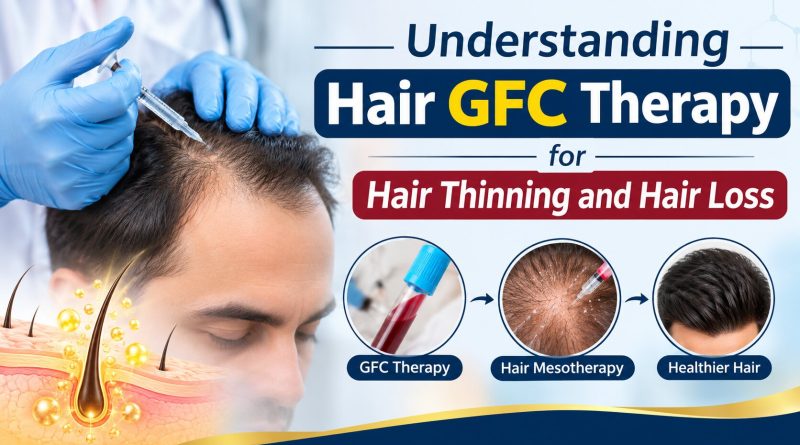
Understanding Hair GFC Therapy for Hair Thinning and Hair Loss
Hair thinning and hair loss are common concerns affecting both men and women. Factors such as genetics, hormonal changes, nutritional deficiencies, stress, medical conditions, and lifestyle habits can contribute to excessive hair shedding and reduced hair density. While occasional hair fall is a normal part of the hair growth cycle, continuous hair loss may require proper evaluation and treatment.
With advancements in dermatology and hair restoration, several non-surgical treatment options are available to address hair thinning. One such option is Hair GFC Therapy, which uses growth factor-rich components prepared from a patient’s own blood to support the natural hair growth process.
This treatment has gained attention among individuals looking for non-surgical approaches to manage hair thinning and improve hair density. Understanding its procedure, potential benefits, suitability, and expected results can help patients make informed decisions before starting treatment.
1. What Is Hair GFC Therapy?
Growth Factor Concentrate (GFC) therapy is a regenerative treatment that uses growth factors obtained from the patient’s own blood. These growth factors are biological substances involved in various cellular activities, including tissue repair and regeneration.
During the procedure, a blood sample is collected and processed using specialised equipment to prepare a concentrated growth factor solution. This solution is then administered into selected areas of the scalp through small injections.
The primary objective is to create a supportive environment for hair follicles and encourage healthier hair growth. It may be recommended for individuals experiencing early-stage hair thinning, reduced hair density, or certain types of hair loss.
However, results can vary depending on the underlying cause of hair loss, the condition of existing hair follicles, and individual response to treatment.
2. How Does GFC Therapy Work for Hair Growth?
Hair follicles naturally pass through different stages of growth, including the anagen (growth), catagen (transition), and telogen (resting) phases. Changes in this cycle can contribute to excessive hair shedding and gradual hair thinning.
GFC therapy aims to support the scalp environment by delivering concentrated growth factors to targeted areas.
The treatment may help through the following mechanisms:
- Follicle Support: Growth factors participate in cellular communication and may support the activity of existing hair follicles.
- Scalp Health: The treatment aims to support the local scalp environment.
- Hair Growth Cycle: Certain growth factors are involved in biological processes associated with hair follicle activity.
- Hair Density: In suitable patients, treatment may help improve the appearance of hair density over time.
- Tissue Regeneration: Growth factors play a role in natural tissue repair and cellular activity.
It is important to understand that GFC therapy cannot guarantee hair regrowth or restore follicles that have been permanently destroyed. A dermatologist should assess the condition before recommending treatment.
3. Common Causes of Hair Thinning and Hair Loss
Before selecting any hair restoration treatment, identifying the underlying cause of hair loss is essential. Different conditions require different management approaches.
Some common causes include:
Genetic Hair Loss: Androgenetic alopecia is a common condition associated with hereditary factors and sensitivity to certain hormones. It can cause gradual hair thinning in men and women.
Hormonal Changes: Hormonal fluctuations related to pregnancy, menopause, thyroid disorders, and other conditions may contribute to hair shedding.
Nutritional Deficiencies: Low levels of iron, protein, vitamin D, and other essential nutrients may affect normal hair growth.
Stress and Lifestyle Factors: Physical or emotional stress, inadequate sleep, and certain lifestyle habits can contribute to temporary hair shedding.
Medical Conditions: Thyroid disorders, scalp infections, autoimmune conditions, and other health problems may affect hair growth.
Improper Hair Care: Excessive heat styling, harsh chemical treatments, and tight hairstyles can contribute to hair damage and breakage.
A proper scalp and hair assessment helps determine whether GFC therapy is appropriate or whether another treatment is required.
4. What Happens During the Hair GFC Therapy Procedure?
GFC therapy is generally performed as an outpatient procedure. The process involves collecting a blood sample, preparing the growth factor concentrate, and administering it into the targeted scalp areas.
The procedure usually includes the following steps:
Step 1: Initial Consultation
The dermatologist examines the scalp, evaluates the pattern of hair loss, and reviews the patient’s medical history. Additional investigations may be recommended when necessary.
Step 2: Blood Collection
A small blood sample is collected from the patient’s arm using sterile equipment.
Step 3: Preparation of Growth Factor Concentrate
The collected blood is processed using a specialised preparation system to obtain a growth factor-rich concentrate. This preparation is different from conventional PRP and follows a specific processing method.
Step 4: Scalp Preparation
The treatment area is cleaned, and a suitable numbing method may be used to improve patient comfort.
Step 5: Administration
The prepared concentrate is injected into selected scalp areas using fine needles. The injection pattern depends on the areas affected by hair thinning.
Step 6: Post-Treatment Guidance
After the procedure, the dermatologist provides instructions regarding scalp care, washing, physical activity, and follow-up appointments.
The number of sessions and the interval between them depend on the patient’s condition and the treatment plan.
5. Potential Benefits of GFC Therapy for Hair Loss
GFC therapy is considered a non-surgical hair treatment option for selected individuals. Since it uses a concentrate prepared from the patient’s own blood, it avoids introducing donor-derived growth factors.
Some potential benefits include:
- Non-Surgical Approach: The treatment does not require conventional hair transplant surgery.
- Use of Autologous Material: Growth factors are prepared from the patient’s own blood.
- Targeted Application: The concentrate is administered directly into selected scalp areas.
- Minimal Downtime: Many patients can return to routine activities relatively soon, depending on individual response.
- Hair Follicle Support: Growth factors may support biological processes involved in hair follicle activity.
- Personalised Treatment: The procedure can be planned according to the patient’s hair loss pattern and scalp condition.
However, clinical evidence for GFC is still developing. Its effectiveness is not equally established for every type of hair loss, and it should not be presented as a guaranteed replacement for established medical treatments.
6. Hair GFC Therapy vs Hair Mesotherapy
Both GFC therapy and mesotherapy are non-surgical procedures used in hair care, but their preparation methods and treatment approaches are different.
GFC Therapy: This procedure uses a growth factor-rich concentrate prepared from the patient’s blood. The concentrate is administered into selected areas of the scalp.
Hair Mesotherapy: This treatment involves delivering selected substances, such as vitamins, amino acids, or other formulations, into the superficial layers of the scalp. The ingredients depend on the treatment protocol used by the practitioner.
Some important differences include:
- GFC uses growth factors obtained from the patient’s own blood.
- Mesotherapy uses selected formulations that may vary between clinics.
- Both treatments involve injections into the scalp.
- Their suitability depends on the underlying cause of hair loss.
- Neither treatment guarantees permanent hair restoration.
The choice between these procedures should be based on a proper scalp assessment, treatment goals, and available clinical evidence rather than general claims about effectiveness.
7. Who May Be Suitable for GFC Therapy?
GFC therapy may be considered for individuals experiencing certain forms of hair thinning or reduced hair density.
Potential candidates may include:
- Individuals experiencing early-stage pattern hair loss.
- People with gradual hair thinning.
- Patients with reduced hair density in selected scalp areas.
- Individuals looking for non-surgical treatment options.
- Patients whose hair follicles are still present and potentially responsive to treatment.
However, it may not be suitable for everyone. People with active scalp infections, certain blood-related conditions, or other medical concerns may require alternative treatment approaches.
Patients with advanced hair loss or permanently damaged follicles may not achieve meaningful regrowth through GFC therapy alone. A dermatologist should determine suitability after evaluating the scalp and medical history.
8. Possible Side Effects and Precautions
Although GFC therapy uses material obtained from the patient’s own blood, the injection procedure may still cause temporary side effects.
Some possible reactions include:
- Mild redness around injection sites.
- Temporary swelling or tenderness.
- Minor discomfort during or after injections.
- Small bruises at the treated areas.
- Temporary scalp sensitivity.
Infection and other complications are uncommon when appropriate sterile techniques are followed, but they are possible.
Patients should choose a qualified medical professional and a facility that follows proper hygiene and preparation protocols. They should also inform the doctor about existing medical conditions, medications, allergies, and previous hair treatments.
9. How Long Does It Take to See Results?
Hair growth is a gradual biological process, so results from GFC therapy should not be expected immediately.
The time required to notice changes depends on several factors, including:
- The cause and severity of hair loss.
- The condition of existing hair follicles.
- Individual response to treatment.
- Overall scalp health.
- Consistency with the recommended treatment plan.
- Presence of other medical or nutritional factors.
Some patients may notice changes in hair shedding or hair appearance over time, while others may experience limited improvement.
Regular follow-up appointments help the dermatologist assess progress and decide whether additional sessions or other treatments are necessary.
10. Importance of Consulting an Experienced Skin Specialist
Hair loss can have multiple underlying causes, and choosing a treatment without proper diagnosis may delay appropriate care. An experienced dermatologist can examine the scalp, identify possible contributing factors, and recommend a suitable treatment approach.
Individuals looking for a Skin Doctor in Vidhyadhar Nagar should consider the doctor’s qualifications, experience in managing hair and scalp conditions, available diagnostic facilities, and approach to personalised treatment.
Depending on the diagnosis, the treatment plan may include GFC therapy, medications, nutritional correction, scalp care, or other hair restoration procedures.
A specialist can also explain the expected benefits, limitations, possible side effects, and long-term management requirements of the recommended treatment.
Conclusion
Hair thinning and hair loss can affect appearance and confidence, making early evaluation important. GFC therapy is a non-surgical treatment option that uses growth factor-rich components prepared from the patient’s own blood to support hair follicle activity.
Understanding its procedure, potential benefits, limitations, and suitability can help individuals make informed decisions. However, successful hair loss management begins with identifying the underlying cause and selecting an appropriate treatment plan.
Consulting a qualified dermatologist can help determine whether Hair GFC Therapy or another hair restoration approach is suitable for individual needs.
Frequently Asked Questions
- What is Hair GFC Therapy used for?
GFC therapy is used as a non-surgical treatment option for selected individuals experiencing hair thinning and certain types of hair loss. It uses growth factors obtained from the patient’s own blood.
- Is GFC therapy different from PRP treatment?
Yes. Both treatments use the patient’s own blood, but their preparation methods and final compositions differ. GFC is specifically prepared to obtain a growth factor-rich concentrate, while PRP uses platelet-rich plasma.
- How many GFC therapy sessions are required?
The number of sessions depends on the patient’s hair loss condition, treatment response, and dermatologist’s recommendations. A personalised treatment schedule is generally advised.
- Is GFC therapy painful?
Patients may experience mild discomfort during injections. A suitable numbing method can be used to improve comfort during the procedure.
- Can GFC therapy completely stop hair loss?
No treatment can guarantee complete prevention of hair loss. Results depend on the underlying cause, individual response, and overall treatment plan.