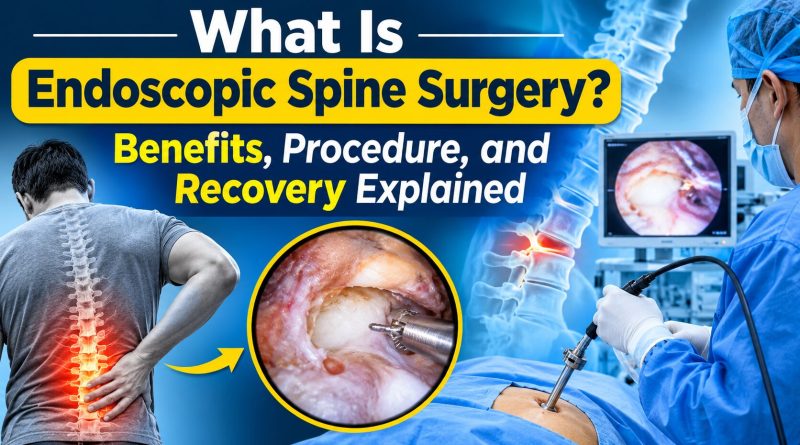
What Is Endoscopic Spine Surgery? Benefits, Procedure, and Recovery Explained
Back pain, leg pain, numbness, and tingling can significantly affect everyday life. Conditions such as herniated discs, slipped discs, and spinal stenosis may cause persistent discomfort and make activities like walking, sitting, or bending difficult. When medications, physiotherapy, and other conservative treatments do not provide sufficient relief, surgery may be considered.
With advancements in medical technology, Endoscopic Spine Surgery has emerged as a minimally invasive option for treating selected spinal conditions. This modern surgical technique uses a small camera and specialized instruments to treat the affected area while minimizing damage to surrounding muscles and tissues.
For patients looking for effective Sciatica Treatment or Slipped Disc Treatment in Jaipur, understanding this procedure can help them make informed decisions about their spinal health.
What Is Endoscopic Spine Surgery?
Endoscopic Spine Surgery is a minimally invasive surgical procedure used to treat certain conditions affecting the spinal discs, nerves, and surrounding structures. It involves using a thin instrument called an endoscope, which contains a small camera and light source.
The surgeon inserts the endoscope through a small incision to access the affected spinal region. Images from the camera are displayed on a monitor, allowing the surgeon to view the targeted area and use specialized instruments to remove the tissue causing nerve compression.
Unlike traditional open spine surgery, which may require larger incisions and more extensive muscle dissection, endoscopic techniques aim to preserve surrounding tissues.
Depending on the patient’s condition and the complexity of the procedure, local anesthesia with sedation or general anesthesia may be used.
Conditions Treated with Endoscopic Spine Surgery
Endoscopic spine surgery may be recommended for several spinal conditions that cause nerve compression and persistent pain.
1. Herniated or Slipped Disc
A slipped disc occurs when the soft inner material of a spinal disc pushes through its outer layer. This can put pressure on nearby nerves, resulting in back pain, leg pain, tingling, or numbness.
In suitable cases, endoscopic surgery can remove the portion of the disc responsible for nerve compression. Patients searching for Slipped Disc Treatment in Jaipur may benefit from consulting a spine specialist to understand whether this minimally invasive approach is appropriate.
2. Sciatica
Sciatica is a condition characterized by pain that travels from the lower back through the buttocks and down one or both legs. It commonly develops when the sciatic nerve or its nerve roots become irritated or compressed.
When sciatica is caused by a herniated disc or spinal narrowing, endoscopic surgery may help relieve nerve pressure. The appropriate Sciatica Treatment depends on the underlying cause and severity of symptoms.
3. Spinal Stenosis
Spinal stenosis occurs when the spinal canal or nerve passageways become narrow. This narrowing can compress nerves and cause pain, numbness, weakness, and difficulty walking.
In selected patients, endoscopic decompression can help create additional space for compressed nerves.
4. Foraminal Stenosis
The small openings through which spinal nerves exit the spine are known as neural foramina. When these openings become narrow, they may compress nearby nerves and cause radiating pain. Endoscopic techniques may help relieve this pressure in suitable cases.
Benefits of Endoscopic Spine Surgery
Endoscopic Spine Surgery offers several potential advantages compared with certain traditional open surgical procedures.
- Smaller Incisions: The procedure generally requires a small incision, resulting in a smaller surgical wound and less disruption to surrounding tissues.
- Less Muscle Damage: Specialized instruments allow surgeons to access the affected spinal area while preserving much of the surrounding muscle tissue.
- Reduced Postoperative Discomfort: Because less tissue disruption may be involved, some patients experience less postoperative pain compared with traditional open procedures.
- Faster Recovery: Many suitable patients can return to light daily activities sooner, although recovery depends on the condition being treated and individual healing.
- Smaller Surgical Scar: The smaller incision generally results in a less noticeable scar.
- Shorter Hospital Stay: Some patients may be discharged on the same day or after a short hospital stay, depending on their health and the surgical procedure.
It is important to understand that these benefits are not guaranteed for everyone. Treatment outcomes depend on the patient’s condition, surgical technique, and the experience of the treating specialist.
How Is Endoscopic Spine Surgery Performed?
Understanding the procedure can help patients feel more confident before undergoing treatment. The process generally involves the following steps.
Step 1: Initial Consultation and Diagnosis
The surgeon evaluates the patient’s symptoms, medical history, and physical condition. Imaging tests such as MRI, CT scans, or X-rays may be recommended to identify the affected spinal region.
Step 2: Anesthesia
The appropriate anesthesia is selected according to the patient’s medical condition and the planned procedure. Local anesthesia with sedation or general anesthesia may be used.
Step 3: Small Incision
The surgeon makes a small incision near the affected spinal area and carefully creates an access pathway to the targeted structure.
Step 4: Endoscope Insertion
A thin endoscope containing a camera and light source is inserted through the access channel. The camera provides a magnified view of the spinal structures on a monitor.
Step 5: Treating the Affected Area
Using specialized surgical instruments, the surgeon removes the tissue responsible for nerve compression or performs the required decompression. The exact technique depends on the patient’s diagnosis.
Step 6: Closing the Incision
Once the procedure is complete, the instruments are removed, and the small incision is closed using suitable wound-closure techniques.
The duration of surgery varies according to the condition being treated and the complexity of the procedure.
Recovery After Endoscopic Spine Surgery
Recovery is an important part of successful spine treatment. Although Endoscopic Spine Surgery is minimally invasive, patients must follow medical advice to support proper healing.
First 24 Hours: Patients are monitored after surgery. Depending on their condition, they may be encouraged to stand or walk with assistance.
First Few Days: Mild soreness around the incision is common. Patients should follow wound-care instructions, take prescribed medications, and avoid excessive physical activity.
First Few Weeks: Many patients gradually resume light daily activities. Walking may be encouraged, while heavy lifting, excessive bending, and twisting should be avoided until permitted by the surgeon.
Long-Term Recovery: Recovery varies from patient to patient. Some symptoms may improve quickly, while nerve-related symptoms such as numbness or weakness can take longer to recover. Physiotherapy may be recommended to improve strength, flexibility, and spinal stability.
Patients should attend follow-up appointments to monitor healing and discuss their progress.
Is Endoscopic Spine Surgery Safe?
Endoscopic Spine Surgery is generally considered a safe treatment option for appropriately selected patients when performed by a qualified and experienced spine surgeon. However, like every surgical procedure, it carries certain risks.
Possible complications include:
- Infection or bleeding.
- Nerve irritation or injury.
- Dural tear or spinal fluid leakage.
- Persistent or recurring symptoms.
- Incomplete relief of pain.
- Need for additional surgery in some cases.
A detailed medical evaluation helps determine whether the expected benefits outweigh the potential risks for an individual patient.
Who Is an Ideal Candidate for Endoscopic Spine Surgery?
This procedure may be suitable for patients who:
- Experience persistent back pain or radiating leg pain.
- Have a confirmed herniated disc or selected cases of spinal stenosis.
- Have not achieved sufficient relief through appropriate non-surgical treatments.
- Have imaging findings that match their symptoms.
- Are medically suitable for the procedure.
Not every patient with back pain or a slipped disc requires surgery. Many spinal conditions improve with medications, physiotherapy, lifestyle modifications, and other conservative treatments.
Choosing the Right Spine Treatment in Jaipur
Choosing the right treatment begins with an accurate diagnosis. Patients experiencing persistent back pain, sciatica, or symptoms associated with a slipped disc should consult an experienced spine specialist.
If you are searching for Sciatica Treatment or Slipped Disc Treatment in Jaipur, discuss all available treatment options with your doctor. Ask about the benefits, risks, expected recovery, and suitability of minimally invasive procedures such as endoscopic spine surgery.
An individualized treatment plan can help address the underlying problem and support long-term spinal health.
Conclusion
Endoscopic Spine Surgery is an advanced minimally invasive technique used to treat selected spinal conditions, including herniated discs and nerve compression. Smaller incisions, reduced muscle disruption, and the potential for quicker recovery make it an important option in modern spine care.
However, the most appropriate treatment depends on the patient’s symptoms, diagnosis, imaging findings, and overall health. Consulting a qualified spine specialist can help determine whether surgery or conservative treatment is the right choice.
If you are experiencing persistent back pain, leg pain, or sciatica symptoms, seek timely medical evaluation to explore suitable treatment options and take a step towards better spinal health.
Frequently Asked Questions
1. What is Endoscopic Spine Surgery used for?
Endoscopic Spine Surgery is used to treat selected spinal conditions, including herniated discs, spinal stenosis, and nerve compression that causes back pain or radiating leg pain.
2. Is Endoscopic Spine Surgery better than traditional spine surgery?
It may offer advantages such as smaller incisions, less muscle disruption, and potentially faster recovery. However, the best surgical approach depends on the patient’s condition and medical requirements.
3. How long does recovery take after Endoscopic Spine Surgery?
Recovery varies depending on the procedure, the severity of the condition, and individual healing. Many patients resume light activities relatively early, while complete recovery may take several weeks or longer.
4. Can Endoscopic Spine Surgery treat a slipped disc?
Yes. It can be used to remove the portion of a herniated disc compressing a nerve in appropriately selected patients.
5. Is Endoscopic Spine Surgery suitable for Sciatica Treatment?
It may be suitable when sciatica is caused by a structural problem, such as a herniated disc or spinal stenosis, that compresses a nerve. A specialist must identify the underlying cause before recommending surgery.