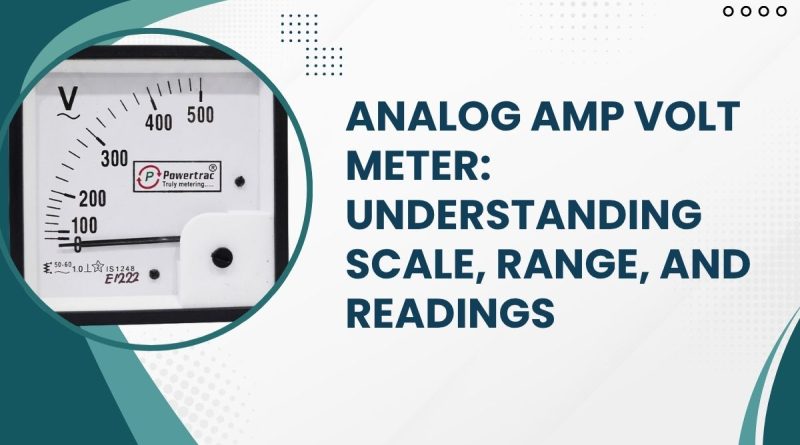
Analog Amp Volt Meter: Understanding Scale, Range, and Readings
Electrical measurement is an important part of monitoring and maintaining electrical systems. Voltage and current need to be observed regularly in control panels, distribution boards, industrial machines, generators, and other electrical equipment. A meter provides a simple way to monitor these values and identify unusual changes before they become a larger problem.
An Analog Amp volt Meter uses a moving pointer and graduated scale to display electrical measurements. Unlike digital instruments that show values as numbers on a screen, analog meters indicate the measured value through the position of a needle. This makes understanding the scale, range, and reading method important for obtaining accurate results.
What Is an Analog Amp Volt Meter?
An analog amp volt meter is a panel-mounted or portable measuring instrument designed to indicate electrical current, voltage, or both, depending on its configuration. The term “amp” generally refers to current measurement in amperes, while “volt” refers to voltage measurement in volts.
The instrument normally consists of a graduated scale, pointer, movement mechanism, terminals, and a protective housing. When an electrical quantity is measured, the internal movement responds to it and moves the pointer across the scale.
These meters are commonly installed where operators need to monitor electrical parameters continuously. Their simple visual indication can make it easy to observe whether a reading is stable, increasing, or decreasing.
How Does an Analog Amp Volt Meter Work?
The working principle depends on the type of measurement and the internal movement used by the instrument. In general, an electrical signal is applied to the meter through appropriate connections. The meter movement responds to the electrical quantity and produces a corresponding pointer deflection.
The pointer moves over a calibrated scale. The position of the pointer represents the measured value.
For current measurement, the meter is connected so that the electrical current passes through the appropriate measuring circuit. For voltage measurement, the instrument is connected across the points where the voltage is being monitored. In practical installations, suitable measuring arrangements such as current transformers may be used for higher-current applications.
The meter must always be selected and connected according to the electrical system and the manufacturer’s specifications.
Understanding the Scale of an Analog Meter
Reading the scale correctly is one of the most important aspects of using an analog meter. The scale contains numerical markings and smaller divisions that allow the user to determine the measured value.
For example, suppose a meter has a scale from 0 to 100 and the pointer is positioned at 60. If the selected range corresponds directly to 0–100 units, the reading is 60 units. However, the same physical scale may represent a different measurement range depending on the meter configuration.
Users should therefore check the meter’s range before interpreting the pointer position.
The smallest divisions on the scale are also important. If the distance between two numbered marks contains several smaller divisions, the value of each division can be calculated based on the difference between the numbered marks.
What Does Meter Range Mean?
The range indicates the maximum electrical value that the meter is designed to measure on a particular setting or configuration.
For example, a voltage meter may be designed for a specific voltage range, while an ammeter may have a particular current range. The correct range depends on the electrical system and the measurement requirement.
Choosing a suitable range is essential because applying a value beyond the instrument’s specified measurement range can result in an incorrect reading and may damage the instrument.
In panel applications, the meter’s rated range should be selected according to the system voltage or current and the measurement method being used. The manufacturer’s technical specifications should always be checked before installation.
How to Read an Analog Amp Volt Meter Correctly
Reading an analog meter requires attention to both the pointer position and the selected scale. The following steps can help:
- Identify the parameter: Determine whether the instrument is measuring voltage, current, or another electrical quantity.
- Check the range: Confirm the meter’s rated measurement range before reading the scale.
- Select the correct scale: Some meters have multiple scales printed on the same dial.
- Observe the pointer: Look directly at the pointer to avoid errors caused by viewing the scale from an angle.
- Read the smallest divisions: Estimate the value between the numbered markings when necessary.
- Apply the range factor: If the displayed scale does not directly match the selected range, calculate the corresponding value.
- Compare the reading: Where appropriate, compare the reading with expected operating values for the electrical equipment.
Avoid estimating a reading too quickly. Taking a moment to identify the correct scale and range can improve measurement accuracy.
Why Is the Correct Range Important?
Using the correct range helps the instrument operate within its intended measurement limits. A range that is too low may not be suitable for the expected electrical value, while an unnecessarily high range can make smaller changes harder to observe on some analog scales.
For example, if an electrical system normally operates around a particular voltage and the meter has multiple available ranges, the appropriate range should be selected according to the instrument’s design and the system requirements.
In fixed installations, the range is generally specified when the meter is selected and installed. This makes it important to provide the manufacturer or supplier with accurate system details before ordering.
Analog Amp volt Meter for Panel Applications
An Analog Amp volt Meter for Panel is commonly used in electrical control panels, distribution panels, generator panels, and industrial equipment where continuous visual monitoring is required.
Panel meters are designed to be installed into a suitable panel cutout and connected to the electrical measurement circuit. Once installed, operators can view the pointer position without using a separate handheld measuring device for routine monitoring.
Depending on the application, separate meters may be used for voltage and current, or a suitable combined configuration may be selected. The required meter size, scale, accuracy, range, mounting arrangement, and electrical specifications should be considered before installation.
For higher-current systems, the measurement arrangement may include a current transformer so that the panel meter can monitor the required current safely within its specified input.
Analog vs Digital Panel Meters
Both analog and digital meters can be used for electrical monitoring, but they present information differently.
An analog meter displays the measurement using a moving pointer. This allows users to see changes in the reading visually and observe the general movement of the measured parameter.
A Digital Panel Meter for Electrical Panel displays the measured value numerically, usually on an LED or LCD display. Digital meters can offer convenient numerical readings and may include additional functions depending on the model.
The choice between the two depends on the application, required features, installation environment, measurement requirements, and user preference. Neither format should be selected solely on appearance; the electrical specifications and intended application are more important.
Common Applications of Analog Amp Volt Meters
Analog meters are used across various electrical and industrial environments. Common applications include:
- Electrical control panels
- Distribution boards
- Generator control panels
- Industrial machinery
- Motor control systems
- Power distribution equipment
- Electrical testing and monitoring setups
- Automation and process-control panels
- Commercial electrical installations
They are particularly useful in installations where operators need a straightforward visual indication of voltage or current.
Factors to Consider Before Selecting a Meter
Selecting the correct meter involves more than choosing the desired display type. Consider the following factors:
Measurement Type
Determine whether the application requires voltage measurement, current measurement, or another parameter.
Measurement Range
The meter range should match the electrical value that needs to be monitored. The expected operating value should remain within the instrument’s specified limits.
Accuracy
Check the manufacturer’s stated accuracy class or accuracy specification. This is especially important where measurements are used for operational or monitoring purposes.
Panel Size
The meter should fit the available panel cutout and mounting arrangement.
Electrical Compatibility
Check the required input, frequency, AC or DC operation, connection method, and other electrical specifications before installation.
Environmental Conditions
Temperature, humidity, vibration, dust, and other site conditions can affect equipment performance. Select a meter suitable for its intended installation environment.
Maintaining an Analog Meter
Routine inspection can help maintain reliable operation. Check the meter for physical damage, loose connections, unusual pointer movement, or signs of overheating. The panel and surrounding wiring should also be inspected as part of normal electrical maintenance.
If a reading appears unusual, do not assume that the meter is faulty. The electrical system, wiring, connections, measuring transformers, and other related components should also be checked by a qualified professional.
Calibration or verification may be appropriate when measurement accuracy is important. The recommended maintenance and calibration interval should follow the manufacturer’s instructions and the requirements of the application.
Conclusion
An analog amp volt meter provides a simple and practical way to monitor electrical values through a moving pointer and graduated scale. Understanding the scale, measurement range, and correct reading method is essential for interpreting its indication accurately.
For panel installations, selecting the right range, measurement type, accuracy, mounting size, and electrical configuration is equally important. While digital meters provide numerical displays and additional functions in many applications, analog meters remain useful where straightforward visual monitoring is required.
Whether used in industrial equipment, generator panels, control systems, or distribution equipment, the right meter should always be selected according to the actual electrical requirements and installed according to the manufacturer’s specifications and applicable safety practices.
Frequently Asked Questions
1. What is an Analog Amp Volt Meter?
An Analog Amp Volt Meter is an electrical measuring instrument that uses a moving pointer and graduated scale to indicate voltage or current. It is commonly used for monitoring electrical parameters in control panels and industrial equipment.
2. How do you read an Analog Amp Volt Meter?
To read an analog meter, first identify the measurement scale and selected range. Then observe where the pointer falls on the graduated scale and calculate the corresponding value based on the meter’s range.
3. What does the range of an analog meter mean?
The range indicates the maximum electrical value that the meter is designed to measure. Selecting a suitable range helps ensure that the instrument operates within its specified limits.
4. Where is an Analog Amp volt Meter for Panel commonly used?
An Analog Amp volt Meter for Panel can be used in electrical control panels, generator panels, distribution boards, industrial machinery, motor control systems, and other electrical monitoring applications.
5. What is the difference between an analog and digital panel meter?
An analog meter displays measurements using a moving pointer, while a digital panel meter displays the value numerically. The appropriate choice depends on the application’s measurement requirements, features, and installation conditions.
6. Why is the correct scale important when reading an analog meter?
Analog meters can have multiple scales on the same dial. Using the wrong scale can lead to an incorrect reading, so the selected measurement range and corresponding scale should always be checked.