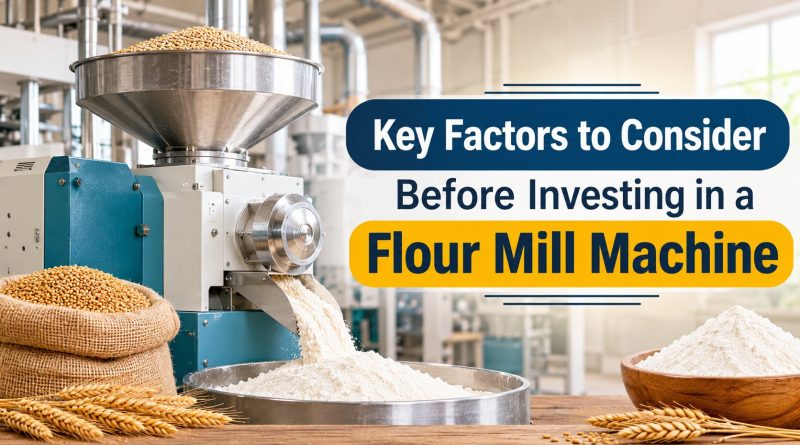
Key Factors to Consider Before Investing in a Flour Mill Machine
Starting a flour milling business requires proper planning, suitable machinery, and an understanding of grain processing requirements. A flour mill machine plays an important role in converting wheat, maize, rice, and other grains into flour. The right equipment can help maintain production quality, improve operational efficiency, and manage processing costs.
Whether you are planning a small commercial unit or a large flour processing plant, selecting suitable machinery is an important investment decision. Before purchasing a flour mill machine in India, businesses should evaluate production capacity, machine quality, energy consumption, automation, maintenance, and manufacturer support.
1. Understand Your Production Requirements
The first step is to identify how much grain you need to process daily. Production requirements depend on the size of your business, customer demand, and the type of flour you plan to manufacture.
Small businesses may require compact machines, while commercial and industrial units generally need higher-capacity equipment.
Consider these points before selecting a machine:
- Expected daily production.
- Required processing capacity per hour.
- Number of operating hours.
- Types of grains to be processed.
- Possibility of future business expansion.
Choosing a machine according to actual production needs helps avoid unnecessary investment and ensures that the equipment can handle regular workloads.
2. Select the Right Type of Flour Mill Machine
Flour milling machines are available in different designs and capacities. Each type serves specific processing requirements.
Domestic Flour Mill: Designed for household use and small quantities of grain processing.
Commercial Flour Mill: Suitable for flour shops, small businesses, and regular commercial production.
Industrial Flour Mill: Used in large processing facilities where higher production capacity and continuous operation are required.
Automatic Flour Mill Plant: Includes different processing stages, such as grain cleaning, grinding, conveying, and packaging, depending on the plant configuration.
Understanding these options helps buyers select equipment according to their business size, budget, and production goals.
3. Check Grinding Capacity
Grinding capacity determines how much grain a machine can process within a specific period. Manufacturers generally mention capacity in kilograms or tonnes per hour.
However, actual production may vary depending on grain quality, moisture content, machine settings, and the type of grinding system.
Before purchasing, check:
- Rated processing capacity.
- Expected output during regular operation.
- Suitability for different grain varieties.
- Consistency of grinding performance.
- Ability to handle future production requirements.
It is advisable to discuss your expected output with the supplier and understand the machine’s performance under practical operating conditions.
4. Evaluate Motor Power and Energy Consumption
Electricity is an important operating expense for flour milling businesses. Therefore, buyers should check motor specifications and power consumption before making an investment.
The motor should provide sufficient power to handle the machine’s intended workload. An unsuitable motor may affect production performance and increase maintenance requirements.
Important factors include motor horsepower, electrical compatibility, energy consumption, and motor protection features.
Businesses should compare the power requirements of different machines along with their production capacities. This helps in understanding the operating expenses and selecting equipment suitable for long-term use.
5. Consider Build Quality and Construction
The construction quality of a flour mill machine directly affects its durability and operational reliability. Machines used for regular commercial production should have a strong structure and suitable components.
Before purchasing, inspect the machine frame, grinding parts, bearings, and other important components.
Food-contact surfaces should use suitable materials that allow proper cleaning and maintenance. Buyers should also check whether spare parts are easily available.
A well-built machine can support regular operations, reduce unexpected breakdowns, and provide reliable performance when maintained properly.
6. Look for Automation and Modern Features
Modern flour milling equipment may include automation features that simplify production and reduce manual work.
Some useful features include:
- Automatic Feeding: Maintains a controlled supply of grains to the grinding section.
- Conveyor Systems: Help transfer grains and flour between different processing stages.
- Control Panels: Allow operators to monitor and manage machine functions.
- Screening Systems: Help separate unwanted particles and maintain flour consistency.
- Packaging Systems: Support weighing and packaging of finished flour.
The level of automation should depend on production volume, available workforce, and the business’s operational requirements.
7. Check Flour Quality and Grinding Consistency
Finished flour quality is an important factor in customer satisfaction. A suitable machine should provide consistent grinding and the required flour texture.
Grinding results depend on grain quality, moisture content, machine settings, and the condition of grinding components.
Before finalising a machine, ask the supplier about available fineness settings, processing capabilities, and sample output. Testing the machine with the grains you intend to process can help you understand its performance.
Businesses should also consider cleaning and screening arrangements to maintain the desired product quality.
8. Choose an Experienced Manufacturer
Selecting the right supplier is as important as selecting the machinery. An experienced flour mill machine manufacturer can guide buyers regarding machine specifications, production capacity, installation, and maintenance requirements.
Before making a purchase, consider the following:
- Manufacturing experience.
- Available machine models and configurations.
- Customisation options.
- Installation and commissioning support.
- Spare parts availability.
- After-sales service.
Buyers should compare technical specifications and discuss their business requirements with the manufacturer before finalising an order.
9. Consider Space and Plant Layout
A flour milling unit requires sufficient space for machinery, grain storage, material movement, and finished product handling.
Before installation, prepare a suitable layout that considers:
- Grain storage and cleaning areas.
- Space for grinding machinery.
- Electrical connections.
- Material handling arrangements.
- Flour storage and packaging areas.
- Ventilation and dust management.
A properly planned layout can improve workflow, simplify maintenance, and make daily operations more organised.
10. Understand the Importance of an Atta Chakki Plant
Businesses planning to establish a complete flour processing facility may consider investing in an atta chakki plant machine. Depending on the production requirements, an integrated plant can include grain cleaning, feeding, grinding, sieving, conveying, storage, and packaging equipment.
The configuration depends on the type of grain, required production capacity, flour quality, and automation level.
Before selecting a plant, buyers should discuss their expected production, available installation space, and future expansion plans with the manufacturer. This helps in choosing a suitable combination of machinery rather than investing in unnecessary equipment.
11. Compare Investment and Maintenance Costs
The initial purchase price should not be the only factor when comparing flour mill machines. Businesses must also consider installation expenses, electricity consumption, labour, spare parts, and regular servicing.
A machine with a lower purchase price may become expensive to operate if it requires frequent repairs or consumes excessive electricity.
Compare the following expenses:
- Machine purchase cost.
- Transportation and installation.
- Electricity consumption.
- Routine maintenance.
- Spare parts and servicing.
- Labour and operating costs.
A complete cost assessment helps businesses understand the overall investment and plan their budget more effectively.
12. Follow Regular Cleaning and Maintenance
Regular maintenance is necessary to keep flour milling machinery in suitable working condition. Flour dust and grain particles can accumulate inside different machine sections, making cleaning and inspection important.
Basic maintenance practices include:
- Clean equipment according to manufacturer instructions.
- Inspect belts, bearings, and moving components.
- Check motor performance regularly.
- Monitor grinding parts for wear.
- Replace damaged components when required.
- Follow recommended servicing schedules.
Proper maintenance can reduce unexpected downtime and support consistent machine performance.
Conclusion
Investing in a flour mill machine requires careful consideration of production capacity, machine type, motor efficiency, construction quality, automation, and maintenance requirements. Businesses should also evaluate the manufacturer’s experience, installation support, and long-term operating expenses.
Whether setting up a small commercial unit or a large grain processing facility, selecting machinery according to actual business requirements can support efficient production and future growth. Proper planning and the right equipment can help establish a reliable flour milling operation.
Frequently Asked Questions
- What should I consider before buying a flour mill machine?
Consider production capacity, machine type, motor power, energy consumption, construction quality, flour consistency, maintenance, and after-sales support.
- Which flour mill machine is suitable for commercial use?
Commercial and industrial flour mills are suitable for regular business operations. The right choice depends on required production capacity, grain type, and operating hours.
- Can one flour mill machine process different grains?
Some machines can process wheat, maize, rice, and other grains. However, compatibility depends on the machine’s design and configuration.
- What is an automatic flour mill plant?
An automatic flour mill plant is a processing setup that can integrate grain cleaning, feeding, grinding, conveying, sieving, and packaging operations.
- How can I maintain a flour mill machine?
Regular cleaning, inspection of moving components, motor checks, timely replacement of worn parts, and scheduled servicing help maintain machine performance.


