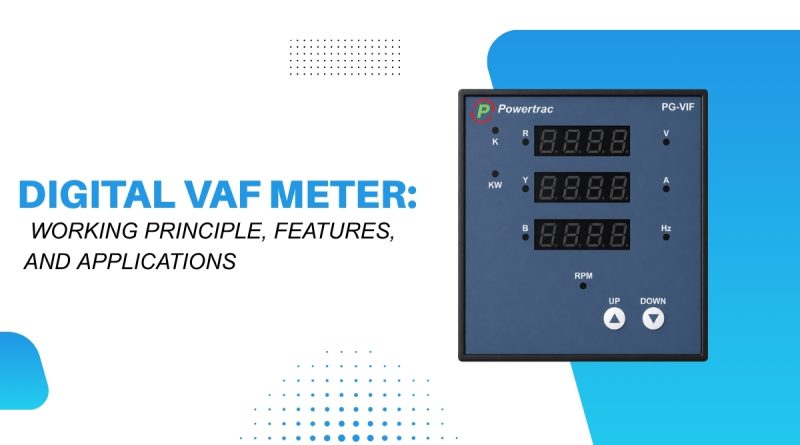
Digital VAF Meter: Working Principle, Features, and Applications
In modern electrical and industrial systems, accurate measurement of electrical parameters is essential for maintaining safety, efficiency, and reliable equipment performance. Voltage, current, and frequency are three important parameters that need regular monitoring in electrical panels, machines, generators, and power distribution systems. A Digital VAF Meter provides a convenient solution by measuring these parameters and displaying the readings in a clear digital format.
VAF stands for Voltage, Ampere, and Frequency. Unlike traditional analog meters that use moving pointers and scales, digital VAF meters use electronic circuits to process electrical signals and show numerical readings. This makes monitoring easier and allows operators to identify changes in electrical conditions quickly.
Digital VAF meters are widely used in industrial control panels, generator panels, motor control systems, distribution boards, automation equipment, and commercial electrical installations. Understanding their working principle, features, benefits, and applications can help businesses select the right meter for their requirements.
What Is a Digital VAF Meter?
A Digital VAF Meter is an electronic measuring instrument designed to monitor voltage, current, and frequency in an electrical system. Depending on its configuration, it can be suitable for single-phase or three-phase applications.
The meter receives electrical inputs from the circuit and processes them through internal electronic components. After processing the signals, the instrument displays the measured values on an LED or LCD screen. In high-current industrial applications, current is commonly measured through a Current Transformer (CT), which provides a suitable input to the meter.
One multifunctional meter can reduce the need for separate voltage, current, and frequency indicators. This can save panel space while giving operators convenient access to essential electrical information.
Working Principle of a Digital VAF Meter
The basic working principle of a digital VAF meter involves sensing electrical signals, converting them into suitable electronic signals, processing the information, and displaying the calculated measurements.
Voltage Measurement
For voltage measurement, the meter receives an input from the electrical supply. Internal circuits condition and scale the input so that it can be safely processed by the measuring electronics. The meter then calculates the voltage value and presents it on the digital display.
Depending on the electrical system, voltage can be measured between phases or between a phase and neutral. Therefore, the meter should always be selected according to the voltage level and configuration of the electrical installation.
Current Measurement
Current measurement may be direct in suitable low-current applications or performed through a Current Transformer for higher current circuits. A CT converts a high primary current into a lower secondary current that can be measured by the meter.
The meter processes the CT signal and displays the corresponding current value. Correct CT ratio, polarity, and wiring are important for obtaining accurate measurements.
Frequency Measurement
Frequency represents the number of alternating-current cycles per second and is measured in Hertz (Hz). The meter analyzes the incoming AC waveform and determines its frequency.
Frequency monitoring is particularly useful in generator and power supply applications where stable frequency is important for equipment operation. Unexpected changes can indicate an issue with the power source or operating conditions.
Key Features of Digital VAF Meters
Modern digital VAF meters include several features designed to make electrical monitoring simple and efficient.
Clear Digital Display
A digital display presents measurements as numerical values, making them easy to read. This is useful in industrial environments where operators need to check electrical parameters quickly.
Multiple Parameter Measurement
The ability to monitor voltage, current, and frequency through one device is a major advantage. It reduces the number of individual instruments required on an electrical panel.
Compact Construction
Digital panel meters are generally designed with compact dimensions. Their space-saving design makes them suitable for control panels and distribution boards where panel space is limited.
Reliable Measurement
When the correct meter is selected and installed according to specifications, it can provide consistent readings for routine electrical monitoring. The measurement range and accuracy should always match the application’s requirements.
Easy Panel Installation
Many models are designed for panel mounting and provide clearly marked terminals for electrical connections. Installation should be performed according to the manufacturer’s wiring diagram and safety instructions.
Single-Phase and Three-Phase Options
Different models are available for different electrical systems. Users can select a configuration based on whether voltage and current measurements are required for single-phase or three-phase equipment.
Benefits of Using a Digital VAF Meter
A digital VAF meter can offer several advantages for industrial and commercial electrical monitoring.
Saves Space
A single multifunctional meter can replace multiple individual measuring instruments. This helps create a cleaner and more organized panel layout.
Easy-to-Read Values
Numerical readings are straightforward to interpret compared with pointer-based analog scales. Operators can quickly observe and record measurements.
Supports Electrical Monitoring
Regular monitoring of voltage, current, and frequency can help operators understand equipment operating conditions and notice unusual readings.
Helps Detect Abnormal Conditions
Unexpected changes in electrical parameters may indicate an underlying issue. Monitoring these values allows maintenance personnel to investigate potential problems before they affect equipment performance.
Supports Preventive Maintenance
Recorded electrical readings can help identify changes in operating conditions over time. This information can support preventive maintenance and troubleshooting activities.
Applications of Digital VAF Meter
Digital VAF meters are used across many industries because electrical parameter monitoring is important for equipment performance and system safety.
Industrial Control Panels
Manufacturing plants use VAF meters to monitor electrical conditions in machinery, production equipment, and distribution panels. Operators can observe important parameters without using separate instruments.
Generator Panels
Generators require monitoring of voltage, current, and frequency during operation. A digital VAF meter provides these readings in an easily accessible format.
Motor Control Panels
Motors operate under different load conditions. Monitoring current and voltage can provide useful information about their electrical operating condition and help identify unusual changes.
Distribution Boards
Commercial and industrial distribution boards may use digital VAF meters to monitor incoming or outgoing electrical supplies. These readings can support routine inspection and maintenance.
Automation Systems
Modern automation equipment depends on reliable electrical supplies. Digital meters can be installed in control panels to provide operators with information about electrical conditions.
Commercial Buildings
Offices, hotels, shopping facilities, and other commercial buildings may use digital electrical meters for monitoring power distribution and connected equipment.
Digital VAF Meter vs Analog Meter
Analog meters display electrical readings through a moving pointer and graduated scale, while digital VAF meters display numerical values electronically.
Digital meters can make readings easier to interpret and can combine several measurements into one device. They can also provide a convenient solution when operators need to record electrical values regularly.
Analog meters are still used in some applications because of their simple and familiar indication. The right choice depends on the electrical system, monitoring requirements, environmental conditions, measurement range, and installation preferences.
How to Choose the Right Digital VAF Meter
Selecting the appropriate meter is important for reliable measurement. Before purchasing, consider the following factors.
Measurement Range
Check the required voltage, current, and frequency ranges. The meter should be suitable for the electrical values expected in the application.
Phase Configuration
Determine whether the system is single-phase or three-phase and select a compatible meter.
CT Ratio
For CT-based current measurement, confirm that the meter supports the required CT ratio. Incorrect configuration can lead to inaccurate readings.
Accuracy
Review the manufacturer’s specified accuracy and select a meter that meets the requirements of the intended application.
Display Visibility
Choose a display that can be easily viewed from the normal operating position, especially when the meter is installed inside an industrial control panel.
Installation Requirements
Check the panel cutout size, mounting method, terminal arrangement, and wiring requirements before installation.
Environmental Conditions
Temperature, humidity, dust, vibration, and other operating conditions should be considered. Selecting equipment suitable for the installation environment can improve long-term reliability.
Why Choose a Reliable Digital VAF Meter Manufacturer?
Choosing a dependable Digital VAF Meter Manufacturer is important when purchasing electrical measurement equipment. Manufacturers should provide clear technical specifications, wiring information, measurement ranges, accuracy details, and operating instructions.
A reliable manufacturer should also maintain suitable quality-control and testing processes. Buyers should evaluate the manufacturer’s product range, technical support, warranty terms, and ability to meet application-specific requirements.
Businesses that require different types of panel meters can also benefit from working with an experienced Digital Meter Manufacturer. A manufacturer offering multiple digital measurement solutions can make it easier to source suitable instruments for different electrical systems.
Installation and Maintenance Tips
Proper installation is essential for accurate and safe operation. Always follow the manufacturer’s wiring diagram and installation instructions. Electrical connections should be handled by qualified personnel, particularly when working with high-voltage or high-current systems.
For CT-based applications, verify the CT ratio, polarity, and connections carefully. Loose terminals, incorrect wiring, or unsuitable input configurations can affect measurement accuracy.
Regularly inspect the meter, wiring, terminals, and surrounding panel for signs of overheating, physical damage, or loose connections. Keeping the display clean also helps maintain clear visibility.
If the meter shows an unexpected value, check the complete electrical circuit, input connections, CT configuration, and supply conditions before determining the cause.
Conclusion
A Digital VAF Meter is a practical solution for monitoring voltage, current, and frequency in modern electrical systems. Its multifunctional design, digital display, compact construction, and convenient operation make it suitable for industrial control panels, generators, motor control systems, distribution boards, automation equipment, and commercial installations.
When selecting a meter, users should consider measurement range, phase configuration, CT compatibility, accuracy, display visibility, installation requirements, and environmental conditions. Choosing an experienced Digital VAF Meter Manufacturer can help businesses obtain suitable products backed by technical information and support.
For organizations requiring a range of electrical measurement instruments, an established Digital Meter Manufacturer can provide solutions for different monitoring applications. With proper selection, installation, inspection, and maintenance, a digital VAF meter can become a valuable part of an efficient and well-monitored electrical system.
FAQs
1. What is a Digital VAF Meter?
A Digital VAF Meter is an electronic measuring device used to monitor voltage, current (ampere), and frequency in electrical systems. It displays the measured values digitally for easy monitoring.
2. Where is a Digital VAF Meter commonly used?
It is commonly used in industrial control panels, generator panels, motor control panels, distribution boards, automation systems, and commercial electrical installations.
3. How does a Digital VAF Meter measure current?
Current can be measured directly in suitable applications or through a Current Transformer (CT) in high-current systems. The meter processes the CT signal and displays the corresponding current value.
4. What parameters can a Digital VAF Meter measure?
A standard VAF meter measures Voltage (V), Current (A), and Frequency (Hz). Specific functions can vary depending on the model.
5. What should I consider when choosing a Digital VAF Meter?
Consider the measurement range, phase configuration, CT ratio, accuracy, display type, installation dimensions, and operating environment before selecting a meter.
6. Can Digital VAF Meters be used for three-phase systems?
Yes. Many Digital VAF Meter models are designed for three-phase electrical systems, while other models are intended for single-phase applications.


