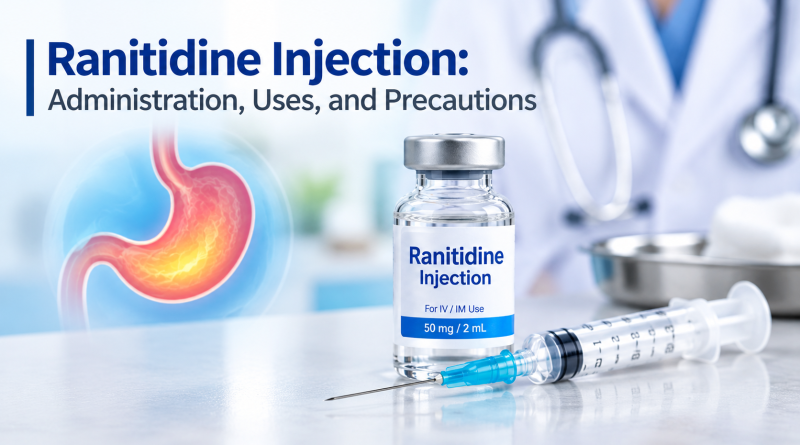
Ranitidine Injection: Administration, Uses, and Precautions
Medicines used to manage excess stomach acid play an important role in treating certain gastrointestinal conditions. Ranitidine is an H2-receptor antagonist that reduces the amount of acid produced in the stomach. Injectable formulations have historically been used in hospital settings when a patient requires acid suppression and oral medication is unsuitable.
Understanding the uses, administration, precautions, and quality requirements associated with Ranitidine Injection is important for healthcare professionals, pharmaceutical manufacturers, and other stakeholders in the healthcare industry. However, its use requires particular attention to regulatory guidance and product safety because of concerns about N-nitrosodimethylamine (NDMA), an impurity associated with some ranitidine products.
What Is Ranitidine Injection?
Ranitidine is a medicine that blocks histamine H2 receptors in the stomach. These receptors help regulate the production of gastric acid. By blocking them, ranitidine reduces acid secretion and may help manage certain acid-related conditions.
The injectable form has been used in clinical settings for patients who cannot take medicines by mouth or who require treatment under medical supervision. Its suitability depends on the patient’s condition, the approved product information, and current local regulatory requirements.
Unlike antacids, which neutralize acid already present in the stomach, ranitidine works by reducing acid production. It belongs to a class of medicines known as H2-receptor blockers.
Medical Uses of Ranitidine Injection
Historically, ranitidine injection has been used for selected gastrointestinal conditions where reducing stomach acid is clinically appropriate. The following are established uses described in historical prescribing information; they should not be interpreted as a recommendation to use every currently available product.
1. Peptic Ulcer Disease
Peptic ulcers are sores that develop in the lining of the stomach or the upper part of the small intestine. Excess acid can aggravate symptoms and interfere with the healing environment.
Ranitidine reduces gastric acid secretion and was previously used as part of the treatment of certain gastric and duodenal ulcers. Current treatment depends on the cause of the ulcer and may include other medicines, particularly when Helicobacter pylori infection is present.
2. Gastroesophageal Reflux Disease
Gastroesophageal reflux disease (GERD) occurs when stomach contents repeatedly flow back into the oesophagus. This can cause heartburn, discomfort, and inflammation.
Acid-suppressing medicines can help manage reflux-related symptoms. Ranitidine injection has had a role in selected clinical circumstances, but clinicians should choose an appropriate, currently authorized alternative or formulation based on the patient’s needs and local guidance.
3. Conditions Associated With Excess Acid Production
Some medical conditions cause the stomach to produce unusually large amounts of acid. Zollinger–Ellison syndrome is one example.
Ranitidine has historically been used in certain pathological hypersecretory conditions. Treatment decisions in these cases require specialist assessment, appropriate monitoring, and consideration of available alternatives.
4. Patients Unable to Take Oral Medication
An injectable medicine may be considered when a patient cannot swallow or otherwise cannot take oral medication. However, an injection is not automatically more effective or appropriate than an oral formulation.
The healthcare professional must evaluate the reason oral medication is unsuitable, the urgency of treatment, the patient’s clinical condition, and the safety profile of the available medicine.
How Does Ranitidine Injection Work?
Ranitidine blocks histamine H2 receptors on acid-producing cells in the stomach. Histamine normally stimulates these cells to release gastric acid. When the receptors are blocked, acid secretion decreases.
Reducing acid production can help relieve acid-related symptoms and support the healing of certain ulcers. Nevertheless, ranitidine does not treat every cause of stomach discomfort, and symptom relief does not necessarily mean the underlying condition has been resolved.
A clinician must determine whether acid suppression is appropriate and whether another treatment would offer a better balance of benefits and risks.
Administration and Dosage Considerations
Ranitidine Injection must be administered by qualified healthcare personnel in accordance with the applicable product label and institutional protocols. The correct route, dose, dilution requirements, administration rate, and monitoring arrangements depend on the specific formulation and clinical circumstances.
Important considerations include:
- Patient assessment: Review the diagnosis, medical history, allergies, kidney function, and other medicines before treatment.
- Dose selection: Any dose must be determined by the prescribing clinician using authorized product information and patient-specific factors.
- Administration technique: Follow the approved instructions for the particular product. Do not assume that different injectable formulations can be administered identically.
- Monitoring: Observe the patient for adverse reactions and any unexpected changes during or after administration.
- Documentation: Record the medicine, dose, batch details where required, administration time, and any suspected adverse reactions according to clinical policy.
Patients should never self-administer an injectable prescription medicine or use leftover stock without medical direction. If ranitidine is unsuitable, a clinician can consider an authorized alternative based on the condition being treated.
Important Precautions and Potential Side Effects
As with other medicines, ranitidine may cause adverse effects. Reported reactions have included headache, nausea, abdominal discomfort, and changes in bowel habits. Injectable administration can also be associated with uncommon but potentially serious reactions, including cardiovascular effects.
Particular caution is necessary in patients with impaired kidney function, because kidney function can affect ranitidine elimination. The healthcare team should also review possible drug interactions and the patient’s overall medical history.
Seek immediate medical attention for signs of a severe allergic reaction, breathing difficulty, fainting, chest discomfort, or another serious unexpected reaction.
Understanding the NDMA Safety Concern
NDMA is a nitrosamine impurity that may increase cancer risk when exposure exceeds acceptable levels over a prolonged period. Regulatory authorities identified concerns that NDMA levels in some ranitidine products could increase during storage, particularly under certain temperature conditions.
In India, the Central Drugs Standard Control Organisation (CDSCO) issued guidance in July 2025 asking manufacturers to monitor NDMA levels in ranitidine active pharmaceutical ingredients and finished formulations and to consider risk-based measures, including changes to shelf life. The notice followed expert review of the safety issue. This means product quality and regulatory compliance are especially important. Patients should not independently restart old stock or assume that every product has the same safety status. Healthcare professionals and suppliers should verify current authorization, applicable warnings, and the quality status of the specific product.
Quality Standards for Pharmaceutical Manufacturers
Producing injectable medicines requires rigorous quality management because these products are administered directly into the body. Manufacturers must follow applicable licensing conditions, pharmacopoeial requirements, good manufacturing practices, and product-specific regulatory standards.
For ranitidine formulations, quality assurance should pay particular attention to the following areas:
- Raw material testing: Verify the identity, purity, and quality of active pharmaceutical ingredients and other materials.
- NDMA monitoring: Apply appropriate validated analytical methods and risk-based controls to monitor nitrosamine impurities.
- Manufacturing controls: Maintain documented procedures, process consistency, and traceability throughout production.
- Sterility and contamination control: Ensure the injectable product meets applicable microbiological and particulate-quality requirements.
- Stability testing: Evaluate product quality over its proposed shelf life under appropriate storage conditions.
- Packaging and labelling: Provide accurate batch identification, expiry information, storage instructions, and approved product details.
- Regulatory compliance: Maintain relevant licences, records, testing reports, and corrective actions as required by applicable authorities.
A Ranitidine Injection Manufacturer must not rely solely on historical product specifications. Current evidence, regulatory directions, validated testing, and ongoing quality monitoring are essential when assessing the suitability of a product for manufacture or supply.
Choosing a Reliable Pharmaceutical Manufacturing Partner
Healthcare organizations and pharmaceutical buyers should evaluate a manufacturer’s regulatory status, quality systems, technical capabilities, and product-specific documentation before entering into a supply arrangement.
A responsible Pharma Manufacturer in India should be able to demonstrate appropriate manufacturing authorization, quality-control procedures, batch traceability, stability data, and compliance with applicable requirements.
For any ranitidine product, buyers should specifically verify whether its manufacture and supply are currently authorized, whether required NDMA controls are in place, and whether the product meets the relevant quality specifications. A manufacturer’s general reputation or certification alone cannot establish the safety of a particular batch.
Conclusion
Ranitidine injection has historically been used to reduce stomach acid in selected gastrointestinal conditions, including certain ulcers and pathological hypersecretory disorders. Its administration requires professional supervision, patient-specific assessment, and adherence to approved product information.
The NDMA issue makes regulatory verification and impurity control particularly important. Healthcare professionals should consider current clinical guidance, while pharmaceutical manufacturers and buyers should prioritize validated testing, stability monitoring, appropriate labelling, and regulatory compliance.
A responsible approach to Ranitidine Injection must place patient safety, evidence-based clinical decisions, and product quality above availability or commercial considerations.
Frequently Asked Questions
- What is Ranitidine Injection used for?
Ranitidine injection has historically been used to reduce stomach acid in selected conditions, including peptic ulcers and pathological acid hypersecretion. Current use depends on regulatory authorization and clinical guidance.
- How does Ranitidine Injection work?
It blocks histamine H2 receptors in the stomach, reducing gastric acid production.
- Who can administer Ranitidine Injection?
It should be administered by qualified healthcare professionals according to the approved product instructions and the patient’s clinical needs.
- What are the possible side effects of Ranitidine Injection?
Possible side effects include headache, nausea, abdominal discomfort, and bowel changes. Serious or unexpected reactions require prompt medical assessment.
- Why is NDMA testing important for ranitidine products?
NDMA is a nitrosamine impurity that may pose a health risk if exposure exceeds acceptable levels over time. Appropriate testing helps manufacturers monitor product quality and comply with applicable regulatory requirements.

