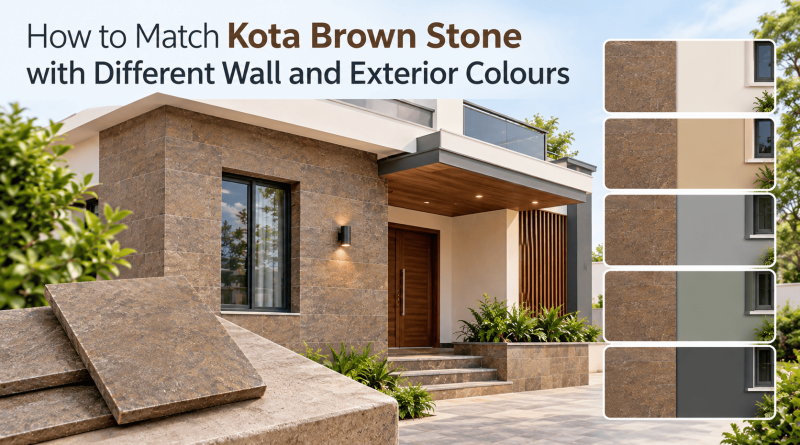
How to Match Kota Brown Stone with Different Wall and Exterior Colours
Choosing the right combination of flooring and wall colours can significantly influence the appearance of a residential or commercial property. Natural stone flooring adds texture, character, and an earthy appeal to architectural spaces. When paired with suitable wall and exterior colours, it can create a balanced design that complements traditional homes, modern buildings, courtyards, and landscaped areas.
Kota Brown Stone is a natural flooring material valued for its brown shades and versatile appearance. It can work with several colour palettes, from light neutrals to deeper architectural accents. However, selecting the right combination requires considering more than the colour of the stone. Lighting, wall texture, building size, surrounding materials, and maintenance requirements also influence the final result.
This guide explores practical ways to coordinate brown natural stone with different wall and exterior colours and create a cohesive architectural design.
Understanding the Natural Appearance of Kota Brown Stone
Before selecting wall colours, it is important to understand the appearance of the stone being used. Natural stone can display variations in shade, texture, and pattern depending on the material, finish, and supply batch.
Brown stone generally complements earthy colour palettes because its warm appearance works well with neutral walls, natural wood, and landscape elements. Depending on the selected shade, it can create either a subtle background or a noticeable design feature.
Homeowners should examine actual stone samples before choosing paint or exterior finishes. A colour that appears suitable in a showroom may look different when exposed to direct sunlight or placed beside other building materials.
The finish also matters. A smooth surface may reflect light differently from a honed or textured surface, affecting how the flooring interacts visually with the surrounding walls.
1. Pair Brown Stone with Cream and Off-White Walls
Cream and off-white are versatile wall colours for properties featuring brown natural stone flooring. Their lighter appearance creates contrast and helps the flooring remain visually distinct.
This combination works well in entrance areas, verandas, courtyards, patios, and residential interiors. Cream introduces warmth, while off-white can create a cleaner and more contemporary appearance.
For exterior walls, warm white shades can complement the natural character of brown stone without making the overall design feel overly complicated. Wooden doors, neutral window frames, and simple landscaping can further connect the different materials.
When using darker brown flooring, lighter walls can also help compact areas feel more open. However, the final appearance depends on the amount of natural light and the proportions of the space.
2. Use Beige and Sand Colours for an Earthy Appearance
Beige and sand-coloured walls create a coordinated appearance with brown stone. Since these colours belong to a similar earthy palette, they can make a building feel warm and visually connected to its surroundings.
This combination is suitable for traditional houses, outdoor seating areas, garden pathways, and properties that use natural materials as part of their architectural design.
To prevent the overall appearance from becoming too uniform, introduce differences in texture. For example, smooth painted walls can be paired with natural stone flooring, wooden features, or green plants.
Warm beige is often a useful starting point, but the exact shade should be selected according to the colour of the actual stone. Testing samples together helps establish whether the combination creates enough contrast.
3. Combine Brown Stone with Light Grey Walls
Light grey offers a contemporary alternative to traditional cream and beige colours. It provides a neutral background that can make brown flooring more noticeable without introducing a strong competing colour.
This pairing can work well in modern houses, office entrances, commercial buildings, and outdoor spaces with clean architectural lines. Grey walls can also coordinate with metal railings, glass windows, and understated exterior features.
The undertone of the grey is important. Warm grey can create a softer transition between the flooring and walls, while cooler grey can produce a sharper contrast.
If the stone has strong warm undertones, compare several grey samples before making a decision. This helps avoid a combination in which the walls and flooring appear disconnected.
4. Choose Muted Green for Garden and Outdoor Spaces
Muted green, sage, and olive shades can complement the earthy character of brown natural stone. These colours are particularly useful in outdoor environments where trees, plants, and landscaped areas form part of the design.
A muted green exterior can create a calm appearance around garden pathways, patios, boundary walls, and covered verandas. The brown flooring connects the building with the surrounding landscape, while green reinforces the natural theme.
For a balanced result, use green as the main wall colour or on selected architectural sections rather than introducing too many competing shades.
Neutral trim, wooden elements, and simple outdoor lighting can complete the design. Exterior paint should also be suitable for the local climate and the surface on which it will be applied.
5. Create a Contemporary Look with Charcoal Accents
Charcoal, dark grey, and deep brown can create a strong architectural appearance when used alongside brown stone flooring.
These colours are especially effective for window frames, gates, railings, entrance features, and selected exterior panels. They add definition without requiring every wall to have a dark finish.
For example, cream exterior walls, charcoal window frames, and brown stone flooring can establish a clear visual hierarchy. Each material contributes to the overall design without overwhelming the space.
In smaller properties, using dark colours selectively can help preserve a sense of openness. The local climate should also be considered because darker exterior surfaces can absorb more solar heat than lighter ones.
6. Explore Terracotta and Earthy Red Shades
Terracotta, muted brick red, and similar earthy colours can complement the warmth of brown natural stone. This palette is suitable for traditional homes, courtyards, heritage-inspired buildings, and designs that incorporate locally influenced architectural details.
The key is to choose muted shades rather than overly bright reds. Subtle terracotta accents can introduce character while allowing the stone flooring to remain an important feature.
Wooden doors, clay planters, natural textures, and greenery can strengthen this combination. If the flooring already has noticeable reddish-brown undertones, use terracotta sparingly to avoid making the entire space appear too similar in colour.
7. How Kota Blue Stone and Brown Stone Can Influence Design Choices
Natural stone is available in different colours, and the choice can affect the overall appearance of a property. Kota Blue Stone is commonly associated with blue-grey or greenish-grey tones, while brown varieties offer a warmer earthy appearance. Exact shades may vary by source and finish.
These differences provide architects and homeowners with different design possibilities.
Brown stone can complement cream, beige, warm white, muted green, and terracotta walls. Blue-grey stone may work particularly well with white, light grey, charcoal accents, and other cool or neutral colours.
The choice between the two should depend on the desired architectural style, surrounding materials, and intended application. It is also important to compare the actual samples because natural colour variations can influence the final combination.
When planning a project with Kota Stone, consider how the flooring will coordinate with wall colours, doors, windows, outdoor paving, and landscaping. Reviewing the entire material palette together can help create a more consistent result.
8. Consider Wall Texture Alongside Colour
Colour is only one part of an effective architectural design. Wall texture also changes how natural stone looks within a space.
Smooth painted walls create a clean contrast with textured flooring. Lightly textured plaster can introduce depth, while brick details or selected stone cladding can strengthen a rustic appearance.
However, combining too many textured surfaces can make a space feel visually crowded. If the flooring has noticeable natural variations, simpler wall finishes can help maintain balance.
For contemporary projects, one primary wall finish and a complementary accent material may be sufficient. Traditional designs can incorporate more texture when the finishes remain consistent with the building’s overall style.
9. Understand the Role of Lighting
Lighting can significantly influence how stone and paint colours appear. Outdoor areas receive changing daylight throughout the day, and direct sunlight may make brown stone look lighter than it does in shaded areas.
At night, warm lighting can emphasise earthy tones, while cooler lighting may create a more neutral appearance. Indoor spaces are similarly affected by the direction of natural light and the colour temperature of artificial lighting.
Before finalising a colour scheme, examine stone and paint samples at different times of day. If the area will mainly be used in the evening, evaluate the combination under the intended lighting conditions.
This simple step can help prevent colour mismatches after installation.
10. Practical Factors to Consider Before Finalising Colours
A successful colour scheme should be attractive as well as suitable for everyday use.
Consider these points before making the final selection:
- Building size: Lighter wall colours can help smaller areas feel more open, while darker accents can add definition.
- Climate: Choose exterior paints and finishes suitable for local weather conditions.
- Maintenance: Consider dust, rain marks, staining, and the cleaning requirements of each material.
- Stone finish: Different surface finishes reflect light differently and can change the appearance of the flooring.
- Surrounding materials: Coordinate the stone with doors, window frames, railings, roofing, and landscaping.
- Sample testing: Place actual stone and paint samples together before purchasing materials in bulk.
When ordering natural stone, review the material from the intended supply batch because variations in shade and texture can affect the final appearance.
Conclusion
Matching brown natural stone with suitable wall and exterior colours can improve the visual balance of a property and highlight the stone’s natural character. Cream, off-white, beige, light grey, muted green, charcoal accents, and terracotta can all work well when selected according to the stone’s actual shade and the building’s architectural style.
Comparing brown varieties with alternatives such as Kota Blue Stone can also help homeowners and designers select a colour palette that suits their project. The best combination depends on lighting, surrounding materials, building size, and practical maintenance requirements.
Frequently Asked Questions
1. Which wall colour looks best with Kota Brown Stone?
Cream, off-white, beige, and warm grey are versatile choices. The best shade depends on the stone’s actual colour, available light, and the architectural style of the property.
2. Can brown natural stone be used with modern exterior designs?
Yes. Brown stone can complement contemporary buildings when paired with neutral walls, clean lines, glass, metal accents, and simple landscaping.
3. Does Kota Brown Stone look good with white walls?
Yes. White and off-white walls can create contrast with brown stone and help the flooring stand out. Warmer whites may coordinate particularly well with earthy brown tones.
4. What is the difference between Kota Brown Stone and Kota Blue Stone?
The main visible difference is their typical colour appearance. Brown varieties offer warmer earthy tones, while blue varieties generally feature blue-grey or greenish-grey tones. Actual colour and texture can vary depending on the material and finish.
5. Can dark grey walls be combined with brown stone?
Yes. Dark grey can work well for accent walls, window frames, gates, and other exterior features. Combining dark accents with lighter main walls can help maintain visual balance.


