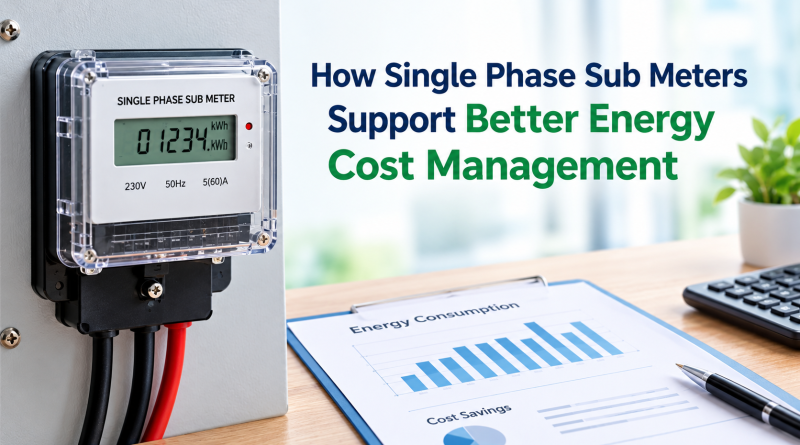
How Single Phase Sub Meters Support Better Energy Cost Management
Managing electricity consumption is an important part of controlling expenses in homes, rental properties, shops, offices, and small commercial establishments. When electricity is supplied through a common connection, it can be difficult to determine how much power each room, tenant, appliance, or individual section consumes. This lack of visibility may lead to confusion about electricity bills and make it harder to identify opportunities for energy savings.
A Single Phase Sub Meter helps address this challenge by measuring electricity consumption for a specific circuit, area, or electrical load. Instead of relying only on the main electricity meter, property owners can monitor individual consumption more clearly. These readings can support better billing calculations, energy awareness, and electricity cost management.
Understanding how sub-metering works, where it is useful, and how to select the right device can help property owners make more informed decisions about electricity usage.
What Is a Single Phase Sub Meter?
A single-phase sub meter is an electrical measuring device installed downstream of a main electricity meter to record the electricity consumed by a particular section of an electrical installation. It is commonly used in residential properties, small shops, offices, rental accommodations, and other locations where individual electricity consumption needs to be monitored.
Unlike a main utility meter, which generally measures the total electricity supplied to a property, a sub meter focuses on a designated circuit or area. For example, a landlord may install separate meters for different rental units to understand how much electricity each unit consumes.
Most single-phase systems operate using a phase conductor and a neutral conductor. The meter measures electrical parameters and records energy consumption, usually in kilowatt-hours (kWh), which is the standard unit used for electricity billing.
How Does a Single Phase Sub Meter Help Manage Energy Costs?
1. Provides Clearer Electricity Consumption Records
One of the main benefits of sub-metering is improved visibility into electricity usage. When multiple occupants share a property, the main meter shows their combined consumption rather than the amount used by each person.
A separate meter helps distinguish the electricity consumed by an individual unit or designated circuit. Property owners can use these readings to understand consumption patterns and calculate electricity costs more transparently.
Clear records can also reduce disagreements between tenants and property managers regarding shared electricity expenses.
2. Supports More Transparent Electricity Billing
Shared electricity bills can become difficult to divide fairly when occupants have different usage habits. One household may use air conditioning for several hours each day, while another may consume considerably less electricity.
A sub meter records the energy used by the circuit or unit it monitors. By comparing readings over a billing period, property managers can calculate consumption-based charges according to an agreed billing arrangement and applicable regulations.
For accurate calculations, readings should be recorded consistently, and the applicable electricity tariff, fixed charges, taxes, and other billing components should be considered where relevant.
3. Helps Identify High-Consumption Areas
Unexpected increases in electricity expenses may result from longer operating hours, additional appliances, inefficient equipment, or changes in occupancy.
Sub-meter readings can help narrow down the source of increased consumption. For example, if the electricity usage recorded for a workshop rises significantly, the owner can investigate equipment operating schedules, heating loads, or other electrical demands.
A meter does not automatically identify the reason for higher consumption, but it provides useful information for further investigation.
4. Encourages Energy-Conscious Behaviour
When people can see how much electricity they use, they may become more aware of their everyday habits. Monitoring consumption can encourage practical measures such as switching off unused equipment, improving air-conditioning settings, replacing inefficient lighting, and avoiding unnecessary standby power.
Over time, comparing readings before and after these changes can help determine whether the measures are reducing electricity consumption.
However, actual savings depend on the equipment being used, operating conditions, and the actions taken by occupants.
5. Improves Monitoring in Rental Properties
Rental buildings, paying guest accommodations, and properties with multiple independent units often need a reliable method of tracking individual electricity consumption.
Installing appropriately rated sub meters can help property owners maintain separate usage records for each designated unit. This arrangement can be particularly useful when different occupants have different schedules or electricity requirements.
The installation must be designed so that each meter measures only the intended circuit. Electrical work should be performed by a qualified professional, with appropriate safety precautions and compliance with local requirements.
Where Are Single Phase Sub Meters Commonly Used?
Single-phase sub meters are suitable for many applications where the electrical installation uses a compatible single-phase supply.
Common applications include:
- Residential properties: Monitoring electricity consumption in separate rooms, floors, or independent units.
- Rental apartments: Maintaining individual electricity usage records for tenants.
- Shops and small offices: Tracking electricity used by a particular business space.
- Small workshops: Monitoring the consumption of designated equipment or production areas.
- Hostels and paying guest accommodations: Supporting consumption tracking across individual sections.
- Auxiliary electrical circuits: Measuring the energy consumed by a specific load or group of appliances.
The meter’s rated current, voltage, accuracy class, installation method, and intended application should be checked before selection. Not every meter is suitable for every circuit.
Single Phase Sub Meter vs. Three Phase Energy Meter
Selecting the correct meter depends largely on the electrical supply and the load being monitored.
A single-phase meter is generally suitable for compatible single-phase installations, while a Three Phase Energy Meter is designed for electrical systems with three-phase supplies. Three-phase meters are commonly used in commercial buildings, industrial facilities, larger equipment installations, and locations with substantial electrical loads.
The two types serve related purposes but are not interchangeable in every application.
For example, a small office with a single-phase supply may use a single-phase sub meter to monitor its consumption. A manufacturing unit operating three-phase motors may require a suitable three-phase meter to measure the energy used by its electrical system.
Before purchasing a meter, consider the supply configuration, load requirements, current rating, measurement accuracy, and whether additional features such as communication interfaces or remote monitoring are needed.
Important Features to Consider When Selecting a Sub Meter
Choosing the right meter helps ensure reliable measurement and suitability for the intended installation.
Measurement Accuracy
Check the specified accuracy class and relevant technical standards. Accurate measurements are particularly important when readings are used for consumption comparisons or billing calculations.
Current and Voltage Ratings
The meter must be suitable for the electrical supply and expected load. Its current rating should not be selected without considering the installation design and applicable protection requirements.
Display and Readability
A clear display makes it easier to record consumption readings. Digital displays can simplify reading energy values, while the availability of additional parameters depends on the particular model.
Installation Type
Meters may be designed for DIN-rail mounting, panel installation, or other specified arrangements. Choose a compatible design for the distribution board or electrical enclosure.
Communication Capabilities
Some models support communication features for remote data collection and energy monitoring. These functions can be useful in installations where regular manual readings are inconvenient.
Manufacturer Support and Documentation
When evaluating products from an Energy Meter Manufacturer, review technical specifications, applicable certifications, warranty terms, product documentation, and after-sales support. Reliable documentation helps installers select and configure the correct meter.
How to Improve Energy Cost Management Using Meter Readings
Installing a meter is only the first step. Consistent monitoring makes the information more useful.
First, record the initial meter reading when monitoring begins. Next, take readings at regular intervals, such as weekly or monthly, depending on the application. Subtract the previous reading from the latest reading to calculate energy consumption during that period.
For example, if a meter records 1,250 kWh at the beginning of a month and 1,430 kWh at the end, the recorded consumption for that period is 180 kWh.
Compare consumption across different periods and investigate unusual changes. Where appropriate, review equipment operating hours, occupancy patterns, and energy-saving measures.
If the readings are being used to allocate costs between occupants, establish a clear billing method and ensure that the arrangement complies with applicable local rules. A sub meter reading alone does not establish the complete electricity bill because tariffs and other charges may also apply.
Conclusion
A single-phase sub meter can make electricity consumption easier to monitor in homes, rental properties, shops, offices, and small commercial installations. By providing separate usage records, it supports transparent cost allocation, helps identify unusual consumption patterns, and encourages more informed energy management.
Choosing a suitable meter requires attention to electrical compatibility, current ratings, accuracy, installation requirements, and product support. Regularly reviewing readings is equally important because measurement becomes valuable when it leads to practical decisions.
Whether the requirement is individual consumption tracking or broader electrical monitoring, selecting the correct metering solution helps improve visibility into energy use and supports better control over electricity-related expenses.
Frequently Asked Questions
1. What is the main purpose of a Single Phase Sub Meter?
A Single Phase Sub Meter measures electricity consumption for a designated circuit, room, rental unit, or electrical load. It helps users monitor individual usage separately from the total consumption recorded by the main meter.
2. Can a single-phase sub meter help reduce electricity bills?
It can help users understand consumption patterns and identify areas of unnecessary usage. Actual savings depend on whether users take effective steps to reduce electricity consumption.
3. Where is a single-phase sub meter commonly installed?
It is commonly used in rental apartments, homes, small shops, offices, hostels, and other compatible single-phase installations where separate consumption monitoring is required.
4. What is the difference between a single-phase sub meter and a Three Phase Energy Meter?
A single-phase sub meter is designed for compatible single-phase electrical systems. A Three Phase Energy Meter is designed to measure energy consumption in compatible three-phase systems, which are common in many commercial and industrial applications.
5. How is electricity consumption calculated from a sub meter?
Subtract the previous cumulative kWh reading from the current reading. For example, if the readings are 2,100 kWh and 2,250 kWh, consumption during the period is 150 kWh.


