Why Arthroscopy Is Used for Treating Different Joint Conditions
Joint pain, stiffness, swelling, and restricted movement can affect everyday activities, making it difficult to walk, exercise, work, or perform routine tasks. These problems may develop due to sports injuries, accidents, aging, cartilage damage, or other joint-related conditions. When medicines and physiotherapy do not provide sufficient relief, doctors may recommend surgical treatment depending on the underlying problem.
One commonly used surgical technique is arthroscopy. It is a minimally invasive procedure that allows doctors to examine and treat problems inside a joint using a small camera and specialised surgical instruments. Patients searching for an arthroscopy hospital in Jaipur can consult an orthopaedic specialist to understand whether this procedure is suitable for their joint condition.
What Is Arthroscopy?
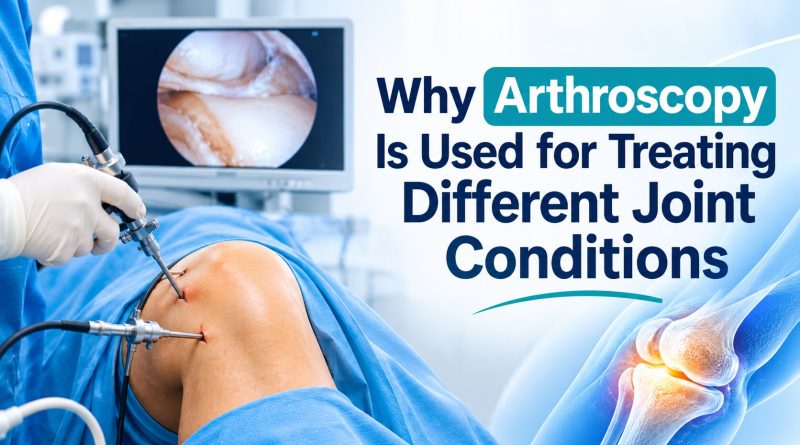
Arthroscopy is a minimally invasive surgical procedure used to diagnose and treat problems affecting joints such as the knee, shoulder, ankle, elbow, wrist, and hip. The procedure involves inserting a thin instrument called an arthroscope into the joint through a small incision.
The arthroscope contains a camera and light source that transmit images of the joint’s internal structures to a monitor. This allows the surgeon to examine cartilage, ligaments, tendons, and other tissues.
If treatment is required, additional small instruments can be inserted through separate incisions to repair or remove damaged tissue, depending on the condition.
Why Is Arthroscopy Used for Different Joint Conditions?
Arthroscopy is useful because several joint problems involve internal structures that cannot always be properly evaluated through a physical examination alone. It allows surgeons to directly visualise the affected area and perform specific treatments during the same procedure.
Here are some common conditions for which arthroscopy may be recommended.
1. Meniscus Tears in the Knee
The meniscus is a piece of cartilage that acts as a cushion between the thighbone and shinbone. It helps distribute body weight and stabilise the knee joint.
A meniscus tear can occur due to sudden twisting movements, sports injuries, or age-related degeneration. Common symptoms include knee pain, swelling, stiffness, and difficulty bending or straightening the leg.
Arthroscopy allows surgeons to examine the damaged meniscus and determine whether it can be repaired or whether the torn portion needs to be removed. Preserving as much healthy meniscus tissue as possible is generally preferred.
2. Anterior Cruciate Ligament (ACL) Injuries
The anterior cruciate ligament (ACL) is an important ligament that helps maintain knee stability. It can tear during activities involving sudden direction changes, jumping, landing, or sports-related accidents.
An ACL injury may cause a popping sensation, swelling, instability, and difficulty participating in physical activities.
Arthroscopic ACL reconstruction is commonly performed to restore knee stability. During the procedure, the damaged ligament is replaced with a graft, which may be taken from the patient’s own tendon or obtained from another suitable source.
An experienced arthroscopy surgeon in jaipur can evaluate the injury and recommend an appropriate treatment plan based on ligament damage, activity level, and overall knee stability.
3. Shoulder Joint Problems
Shoulder arthroscopy is used to diagnose and treat several conditions affecting the shoulder joint. These may include rotator cuff tears, shoulder instability, labral injuries, and certain cases of impingement.
The rotator cuff consists of muscles and tendons that help control shoulder movement and maintain joint stability. Damage to these structures can cause pain, weakness, and difficulty lifting the arm.
Through arthroscopy, surgeons can repair torn tendons, address certain soft tissue injuries, and treat other suitable shoulder conditions using specialised instruments.
4. Cartilage Damage
Articular cartilage covers the ends of bones inside joints and allows smooth movement. Injury, repetitive stress, or degenerative changes can damage this protective surface.
Cartilage damage may lead to joint pain, swelling, stiffness, and reduced mobility. In selected cases, arthroscopy helps surgeons assess the extent of cartilage damage and perform procedures such as removing loose fragments or treating specific cartilage defects.
The appropriate treatment depends on the location, size, and severity of the damage.
5. Joint Loose Bodies
Loose bodies are small fragments of bone or cartilage that move freely within a joint. They may develop due to injuries, joint degeneration, or certain medical conditions.
These fragments can cause sudden joint locking, clicking sensations, discomfort, and restricted movement.
Arthroscopy allows surgeons to locate and remove loose fragments through small incisions. This may help reduce mechanical symptoms and improve joint movement.
6. Shoulder Dislocation and Joint Instability
Repeated shoulder dislocations can damage the soft tissues responsible for keeping the shoulder joint stable. This may result in recurring instability and difficulty performing normal activities.
Arthroscopic procedures can help repair damaged labrum tissue and strengthen the structures supporting the shoulder. The treatment approach depends on the extent of injury and the patient’s overall joint condition.
7. Ankle and Hip Joint Conditions
Arthroscopy is not limited to the knee and shoulder. It can also be used to treat selected ankle and hip joint problems.
In the ankle, it may help address cartilage injuries, loose bodies, and certain conditions causing persistent pain or restricted movement.
Hip arthroscopy may be recommended for selected cases involving labral tears, femoroacetabular impingement, and loose bodies.
These procedures require specialised surgical expertise because of the complex anatomy of the hip and ankle joints.
Benefits of Arthroscopy for Joint Treatment
Arthroscopy offers several advantages over conventional open surgical procedures in suitable patients. Some important benefits include:
- Smaller incisions: The procedure generally requires only small cuts to access the affected joint.
- Less tissue disruption: Specialised instruments allow surgeons to work inside the joint without making a large surgical opening.
- Better visualisation: The camera provides a magnified view of internal joint structures.
- Targeted treatment: Surgeons can address specific problems, such as ligament injuries, cartilage damage, and loose fragments.
- Potentially quicker recovery: Many patients experience a shorter initial recovery period compared with certain open procedures.
- Reduced postoperative discomfort: Smaller incisions may help reduce pain and wound-related complications.
However, the benefits depend on the patient’s condition, the type of procedure, and overall health. Arthroscopy is not suitable for every joint problem.
How Is Arthroscopy Performed?
Arthroscopy is generally performed under regional or general anaesthesia, depending on the joint being treated and the complexity of the procedure.
The process usually involves the following steps:
- Preoperative evaluation: The doctor reviews the patient’s symptoms, medical history, physical examination, and imaging reports.
- Anaesthesia: Appropriate anaesthesia is administered to ensure comfort during surgery.
- Small incisions: The surgeon makes small openings around the affected joint.
- Camera insertion: An arthroscope is inserted to examine the internal structures on a monitor.
- Treatment: Specialised instruments are used to repair or remove damaged tissue, depending on the condition.
- Incision closure: The instruments are removed, and the small incisions are closed with sutures or dressings.
The duration of the procedure varies according to the joint involved and the treatment required.
Who May Need Arthroscopic Surgery?
Arthroscopy may be considered for patients experiencing persistent joint symptoms that do not improve sufficiently with non-surgical treatment.
A doctor may recommend an evaluation for arthroscopy when a patient has:
- Repeated knee or shoulder injuries.
- Persistent joint pain and swelling.
- Restricted movement or joint stiffness.
- A torn ligament or meniscus.
- Recurrent shoulder dislocations.
- Loose cartilage or bone fragments.
- Mechanical symptoms such as joint locking or catching.
Patients looking for an arthroscopy hospital in jaipur should consider the hospital’s orthopaedic facilities, surgical expertise, diagnostic support, and postoperative rehabilitation services. A proper medical assessment is essential before deciding whether arthroscopy is appropriate.
What Is the Recovery Process After Arthroscopy?
Recovery after arthroscopy depends on the joint treated and the type of surgical procedure performed. Some patients can resume light activities relatively soon, while others may require several weeks or months of rehabilitation.
The recovery process generally includes:
- Initial rest: The operated joint may need rest, ice application, and elevation to manage swelling.
- Pain management: Doctors may prescribe medicines to control postoperative discomfort.
- Physiotherapy: Guided exercises help restore flexibility, strength, and joint movement.
- Activity modification: Heavy lifting, running, and strenuous activities should be avoided until medically permitted.
- Follow-up appointments: Regular check-ups help monitor healing and recovery progress.
Patients should follow their surgeon’s instructions carefully. Returning to sports or physically demanding activities too early can increase the risk of reinjury.
How to Choose the Right Arthroscopy Surgeon?
Selecting an experienced surgeon is an important part of joint treatment. Arthroscopic procedures require specialised training, knowledge of joint anatomy, and experience in handling different types of injuries.
When consulting an arthroscopy surgeon in jaipur, patients should consider the following factors:
- The surgeon’s orthopaedic qualifications and experience.
- Experience in treating the specific joint condition.
- Availability of modern diagnostic and surgical facilities.
- Access to physiotherapy and rehabilitation services.
- Clear communication about treatment options, risks, and expected recovery.
Patients with advanced joint damage may also need other treatment options. For example, individuals with severe arthritis may be evaluated for joint replacement rather than arthroscopy. A robotic joint replacement hospital may offer another treatment option for eligible patients requiring joint replacement surgery.
It is important to understand that arthroscopy and joint replacement serve different purposes. The choice depends on the extent of joint damage, symptoms, age, activity level, and medical evaluation.
Conclusion
Arthroscopy has become an important technique in modern orthopaedic care because it allows surgeons to diagnose and treat several joint conditions through minimally invasive methods. From meniscus tears and ACL injuries to shoulder instability and cartilage damage, it can help address different problems in suitable patients.
However, successful treatment depends on accurate diagnosis, appropriate surgical planning, the surgeon’s expertise, and proper rehabilitation. Patients experiencing persistent joint pain or movement difficulties should consult an orthopaedic specialist to understand which treatment approach is most suitable for their condition.
Frequently Asked Questions (FAQs)
- Is arthroscopy a major surgery?
Arthroscopy is generally considered a minimally invasive surgical procedure. However, its complexity depends on the joint condition and the treatment being performed.
- Which joint problems can be treated with arthroscopy?
Arthroscopy can be used for selected knee, shoulder, hip, ankle, elbow, and wrist conditions, including ligament injuries, cartilage damage, and loose bodies.
- How long does it take to recover from arthroscopy?
Recovery varies depending on the procedure. Some patients resume routine activities within a few weeks, while ligament reconstruction and complex repairs may require several months.
- Is arthroscopy better than open surgery?
Arthroscopy offers smaller incisions and less tissue disruption in suitable cases. However, open surgery may be more appropriate for certain complex conditions.
- How do I find the right arthroscopy specialist in Jaipur?
Look for an experienced surgeon with relevant orthopaedic qualifications, experience in the required procedure, and access to proper rehabilitation facilities.