Deeper, Smarter, Better: Why 3D Massage Technology Is a Game-Changer
For years, massage chairs relied on simple back-and-forth roller movements — effective, but limited. They could apply pressure up and down the spine, but they couldn’t truly adapt to the shape of the person sitting in them. Today, a new generation of seating has emerged that thinks, adapts, and moves with far more precision. This is the era of the 3D massage chair, and it’s changing what people expect from at-home relaxation. Instead of a flat, one-directional motion, 3D technology allows rollers to move inward and outward, adjusting depth in real time to match the natural contours of your body. The result is a massage that feels less mechanical and more like the hands of a skilled therapist working out real tension, not just skimming the surface.
Problem With Traditional Massage Chairs
To understand why 3D technology is such a significant leap forward, it helps to look at what came before it. Early massage chairs offered relief, but the experience was often generic. Rollers moved along a single fixed track, applying the same pressure regardless of whether the user was broad-shouldered, petite, or somewhere in between. For many people, this meant certain areas received too much pressure while others barely got touched at all. It’s the equivalent of a masseuse using the exact same technique on every client, without ever adjusting to the person on the table.
This is where the limitations of a standard massage chair become clear. Comfort and effectiveness both depend on the ability to adapt—and adaptation requires more than just moving up and down. It requires depth, precision, and responsiveness. That’s exactly the gap 3D technology was built to close.
What Makes 3D Different
A traditional massage chair moves rollers along a fixed vertical or horizontal track. A 3D system adds a crucial third dimension—depth. Instead of pressing at one consistent intensity, the rollers extend and retract to follow the curves of the neck, shoulder blades, and lower back. This means broader shoulders receive firmer contact, while more delicate areas like the neck get a gentler touch. It’s an intelligent, body-aware approach that eliminates the “one size fits all” problem so many older massage chairs struggle with.
In practice, this means the chair is constantly recalibrating throughout a session. As the rollers travel along the spine, sensors detect the changing contour of the back and adjust roller extension accordingly. The pressure a person feels near their shoulder blades will differ from what they feel near the lower back — not because the machine is randomly varying intensity, but because it’s actually mapping the body’s real shape and responding to it. This is the difference between a massage that feels generic and one that feels genuinely personalized.
Zero Gravity: The Perfect Complement to 3D Rollers
Paired with zero-gravity massage chair positioning — which reclines the body into a posture that evenly distributes weight and reduces spinal pressure — 3D rollers can work even more effectively. The zero-gravity position, inspired by the posture astronauts adopt during liftoff, elevates the legs to roughly the same level as the heart. This reduces the load on the lower spine and allows the entire back to rest more naturally against the chair’s surface.
With the body weightless and fully supported, rollers glide deeper into muscle tissue without resistance, making recovery sessions feel more thorough and far more relaxing. Muscles that are already relaxed by reduced gravitational pull respond better to roller pressure, allowing 3D technology to reach tension points that might otherwise stay guarded or tight. Together, these two systems—adaptive 3D rollers and zero gravity support—create a session that feels closer to a professional table massage than anything a standard chair can offer.
Introducing the Rotai R-RELX Luxury 3D Massage Chair
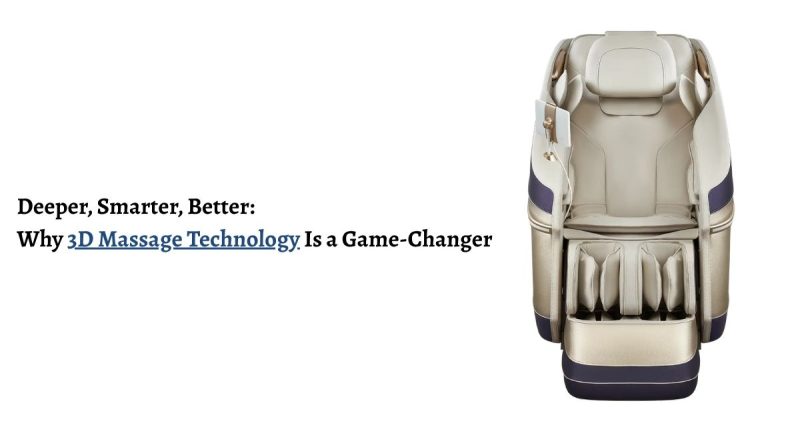
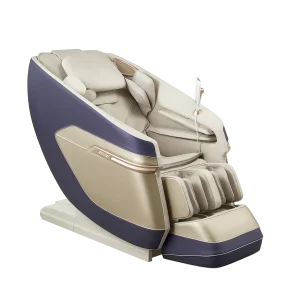
This is precisely the philosophy behind Rotai, a brand built on the idea that relaxation should be intelligent, not generic. Rotai has spent years refining the balance between engineering and comfort, and that focus is most evident in its flagship model, the R-RELX Luxury 3D Massage Chair.
The R-RELX brings together advanced 3D roller technology, zero-gravity recline, and full-body airbag compression into one refined design. Rather than treating the back as a single surface to roll across, the chair maps pressure zones across the shoulders, spine, and lower back, then adjusts automatically. It applies firm, human-like pressure to areas that typically carry the most tension — like the trapezius muscles and lower back — while easing off around more sensitive areas near the spine itself.
Beyond the rollers, the R-RELX incorporates heat therapy modules that gently warm targeted areas to improve blood flow and further loosen tight muscles. Multiple pre-set massage programs allow users to choose between deep tissue-style sessions, lighter relaxation modes, or targeted programs focused specifically on the neck, shoulders, or lower back. Full-body airbag compression extends the experience to the arms, hips, and calves, ensuring that relief isn’t limited to the back alone.
What sets the R-RELX apart in a crowded market is Rotai’s attention to comfort engineering. The chair features premium upholstery designed for both durability and a soft, high-end feel, whisper-quiet motors that allow for use at any time of day without disturbing others, and a chassis built for long-term durability rather than short-term novelty. It’s designed not as a short-term gadget, but as a long-term wellness investment for people serious about recovery, stress relief, and daily self-care.
Why It Matters for Everyday Wellness
Whether you’re managing chronic tension from desk work, recovering after workouts, or simply looking to unwind at the end of a long day, the difference between a standard massage chair and a true 3D system is night and day. The adaptive depth, combined with zero-gravity support, means every session feels personalized rather than generic. Instead of a fixed routine that treats every body the same way, a 3D massage chair responds to your specific shape and tension points, delivering a session that actually addresses what your body needs in that moment.
This shift matters more than it might seem at first glance. Chronic muscle tension doesn’t build evenly across the body—it accumulates in specific areas based on posture, activity, and daily habits. A massage system that can’t adapt to those individual differences will always fall short of one that can. That’s the real value 3D technology brings to the table: not just a more advanced feature but a fundamentally better way to deliver relief.
As more people bring wellness technology into their homes, Rotai’s R-RELX Luxury 3D Massage Chair stands out as a clear example of how far massage chair innovation has come—proving that deeper, smarter, and better isn’t just a tagline. It’s the new standard for what a modern massage chair should be able to do and a strong signal of where the future of at-home wellness technology is headed.