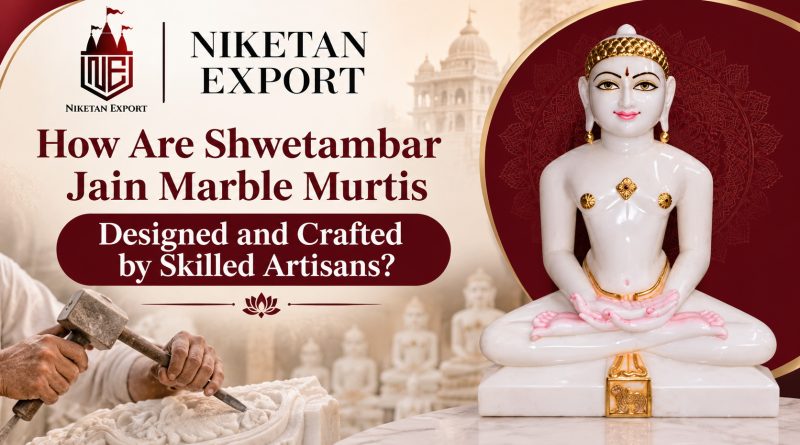
How Are Shwetambar Jain Marble Murtis Designed and Crafted by Skilled Artisans?
A Shwetambar Jain Marble Murti represents devotion, spiritual discipline, purity, and the rich artistic heritage of Jainism. These sacred marble sculptures are carefully designed to represent Jain Tirthankaras with specific traditional features, peaceful expressions, and balanced proportions. Creating a beautiful Jain marble murti requires a combination of religious knowledge, artistic experience, technical skills, and precision in stone carving. From selecting high-quality white marble to completing the final polishing, every stage plays an important role in achieving the desired appearance and traditional authenticity.
A skilled artisan does more than transform a block of marble into a sculpture. The process involves understanding Jain iconography, following traditional design principles, and maintaining attention to intricate details. Today, experienced manufacturers and exporters from India create handcrafted Jain marble statues for temples, religious institutions, and devotees across different countries.
What Is a Shwetambar Jain Marble Murti?
A Shwetambar Jain Marble Murti is a sacred representation of a Jain Tirthankara, traditionally crafted using white marble. The Shwetambar tradition is one of the two major traditions within Jainism, and its religious practices and iconographic representations have distinct characteristics. The Tirthankaras are spiritual teachers who attained liberation and guide followers towards the path of righteousness, non-violence, and self-discipline.
These murtis are generally recognised by their serene facial expressions, meditative posture, balanced body proportions, and symbolic features. White marble is particularly valued because its natural appearance represents simplicity, purity, and peacefulness.
A traditional Shwetambar Jain Tirthankar Murti may feature a seated Padmasana posture or a standing Kayotsarga posture, depending on the intended representation. The specific Tirthankara can also be identified through traditional symbols, known as Lanchhanas, and other iconographic details.
How Do Skilled Artisans Design Shwetambar Jain Marble Murtis?
Designing a Shwetambar Jain Marble Murti involves careful planning before the actual carving begins. Artisans consider religious requirements, traditional references, proportions, posture, facial features, and the intended installation location. Each design decision contributes to the spiritual and artistic identity of the finished sculpture.
Understanding Traditional Jain Iconography
The first stage involves understanding the religious identity and traditional representation of the Tirthankara. Every Jain Tirthankara has specific identifying symbols and traditional characteristics. Artisans study these details to ensure that the Jain Bhagwan Marble Murti represents the intended spiritual figure correctly.
The design may include a specific meditation posture, traditional symbols, a decorative halo, and other religious elements. Maintaining these characteristics is important when creating an authentic Shwetambar Jain Idol.
Preparing the Design and Measurements
After understanding the religious requirements, artisans prepare the sculpture’s basic design. Measurements are planned according to the required height, width, proportions, posture, and level of detailing.
For example, a Jain marble idol intended for a large temple may require different dimensions and structural considerations compared with a smaller murti designed for a home temple. Manufacturers also consider the available installation space and architectural surroundings before finalising the design.
Selecting the Right Marble
Marble selection is another important part of the design process. High-quality white marble is commonly preferred for a White Marble Jain Murti because of its clean appearance, smooth texture, and suitability for detailed carving.
Artisans and manufacturers examine the marble block for natural veins, cracks, colour variations, density, and structural consistency. Selecting an appropriate stone helps achieve a refined finish and reduces the possibility of damage during carving.
What Is the Step-by-Step Process of Crafting a Handmade Jain Marble Murti?
The creation of a Handmade Jain Marble Murti involves several stages, each requiring specialised tools and skilled craftsmanship. Although modern equipment can support certain operations, detailed carving and finishing often depend on the experience and precision of traditional artisans.
- Marble Block Selection and Preparation
The process begins with selecting a suitable marble block according to the required statue dimensions and design. The stone is inspected to identify visible imperfections and determine whether it can support the intended sculpture.
Once selected, the marble block is cleaned, measured, and marked according to the initial design. These markings help artisans identify the major sections of the sculpture and maintain the correct proportions throughout the carving process.
- Initial Shaping of the Marble
The next stage involves removing excess marble to develop the basic shape of the murti. Artisans use chisels, hammers, cutting tools, and other specialised equipment to create the initial outline.
At this stage, the overall body structure, head, shoulders, arms, legs, and sitting or standing posture begin to take shape. Careful material removal is essential because excessive cutting can affect the final proportions.
- Detailed Facial and Body Carving
Facial expressions are among the most important elements of a Jain Tirthankar Marble Statue. Artisans carefully carve the eyes, nose, lips, ears, forehead, and other facial features to achieve a calm and meditative appearance.
The body proportions are refined to maintain balance and symmetry. Particular attention is given to the hands, feet, fingers, and posture. These details help establish the peaceful expression and traditional appearance associated with Jain Tirthankaras.
- Creating Religious Symbols and Decorative Details
Once the basic sculpture is complete, artisans work on the traditional religious elements. These may include the Tirthankara’s Lanchhana, decorative Prabhavali (halo or surrounding arch), and other features according to the selected design.
The detailing varies depending on the Tirthankara, temple requirements, and traditional iconographic references. Skilled artisans ensure that decorative elements complement the central figure rather than distracting from its spiritual representation.
- Surface Refinement and Polishing
After the carving work is completed, the sculpture undergoes surface refinement. Artisans use different grades of abrasive materials to smooth rough surfaces and remove minor irregularities.
The final polishing process enhances the natural appearance of white marble and gives the Shwetambar Jain Marble Statue a clean, refined finish. The level of shine can vary according to the design and customer requirements.
- Final Inspection and Finishing
The completed Jain Marble Murti is inspected for carving accuracy, symmetry, surface quality, structural stability, and finishing consistency. Manufacturers may also check the base, decorative elements, and transportation requirements before preparing the statue for delivery.
This final inspection helps ensure that the sculpture meets the expected quality and design specifications.
What Makes a High-Quality Shwetambar Jain Marble Murti?
The quality of a Jain Marble Murti depends on several factors beyond its appearance. Religious accuracy, marble quality, carving precision, and structural strength all contribute to the overall value of the sculpture.
High-quality marble should have suitable density, a consistent appearance, and sufficient strength for the intended design. Detailed facial expressions, balanced proportions, smooth finishing, and accurate traditional symbols are equally important.
Another important consideration is the artisan’s experience. Skilled marble artists understand how to work with natural stone while maintaining the intended design. Their craftsmanship is particularly important for complex temple sculptures featuring detailed carving and decorative elements.
Buyers should also consider the manufacturer’s ability to provide customised designs, appropriate packaging, and reliable delivery arrangements.
What Factors Should You Consider When Choosing a Jain Marble Murti Manufacturer?
Selecting an experienced Shwetambar Jain Marble Murti Manufacturer is important for obtaining a sculpture that meets religious, artistic, and quality expectations. Buyers should evaluate the manufacturer’s experience in Jain sculpture production rather than considering price alone.
Look for manufacturers with a portfolio of completed Jain Tirthankar marble statues, knowledge of traditional iconography, and experience in different marble varieties. Reviewing previous projects can help buyers understand the quality of facial detailing, carving accuracy, proportions, and polishing.
Customisation is another important factor. A reliable Jain Marble Idol Manufacturer should be able to discuss different sizes, postures, marble selections, decorative elements, and installation requirements.
For international buyers, working with a Marble Murti Manufacturer exporter from India can provide access to traditional Indian marble craftsmanship and specialised production capabilities. It is also important to check export packaging, shipping arrangements, product inspection, and communication before placing an order.
Why Is India Known for Shwetambar Jain Marble Murti Manufacturing?
India has a long-standing tradition of marble sculpture, stone carving, and temple architecture. Skilled artisans across different regions have developed specialised techniques for creating religious sculptures, decorative temple elements, and customised marble statues.
Indian marble craftsmanship is valued for its combination of traditional artistic knowledge and detailed manual work. Experienced manufacturers produce Jain Bhagwan Marble Murti designs in different sizes and styles for domestic and international projects.
India is also an important destination for buyers looking for customised Jain temple sculptures. A marble Jain Mandir Manufacturer may provide a range of related products, including Jain Tirthankar statues, marble pillars, temple arches, decorative panels, and other architectural components.
The availability of experienced artisans, different marble varieties, and custom manufacturing facilities makes India a preferred sourcing destination for many Jain temple projects.
How Are Shwetambar Jain Marble Murtis Customised for Temples and Homes?
Customisation allows devotees, temple committees, and religious organisations to select a murti according to their specific requirements. The design process may include selecting the Tirthankara, posture, statue height, marble variety, decorative features, and finishing style.
Temple installations may require larger sculptures with carefully planned bases, traditional Prabhavalis, and architectural compatibility. Home temple murtis are generally designed according to the available space while maintaining traditional proportions and religious characteristics.
A professional marble Jain Mandir Manufacturer can also coordinate the statue design with other temple elements to create a consistent architectural appearance. Before production begins, buyers should finalise measurements, design references, finishing preferences, and transportation requirements.
Conclusion
Designing and crafting a Shwetambar Jain Marble Murti is a detailed process that combines traditional Jain iconography, natural marble selection, artistic planning, and skilled stone carving. From preparing the initial design to refining facial expressions, carving religious symbols, and completing the final polish, every stage contributes to the sculpture’s quality and spiritual representation.
Choosing an experienced Shwetambar Jain Marble Murti Manufacturer or Marble Murti Manufacturer exporter from India helps buyers access traditional craftsmanship, customised designs, and carefully finished marble sculptures. Whether intended for a Jain temple or a home mandir, a well-crafted marble murti reflects the dedication of artisans and India’s enduring heritage of stone sculpture.