Hip Replacement Surgery: What Happens When the Hip Joint Is Replaced?
Hip replacement surgery is a procedure used to replace a damaged or severely worn hip joint with an artificial joint. It is commonly considered when hip pain, stiffness, and reduced movement begin to interfere with everyday activities and other treatment options are no longer providing adequate relief. Understanding what happens during the procedure can help patients feel more prepared and know what to expect before, during, and after surgery.
The hip is a ball-and-socket joint that connects the thigh bone to the pelvis. The rounded top of the thigh bone, known as the femoral head, fits into a cup-shaped area of the pelvis called the acetabulum. Smooth cartilage normally allows these surfaces to move easily. When the cartilage becomes damaged because of arthritis, injury, or other conditions, movement can become painful and difficult.
An experienced hip replacement surgeon evaluates the condition of the joint, symptoms, medical history, and imaging reports before deciding whether replacement surgery is appropriate.
Why Is Hip Replacement Surgery Needed?
Hip replacement may be recommended when damage to the joint causes persistent pain and affects mobility or quality of life. Osteoarthritis is one of the most common reasons for hip replacement, but other conditions may also damage the joint.
Common reasons include:
- Advanced osteoarthritis
- Rheumatoid arthritis
- Hip fractures
- Avascular necrosis
- Severe joint damage caused by injury
- Certain developmental or structural hip problems
Patients may experience pain while walking, climbing stairs, standing, or getting up from a chair. Some people may also have stiffness that makes it difficult to put on shoes, socks, or clothing.
Initially, doctors may recommend nonsurgical treatments such as medicines, physiotherapy, activity modification, weight management, or walking support. If symptoms continue to significantly affect daily life, hip replacement may become a treatment option.
What Happens When the Hip Joint Is Replaced?
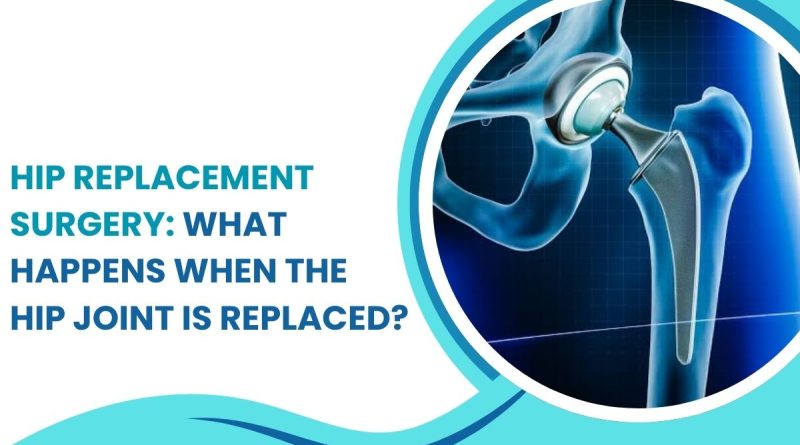
During total hip replacement, the damaged portions of the natural joint are removed and replaced with artificial components. The procedure generally involves replacing both the damaged femoral head and the affected surface of the hip socket.
The surgeon first accesses the hip joint and removes the damaged femoral head from the thigh bone. The inside of the thigh bone is then prepared to receive the stem of the artificial implant.
Next, the damaged cartilage and bone from the hip socket are removed or prepared so that an artificial socket component can be positioned securely.
An artificial ball is attached to the femoral component and placed into the new socket. The components are designed to work together as a smooth artificial ball-and-socket joint.
Different implant designs and materials may be used depending on the patient’s age, bone quality, anatomy, activity level, and clinical requirements.
What Are the Main Components of an Artificial Hip?
A total hip replacement generally consists of several components that work together to recreate the function of the natural joint.
Femoral Component
This component replaces the damaged upper portion of the thigh bone. It usually includes a stem that fits inside the femur and an artificial ball at the top.
Acetabular Component
This component replaces the damaged surface of the hip socket. It provides the artificial surface against which the new femoral ball moves.
Bearing Surface
The bearing surface is the area where the artificial ball and socket move against each other. Different material combinations may be used depending on the implant design and patient requirements.
The choice of implant is made by the orthopedic team after considering several individual factors rather than using one implant type for every patient.
How Is a Patient Prepared for Surgery?
Before surgery, the patient undergoes a detailed evaluation. The orthopedic team may review medical history, medications, previous treatments, allergies, and existing medical conditions.
Imaging tests such as X-rays are commonly used to assess the condition of the hip joint. Blood tests and other medical evaluations may also be required before surgery.
Patients may receive instructions about medicines, eating and drinking before the operation, exercises, and preparing their home for recovery.
Maintaining appropriate physical activity before surgery, when medically suitable, can help patients remain as active as possible before the procedure.
For patients looking for the best ortho surgeon in Jaipur, it is important to consider relevant orthopedic qualifications, experience with joint replacement procedures, hospital facilities, rehabilitation support, and postoperative follow-up rather than relying only on promotional claims.
What Happens Immediately After Surgery?
After the operation, the patient is moved to a recovery area where vital signs and overall condition are monitored. Pain management is provided according to the patient’s needs.
Once medically appropriate, the patient may begin moving with assistance. A physiotherapist can demonstrate safe techniques for getting out of bed, standing, and walking with a walker or crutches.
Early movement is an important part of modern joint replacement recovery. However, activity levels should always follow the instructions provided by the treating healthcare team.
The length of hospital stay varies depending on the patient’s health, surgical procedure, recovery progress, and hospital protocols.
What Is Recovery Like After Hip Replacement?
Recovery takes time because the muscles, tissues, and surgical area need to heal. Patients may initially experience discomfort, swelling, stiffness, and reduced strength around the hip.
Physiotherapy generally plays an important role during recovery. Exercises may focus on improving muscle strength, joint movement, balance, and walking ability.
Patients are usually encouraged to gradually increase activity rather than trying to return immediately to their previous level of physical activity.
The exact recovery timeline differs between individuals. Age, general health, muscle strength, pre-existing conditions, surgical technique, and adherence to rehabilitation instructions can all influence recovery.
A hip replacement hospital should ideally provide coordinated support from orthopedic specialists, anesthesia teams, nursing staff, physiotherapists, and other healthcare professionals involved in the patient’s recovery.
What Activities Can Be Done After Hip Replacement?
The goal of rehabilitation is to help patients return to daily activities safely. Walking, sitting, standing, and climbing stairs can gradually become easier as strength and mobility improve.
Low-impact activities are generally considered more suitable for many people after recovery, but the appropriate activity level depends on the individual patient and advice from the orthopedic team.
Patients should avoid suddenly increasing physical activity or beginning demanding exercises without professional guidance.
Follow-up appointments are also important because the surgeon can assess healing, mobility, and the condition of the artificial joint.
What Precautions Are Important After Surgery?
Patients may receive specific precautions depending on the surgical approach, implant, and individual circumstances.
During the early recovery period, patients may need to avoid certain positions, excessive bending, sudden twisting, or activities that increase the risk of falling.
Walking aids should be used as advised. Patients should also follow the prescribed physiotherapy programme and maintain good wound care.
Any increasing redness, unusual discharge, fever, severe pain, or significant swelling around the surgical area should be discussed with the medical team.
Sudden chest pain or difficulty breathing requires urgent medical attention.
What Are the Possible Risks?
Hip replacement is a commonly performed procedure, but like other major surgeries, it has potential risks.
Possible complications can include:
- Infection
- Blood clots
- Dislocation
- Difference in leg length
- Nerve or blood vessel injury
- Implant loosening
- Wear of implant components
- Need for revision surgery
The risk varies from patient to patient. Medical history, age, general health, bone quality, surgical factors, and postoperative care can influence individual risk.
Patients should discuss potential complications and warning signs with their orthopedic team before surgery.
How Long Can an Artificial Hip Last?
An artificial hip is designed to provide long-term function, but its lifespan can vary. Implant longevity may be affected by factors such as implant design, activity level, body weight, bone quality, age, and overall health.
Some patients may eventually require revision surgery if an implant becomes loose, worn, damaged, or affected by another complication.
Regular medical follow-up can help monitor the condition of the artificial joint and address concerns when necessary.
How to Choose the Right Hip Replacement Care?
Choosing the right orthopedic care involves more than selecting a surgeon. Patients should consider the surgeon’s qualifications and relevant experience, the availability of modern diagnostic facilities, surgical infrastructure, physiotherapy services, infection-control practices, and postoperative follow-up.
A suitable hip replacement hospital should be able to support the patient through different stages of treatment, from preoperative assessment and surgery to rehabilitation and follow-up.
When researching the best ortho surgeon in Jaipur, patients can review qualifications, experience in joint replacement procedures, treatment approach, hospital facilities, and the type of postoperative care provided.
Conclusion
Hip replacement surgery replaces damaged portions of the natural hip joint with artificial components designed to restore smoother movement and reduce pain caused by severe joint damage. The procedure involves replacing the damaged femoral head and, in total hip replacement, the affected surface of the socket.
Successful recovery involves more than the operation itself. Proper preoperative evaluation, appropriate implant selection, guided movement, physiotherapy, follow-up appointments, and adherence to medical advice all play important roles.
If persistent hip pain or stiffness is affecting everyday life, an orthopedic evaluation can help identify the underlying cause and determine whether nonsurgical treatment or joint replacement may be appropriate. A qualified hip replacement surgeon can explain the available treatment options, expected recovery, potential risks, and precautions based on the patient’s individual condition.
Frequently Asked Questions
1. Is hip replacement surgery suitable for every patient with hip pain?
No. Hip pain can have several causes. Hip replacement is generally considered when significant joint damage and persistent symptoms affect daily activities and other appropriate treatments have not provided sufficient relief.
2. How soon can a patient walk after hip replacement?
Many patients can begin standing and walking with assistance soon after surgery when their medical condition allows it. A physiotherapist usually guides the initial movement and walking exercises.
3. Is physiotherapy necessary after hip replacement?
Physiotherapy is an important part of recovery for many patients. It can help improve strength, mobility, balance, and confidence while walking.
4. How long does it take to recover from hip replacement?
Recovery varies between individuals. Some daily activities may become easier within weeks, while strength, mobility, and confidence can continue improving over several months.
5. Can patients return to normal activities after hip replacement?
Many patients are able to return to a wide range of everyday activities after recovery. The timing and type of activity should be discussed with the treating orthopedic team.
6. When should someone consult a hip replacement surgeon?
A consultation may be appropriate when persistent hip pain, stiffness, or limited mobility continues to interfere with walking, sleeping, work, or daily activities despite conservative treatment.