How to Identify a Pure White Marble Buddha Statue?
A white marble Buddha statue can bring a calm and elegant presence to a home, meditation room, garden, hotel, temple, or wellness space. But when you are buying one, especially online, it is not always easy to tell whether the statue is actually carved from natural white marble or made from another material designed to look similar.
Painted stone, marble powder, resin, and composite materials can sometimes resemble natural marble in photographs. So, how can you identify a genuine white marble Buddha statue before buying?
There is no single home test that can confirm the exact geological composition of a statue with complete certainty. However, the following checks can help you assess the material, workmanship, and overall quality before making a purchase.
1. Look Closely at the Natural Marble Pattern
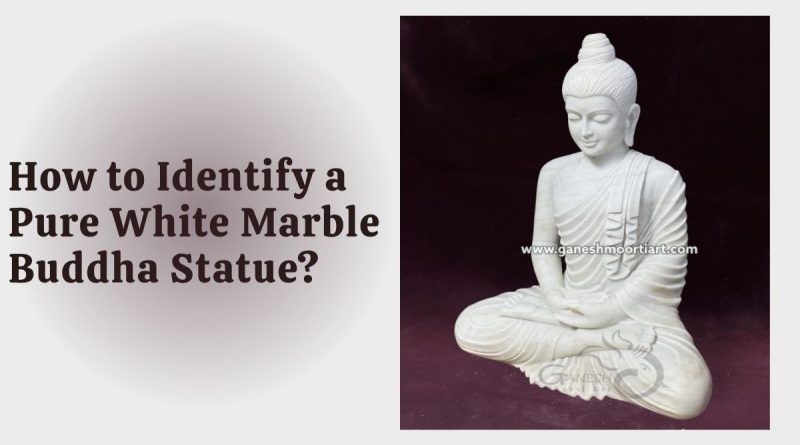
Natural marble usually has subtle variations in shade, grain, or veining. Even high-quality white marble may not look perfectly identical across every part of the statue.
Look closely at areas such as:
- the back of the statue
- the base
- folds of the robe
- hands and feet
- deeper carved portions
If the entire surface has an unusually uniform white appearance, ask the murti manufacturer whether the statue has been painted, coated, or made using marble powder.
Natural variation is not necessarily a defect. In many cases, it is part of the character of real stone.
2. Check the Weight of the Statue
Natural marble is a dense and relatively heavy stone.
A solid marble Buddha statue will generally feel considerably heavier than a similarly sized resin or hollow decorative statue. This can be particularly useful when inspecting a statue in person.
For online purchases, ask the seller for the approximate weight along with the height, width, and depth of the statue.
Weight alone, however, should not be used as proof of authenticity because other stone and composite materials can also be heavy.
3. Examine the Unpolished Areas
One useful way to understand the material is to inspect portions that have received less polishing.
The underside of the base or a concealed area may reveal the natural stone more clearly than the highly polished front surface.
A carved marble statue should generally show stone continuity beneath the finished surface rather than a thin decorative coating over another material.
When buying online, you can request close-up photographs of the base, back, and unfinished underside of the Buddha statue.
4. Feel the Surface and Temperature
Natural marble often feels cool when first touched, particularly in a normal indoor environment.
When you place your hand on it, the stone gradually absorbs heat from your skin. Resin and some synthetic materials can feel different because of their lower thermal conductivity.
This is a useful observation when inspecting a statue personally, but it should not be treated as a definitive test. Room temperature, surface finish, and environmental conditions can affect how the material feels.
5. Look at the Carving Details
Material is only one part of choosing a good Buddha statue. The quality of craftsmanship is equally important.
Observe the detailing around the:
- face and expression
- eyes and lips
- hair curls
- fingers and toes
- robe folds
- lotus base
- ornaments, where applicable
A well-carved marble Buddha statue should have balanced proportions and clean detailing. Handmade work may contain slight variations, which can be expected in individually carved pieces.
The facial expression deserves particular attention. A Buddha statue should generally convey the peaceful and meditative character intended by its design.
6. Ask What Type of Marble Is Being Used
Do not rely only on descriptions such as “premium marble,” “pure marble,” or “high-quality white marble.”
Ask the manufacturer specifically:
“Which marble has been used to make this Buddha statue?”
If a particular marble variety or source is claimed, ask for supporting details. For example, if a seller describes a statue as being made from Makrana marble, the seller should be able to explain the material rather than relying only on a marketing label.
This is especially important for expensive or large custom statues.
7. Check Whether the Statue Is Solid Marble or Marble Powder
This is an important distinction.
A hand-carved marble Buddha statue is generally carved from a natural stone block. A marble-powder or composite statue may be produced by combining powdered material with binders and forming it in a mould.
Both can be sold as decorative products, but they are not the same manufacturing method.
Before ordering, ask:
“Is this Buddha statue carved from a solid natural marble block, or is it made using marble powder/composite material?”
A reliable manufacturer should answer this clearly.
8. Inspect the Statue for Paint or Artificial Coating
Some statues receive surface treatments to improve their appearance. This is not automatically a problem, provided the treatment is disclosed.
The concern arises when a coating makes another material appear to be natural white marble.
Check corners, the underside, deep carving areas, and the base for differences between the surface and the material underneath.
If you want a natural marble finish, ask whether the statue is:
- naturally polished
- waxed
- sealed
- painted
- chemically treated
- coated
Knowing the finishing method helps you understand what you are actually purchasing.
9. Ask for Close-Up Photos and Videos Before Buying Online
Product photographs can hide a surprising amount of detail.
Before ordering a white marble Buddha statue online, especially a high-value piece, ask for a recent video of the actual statue or marble block being offered.
Request close-ups of the:
face → hands → robe → back → base → underside
If the statue is being custom-made, you can also ask the manufacturer to share photographs at different stages of carving.
This gives you a better idea of both the material and workmanship.
10. Compare the Price Carefully
A very low price for a large, intricately carved statue deserves closer inspection.
The cost of a white marble Buddha statue can vary according to the marble selected, statue size, thickness, carving complexity, level of detailing, finishing, artisan work, packaging, and transportation.
Therefore, price alone cannot establish whether marble is genuine.
Instead of simply choosing the cheapest option, compare what each manufacturer is actually offering.
Questions to Ask Before Buying a White Marble Buddha Statue
Before placing your order, ask the manufacturer:
- Is the statue carved from natural solid marble?
- Which type of white marble is used?
- Is any marble powder or resin used in the main statue?
- Is the surface painted, coated, or naturally polished?
- What are the exact dimensions and approximate weight?
- Can you share close-up photos and a video of the actual statue?
- Is the statue completely handmade, machine-assisted, or produced using a combination of methods?
- Can I see the statue or marble before dispatch?
- How will it be packed for transportation?
- Can you make the Buddha statue in a custom size or design?
These questions are particularly useful when purchasing a large or custom-made marble statue.
How Can You Be More Certain About Marble Authenticity?
Visual checks can help, but they cannot always establish the exact composition or origin of a stone.
For a high-value statue where material authenticity is especially important, ask the manufacturer for documentation relating to the stone. If independent verification is necessary, the material can be assessed by a qualified stone or geological testing professional.
Avoid damaging tests such as scratching, chipping, applying chemicals, or acids to a finished statue unless they are being performed appropriately by a professional.
Final Thoughts
Identifying a good-quality marble Buddha statue involves more than checking whether the statue looks white and feels heavy.
Look at the natural stone characteristics, inspect less-polished areas, examine the carving, confirm whether the piece is carved from solid marble, and ask the manufacturer about the marble and finishing process.
For an online purchase, detailed photographs, videos, dimensions, weight, and clear information about the material can make the buying decision much easier.
Most importantly, choose a Buddha statue based on both material quality and craftsmanship. A carefully selected piece should have clean carving, balanced proportions, a peaceful expression, and a finish suitable for the place where you intend to keep it.