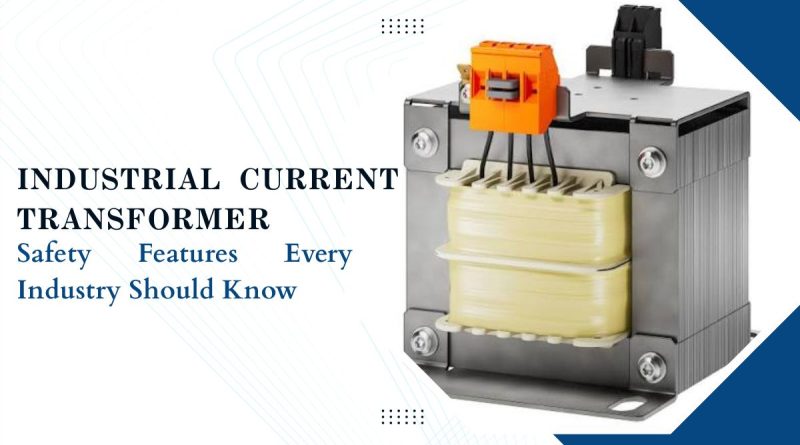
Industrial Current Transformer: Safety Features Every Industry Should Know
Industrial electrical systems often operate with high currents and voltages, making accurate measurement and reliable protection essential. A Current Transformer (CT) is an important electrical component that allows high current to be measured safely by converting it into a lower, manageable current for meters, monitoring devices, and protective relays.
An Industrial Current Transformer is widely used in switchgear, power distribution systems, control panels, generators, transformers, and industrial machinery. Besides providing accurate current measurement, it also supports electrical protection by supplying current signals to protective equipment.
Understanding the safety features of an industrial CT can help businesses select suitable equipment and maintain reliable electrical systems.
What Is an Industrial Current Transformer?
An Industrial Current Transformer is an instrument transformer designed to measure current flowing through an electrical circuit. Instead of connecting measuring equipment directly to a high-current conductor, the CT produces a proportional secondary current that can be safely monitored.
For example, a CT may have a high primary current rating while providing a standardized secondary output for a meter or relay. This makes it possible to monitor industrial electrical systems without exposing measuring instruments to the full primary current.
Industrial CTs are commonly used for:
- Electrical current measurement
- Energy monitoring
- Power system protection
- Overcurrent detection
- Industrial control systems
- Switchgear protection
- Generator monitoring
- Transformer protection
- Motor protection
The right CT depends on the electrical system, application, current rating, accuracy requirements, and installation environment.
Why Are Safety Features Important?
Industrial electrical equipment must operate reliably under demanding conditions. A poorly selected or incorrectly installed Electrical Current Transformer can affect measurement accuracy and may create safety risks.
Safety features help address issues such as:
- Electrical insulation failure
- Excessive temperature
- Incorrect current measurement
- Secondary circuit problems
- Mechanical damage
- Environmental exposure
- Loose electrical connections
A reliable Industrial Current Transformer Manufacturer considers these factors during design and manufacturing to ensure that the CT is suitable for its intended application.
1. High-Quality Electrical Insulation
One of the most important safety features of an industrial CT is its insulation system. Proper insulation separates energized components and helps reduce the risk of electrical leakage, short circuits, and insulation breakdown.
The required insulation level depends on the operating voltage and installation conditions. High-voltage industrial applications require CTs with appropriate insulation capabilities.
When selecting a CT, industries should review its rated insulation level instead of choosing a product only according to its current ratio.
2. Correct Current Rating
A Current Transformer for Industrial Applications must have an appropriate current rating for the electrical system.
The normal operating current, expected maximum load, and possible future load conditions should be considered during selection. Using a CT with unsuitable specifications may result in inaccurate measurements or poor protection-system performance.
Engineers should therefore select the CT based on the actual requirements of the installation rather than relying only on the basic current rating.
3. Appropriate CT Ratio
The CT ratio determines the relationship between primary and secondary current. Selecting the correct ratio is important for accurate measurement and proper operation of connected equipment.
For example, if the CT ratio does not match the requirements of the measuring instrument or protection relay, the displayed readings may not accurately represent the actual current.
A suitable CT ratio should be selected according to the system’s operating current, maximum expected load, and application requirements.
4. Suitable Accuracy Class
Accuracy is particularly important when a CT is used for metering, monitoring, or protection.
A Metering Current Transformer is designed to provide accurate current information to measuring instruments, while a Protection Current Transformer is selected according to the requirements of protective relays and fault detection systems.
The appropriate accuracy class depends on the intended application. Industries should therefore determine whether the CT will be used primarily for measurement, protection, or both before selecting a product.
5. Thermal Safety and Temperature Management
Industrial electrical equipment may experience significant heat during continuous operation or heavy loading. A CT must be capable of operating within its specified thermal limits.
Excessive temperature can affect insulation, accuracy, and equipment life. Properly designed CTs consider thermal performance as part of their overall construction.
Adequate ventilation, correct installation, and avoiding excessive loading can also help maintain safe operating temperatures.
6. Secure Secondary Terminals
The secondary terminals of a CT must be properly designed and securely connected. Loose connections can increase electrical resistance and may result in localized heating, measurement errors, or equipment damage.
Clear terminal identification is also important, especially when several CTs are installed inside the same control panel.
During maintenance, technicians should inspect terminals for signs of looseness, corrosion, overheating, or physical damage.
7. Secondary Circuit Protection
One of the most important safety considerations with a CT is its secondary circuit.
A CT secondary should generally not be left open while the primary is energized. An open secondary can result in a high voltage developing across the secondary terminals, creating a potentially hazardous condition.
Suitable shorting arrangements and test facilities can help technicians perform maintenance safely. Personnel should always follow the manufacturer’s instructions and established electrical safety procedures when working with CT secondary circuits.
8. Mechanical Strength
Industrial equipment can be exposed to vibration, movement, impact, and demanding installation conditions. A well-designed CT should have adequate mechanical strength to protect its internal components.
Strong construction can help minimize damage during installation, transportation, and normal operation.
The mounting method should also be suitable for the equipment in which the CT is installed. Proper mechanical support helps maintain stable connections and reliable operation.
9. Environmental Protection
Industrial locations may contain dust, moisture, heat, chemicals, and other contaminants. A CT installed in such an environment should be designed or enclosed appropriately for the conditions.
Environmental factors that should be considered include:
- Temperature
- Humidity
- Dust
- Moisture
- Chemical exposure
- Vibration
- Indoor or outdoor installation
Selecting an Industrial CT suitable for the actual environment can help improve service life and maintain reliable performance.
10. Reliable Current Measurement
Accurate current measurement is an important part of electrical safety. A CT provides current information to meters, monitoring systems, and protective equipment.
Reliable measurement can help operators identify:
- Overloading
- Unusual current levels
- Equipment problems
- Uneven loading
- Changes in electrical consumption
A Current Measurement Transformer therefore contributes not only to monitoring but also to preventive maintenance and electrical system management.
11. Protection System Compatibility
Many industrial electrical systems use CTs with protective relays. These relays can monitor current conditions and respond to abnormal electrical events according to the protection scheme.
The CT must be compatible with the protection system in terms of ratio, accuracy, burden, and other technical requirements.
For critical installations, engineers should verify the complete protection design rather than treating the CT as an isolated component.
12. Safe Installation and Maintenance
Even a high-quality CT requires proper installation and maintenance.
Qualified electrical personnel should follow the manufacturer’s instructions and the site’s approved safety procedures. Before maintenance, appropriate isolation and verification procedures should be followed.
Routine inspections can include checking:
- Terminal connections
- Insulation condition
- Signs of overheating
- Physical damage
- Contamination
- Mounting arrangements
- Secondary wiring
Regular inspection helps identify developing problems before they affect the electrical system.
How to Choose the Right Current Transformer Manufacturer?
Choosing a reliable Current Transformer Manufacturer is an important step when purchasing equipment for industrial applications.
Before selecting a supplier, consider:
Product Specifications
Check the CT ratio, accuracy class, burden, insulation level, frequency, thermal rating, and other specifications required by your system.
Manufacturing Quality
A professional manufacturer should use suitable materials and maintain consistent manufacturing and quality-control processes.
Testing
Testing helps verify whether the CT performs according to its specified requirements. For important industrial applications, ask about the manufacturer’s testing and quality-control practices.
Application Experience
A manufacturer with experience in industrial electrical systems can better understand application-specific requirements and recommend appropriate configurations.
Customization
Some projects may require specific ratios, dimensions, mounting arrangements, or other technical specifications. A manufacturer capable of providing suitable options can be beneficial for specialized installations.
Common Mistakes to Avoid
Industries should avoid several common mistakes when selecting and installing a CT.
Choosing only based on current rating: Accuracy, burden, insulation, and application type are also important.
Ignoring environmental conditions: CTs installed in harsh environments need suitable protection.
Incorrect secondary wiring: Improper connections can affect measurement and create safety concerns.
Leaving the CT secondary open: This can create a potentially dangerous high-voltage condition.
Skipping regular inspection: Loose terminals, overheating, and insulation damage should be identified early.
Using unsuitable protection equipment: CT specifications must match the requirements of connected relays and monitoring systems.
Benefits of a Properly Selected Industrial Current Transformer
A properly selected and installed CT can provide several advantages:
- Safe measurement of high electrical currents
- Reliable power monitoring
- Accurate metering
- Better protection-system performance
- Improved energy management
- Early identification of abnormal conditions
- Support for preventive maintenance
- Reliable operation of electrical equipment
For industries with complex power networks, these benefits can contribute to improved operational reliability and electrical safety.
Conclusion
An Industrial Current Transformer is an essential component in many industrial electrical systems. Its role extends beyond current measurement, as it also supports electrical monitoring, metering, and protection systems.
Important safety features include reliable insulation, appropriate current and CT ratios, suitable accuracy classes, thermal performance, secure terminals, mechanical strength, environmental protection, and safe secondary-circuit design.
However, product quality alone is not enough. Correct selection, installation, testing, and maintenance are equally important. Industries should work with a trusted Industrial Current Transformer Manufacturer and select a CT according to the specific requirements of their electrical system.
By choosing the right Current Transformer for Industrial Applications and following proper safety practices, industries can achieve dependable current measurement, improved electrical monitoring, and safer power-system operation.
FAQs
1. What is an Industrial Current Transformer?
An Industrial Current Transformer is an electrical instrument used to measure high current safely by converting it into a lower current suitable for meters, monitoring systems, and protective relays.
2. Why is an Industrial Current Transformer important for industrial systems?
It enables safe and accurate current measurement while supporting electrical monitoring and protection of industrial equipment.
3. What safety feature is most important in a current transformer?
Proper electrical insulation is one of the most important safety features because it helps prevent leakage, insulation breakdown, and electrical faults.
4. Can a CT secondary be left open?
The CT secondary should generally not be left open while the primary is energized. An open secondary can produce dangerously high voltage and create a safety hazard.
5. How do I choose the right Industrial Current Transformer?
Consider the required current ratio, accuracy class, burden, insulation level, frequency, thermal rating, environmental conditions, and the requirements of connected equipment.
6. What does CT accuracy class mean?
The accuracy class indicates how accurately the current transformer reproduces the primary current on its secondary side under specified operating conditions.
7. How can I choose a reliable Industrial Current Transformer Manufacturer?
Consider product quality, technical specifications, testing procedures, manufacturing experience, customization capabilities, and after-sales technical support.